Novarchem: “We address quality, technical support and sustainability together”
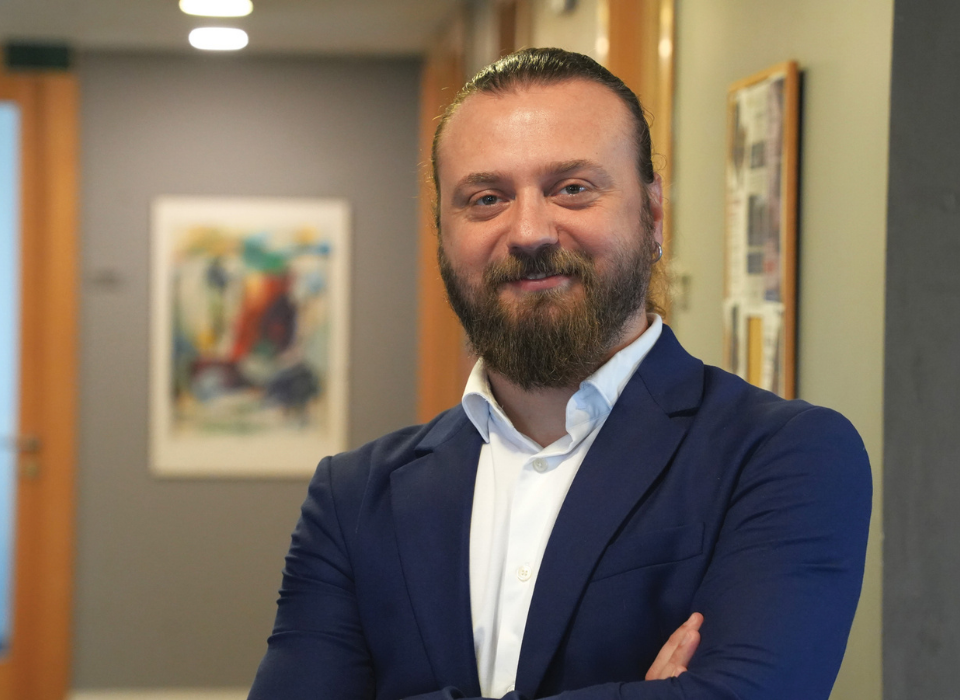
In this interview, we spoke with Atılay Tuzer, Chemical Engineer (MSc) and a member of Novarchem's founding team, about the company's founding vision, the criteria it adopts in raw material supply, the transfer of experience between different sectors, its sustainability efforts and future goals.
We would like to get to know you briefly. Could you tell us a bit about your professional career and Novarchem's vision?
Hello, welcome. I am Atılay Tuzer, a chemical engineer (MSc). We founded Novarchem in 2023 together with my friends. I joined the team around this same period last year. At the company, I am mainly responsible for the supply and sale of raw materials related to detergents and personal care products. We are a team of six in total. Four people on our team have approximately 15-20 years of sector experience. Three of us are chemists, and we provide our customers with technical support regarding both formulation and the end-use applications of raw materials in the final product. One of our teammates is also a food engineer. Although we are a young company, we have a technical and experienced staff. Four of our teammates previously worked at both domestic and foreign major companies. Thanks to this, we had the opportunity to closely observe the advantages and disadvantages of both domestic and foreign companies. We founded Novarchem with the aim of serving the chemical industry in Türkiye by benefiting from these advantages while avoiding the disadvantages.
Which needs and selection criteria do you prioritize when evaluating your raw material portfolio?
As Novarchem, we serve a large number of sectors and try to expand our areas of activity as much as possible. Currently, we are mainly active in fields such as cosmetics, personal care, detergents, industrial cleaning, lubricants and metalworking fluids. We have also built up a significant raw material portfolio on the pharmaceutical and food supplement side.
When supplying raw materials, we try not to proceed solely on a price basis. We have received, and continue to receive, a great deal of feedback from the sector and our customers on this issue. Because when you try to find the cheapest raw material, you can encounter serious quality problems. In this regard, we have an experienced team consisting of chemists and a food engineer. We first try to determine products according to the needs of the sector. Trends change very rapidly. In cosmetics, pharmaceuticals and especially food supplements, new popular products and actives emerge almost every day. We first try to verify the reliability of the manufacturer from whom we will supply these actives. In doing so, we first request technical documents and evaluate the communication the manufacturer establishes with us. We check whether the technical documents match the product label; whether the product's physical form, colour and odour are appropriate. Then we request a sample. If possible, we test these samples together with customers whose technical knowledge we trust and with whom we work closely, and we also get their opinions. In this way, we first evaluate the manufacturer. If the manufacturer passes our evaluation, we take more samples and have the product approved by more of our customers, applying it in new formulations. In addition, together with our team, we attend fairs abroad to follow developments in Europe and Asia. After confirming the quality of the products and manufacturers, we bring the product to market. That said, the factor that most influences the formation of our portfolio is the trends in the sectors we serve.
You control quality and traceability from the supplier all the way to delivery to the customer. So your approach is not just about buying and selling raw materials at a competitive price; you also take on the responsibility for quality, implementing an audit mechanism from the very beginning.
Of course. What I just described are the stages we go through when selecting a manufacturer and building our product portfolio. However, we don't think our responsibility ends once we've sold the product. Thanks to the knowledge and experience of our technical team, we also provide support for technical problems that may arise in production or in the laboratory after the sale. A significant portion of the actives we sell are products that are newly entering the market and starting to become new trends. As a result, the market may not yet have sufficient knowledge about the use of these products in formulations. We also provide support to our customers' R&D and production teams whenever necessary. In the first instance, we help by phone or e-mail, and when necessary, we are present with our customer on-site.
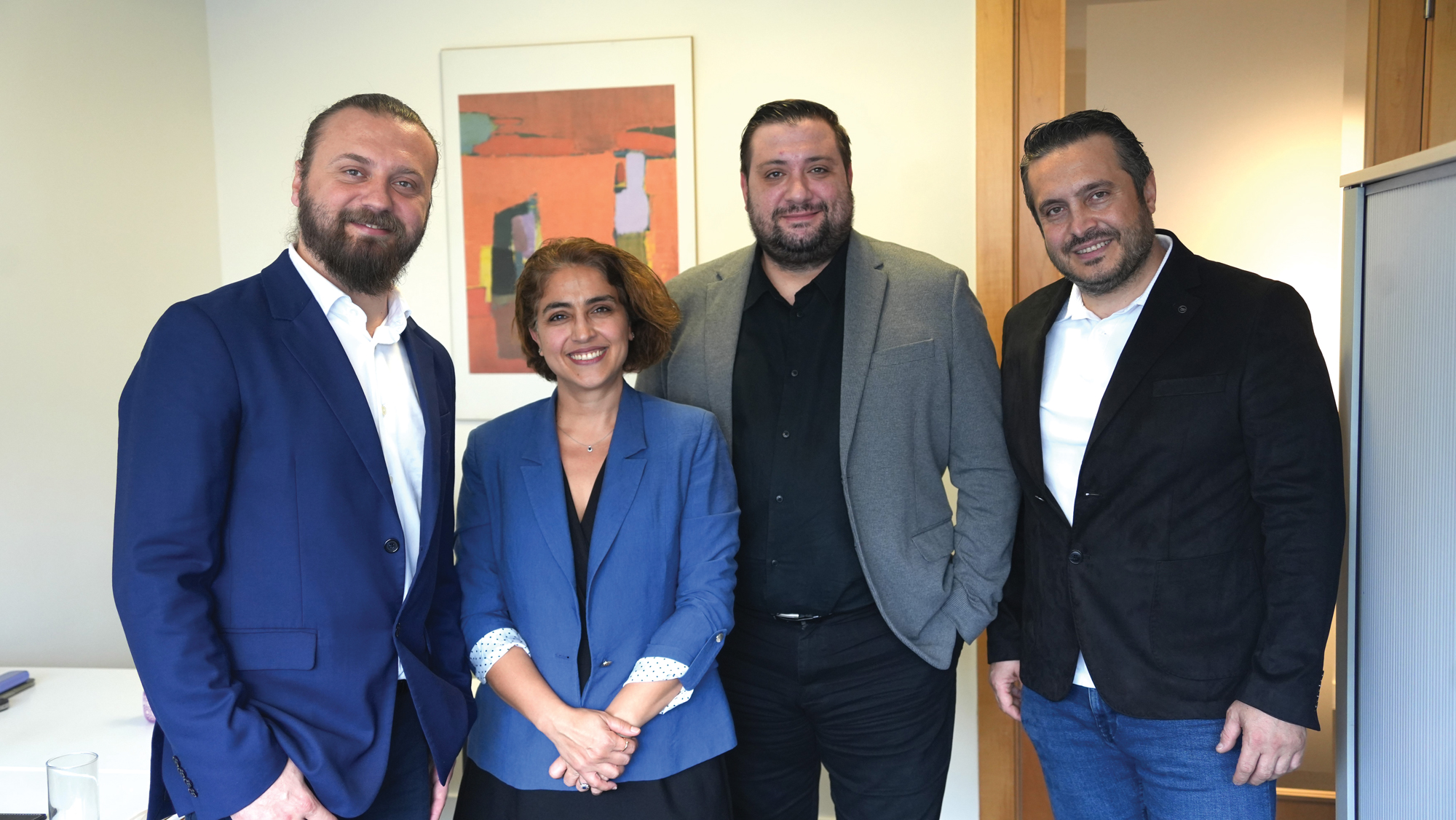
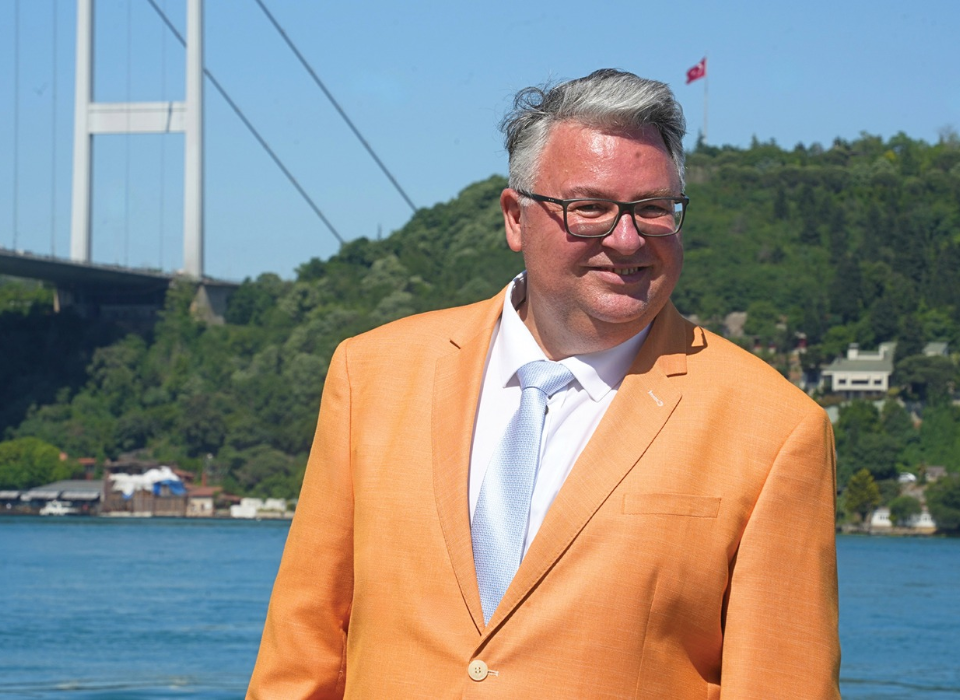
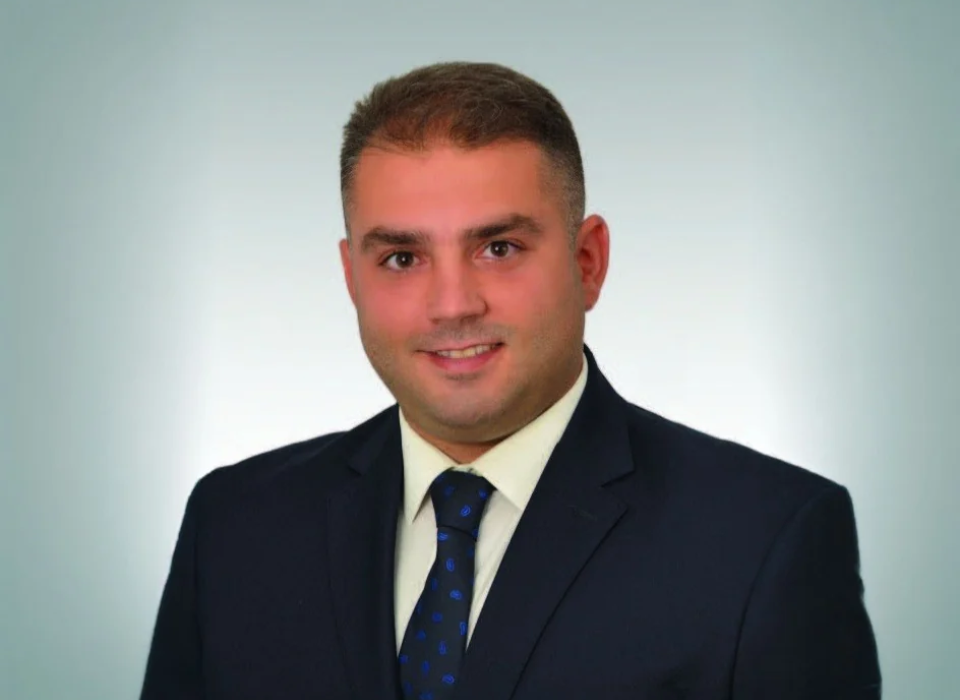
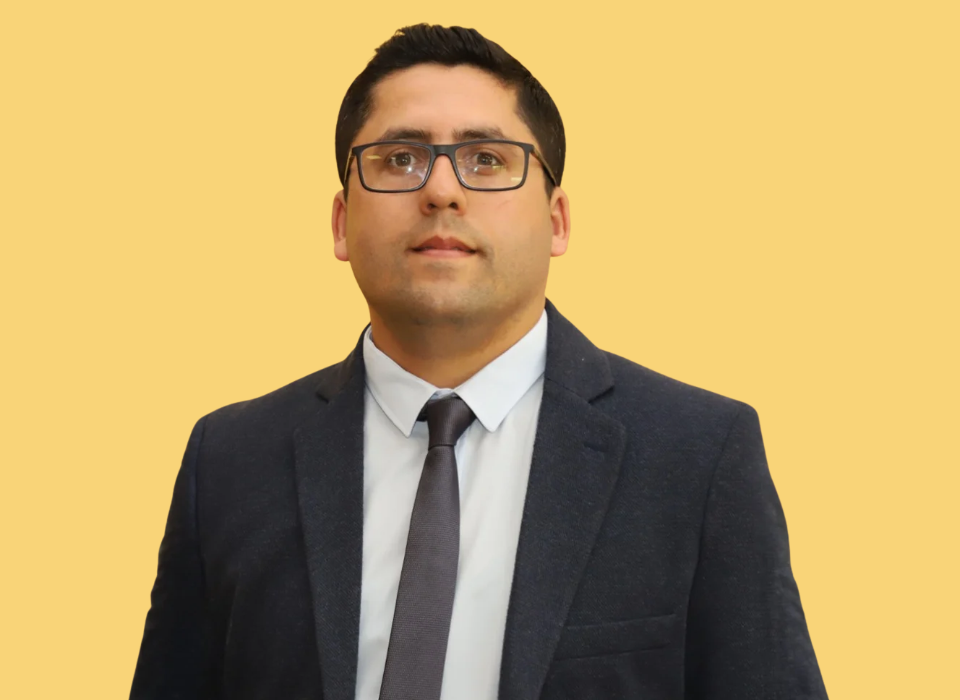
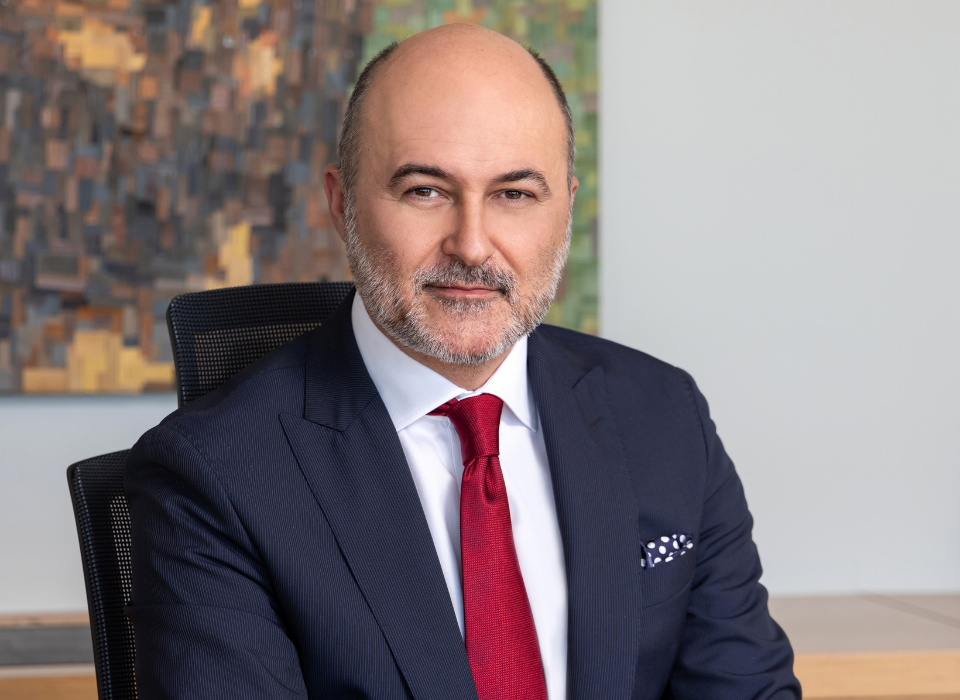
From left to right: Atılay Tuzer - Novarchem, Gamze Ünal - Chem Media, Doğa Akıner - Novarchem, Akın Uzun - Novarchem
We have a transparent working approach with the manufacturers from whom we import products abroad. In situations we cannot resolve on our own, we ask for direct support from our Chinese, Indian or European manufacturers. Through video calls, online meetings or phone calls, we bring together the technical contact at the manufacturer and our customer's technical team to try to solve the problem.
You operate in different fields such as cosmetics, food, pharmaceuticals and food supplements. Is there a transfer of experience between these fields? Can you carry the experience you gain in one sector into another field?
Actually, this is what I personally enjoy doing the most: combining technical processes and approaches used in different sectors with one another. I have approximately 15 years of experience in the raw materials sector. My other teammates also have nearly 20 years of experience. We have all worked in different sectors and at different companies in the past. Over these 15 years, I have also supplied raw materials to many different sectors and markets. I enjoy using something I know or have newly learned in one sector in another sector. I believe we do this very well as a team too. Topics that form the basis of chemistry, such as emulsion knowledge, suspension technology, preservative systems for aqueous systems and solubility, constitute the common points of the markets we serve. For example, a product used as a surfactant and preferred for cleaning purposes in one sector may appear under a different name in another sector. It may be used as an emulsifier in one place, and as a foam agent, foam booster, defoamer or solvent in another. Since we have experienced these products in different sectors, when a new product or trend emerges, we can say, "We used to do this in the other sector this way, we can solve it here in the same way." By sharing this knowledge with our customers, we enable the transfer of experience between sectors.
How do you reflect your sustainability and local production support goals in your raw material supply and product development decisions?
First of all, thank you very much for this question. Because, in my observation, sustainability has mostly become a concept used in marketing and advertising activities in the sector. We, on the other hand, frequently discuss among ourselves what we can really do for sustainability and try to do our best. Selling natural products and natural actives, keeping as little stock as possible, and reducing the number of shipments are among the basic concerns of many companies working on sustainability. In addition to these, we carry out a different effort that can also benefit our country. In the meetings we hold with our customers, we don't just talk about the products they will purchase. We also ask which products are in their stock and whether they have any idle raw materials. Sometimes the production of a product can suddenly be discontinued, but the customer may still have raw materials on hand whose expiry date hasn't passed. We share this information as meeting notes among ourselves. If a demand for the same raw material arises at another customer, sometimes in a different sector, we act as an intermediary while protecting the confidentiality of both parties. Because some customers may not want the raw material they use to be known by other customers or competitors. While maintaining this confidentiality, we ensure that the raw material in stock meets another customer's need. This has an important benefit in terms of sustainability. If the product remaining in stock is not used again, it turns into waste and harms the environment. On the other hand, the customer who needs the product has to import it again. This means national wealth leaving the country. In this way, we create a sustainability system in which everyone wins and benefits. Our approach is not just about selling raw materials to the customer. On the one hand, we provide technical service, and on the other hand, we make an effort to ensure that products remaining in customers' stock are put to use and that the raw material needed is supplied quickly.
What developments do you expect in the sector in terms of raw material and formulation needs in the coming period? How is Novarchem preparing for this change?
We are going through a challenging period on a global scale. Shipping processes, especially in Europe and Asia, have become a serious problem. Lead times are quite long, and shipping costs are also high. In addition, we expect the sales of natural products to continue to increase. Environmental sensitivity and increasing regulations in Europe show that the sector is moving in this direction. In order to gain an advantage in shipping, shorten lead times and to some extent avoid high shipping costs, we established a small production facility in Antalya. Currently, at laboratory scale, we are trying to produce products that are not manufactured in Türkiye. Here, we mostly work on protein hydrolysis. These products are used as actives in cosmetics. At the companies we worked for previously, we used to try to bring these products from abroad in very small quantities. With the investment we made this year, we increased our capacity in Antalya. We have now reached a capacity that allows us to export. In this direction, we are trying to increase the visibility of our company and our products abroad. We see the platform called UL Prospector as a global raw material showcase. Our customers check whether the manufacturers of the products we supply are registered on this platform. As a first step, we created registrations for our products and uploaded our documents. We share our documents transparently with our domestic and international customers. Based on this, we aim to start exporting in 2027.
Where do you see Novarchem in the coming years? What are your goals?
As I mentioned before, we want to start exporting in 2027 and develop this over time. The growth of exports will both strengthen our cash flow and increase our recognition abroad. At our production facility in Antalya, we continue to work on the synthesis of new raw materials and products. Our goal is to expand our product portfolio there over the years and serve both our domestic and international customers with a more comprehensive portfolio. I believe that over the next five years, newly established companies like ours, which we could describe as the "new generation," will grow significantly. There are a few other new companies in the sector alongside us. We never view these companies merely as competitors. On the contrary, we try to walk shoulder to shoulder, in close contact with one another. We move forward without stepping on each other's toes, supporting one another when needed in terms of raw materials and communication. I believe the new generation has very significant growth potential. Because import processes are becoming increasingly difficult. Bringing products from abroad is becoming harder, and there are problems in shipping. Of course, technologies such as artificial intelligence make it somewhat easier for people to communicate, facilitating processes to some extent. However, environmental regulations and shipping conditions are really challenging the sector. For this reason, I believe that companies producing and operating in Türkiye will reach much better positions within the next five years.
Interview: Gamze Ünal
Photographs: Taner Dalkılıç
Gallery
Advertisement
Ad Space728 × 90