Turkish Cement Industry Calls for Fair Implementation of CBAM

TÜRKÇİMENTO warned that the European Union's Carbon Border Adjustment Mechanism (CBAM) in its current form risks turning into a de facto non-tariff trade barrier for Turkey's cement sector.
TURKÇIMENTO warned that the European Union's current implementation of the Carbon Border Adjustment Mechanism (CBAM) risks becoming a de facto non-tariff trade barrier for Turkey's cement sector.
The package law amendments published by the European Commission on 17 October 2025 and the implementing regulations that entered into force in December 2025 are creating serious financial pressures on Turkish cement exports, particularly due to the default emission values that will be applied to third countries.
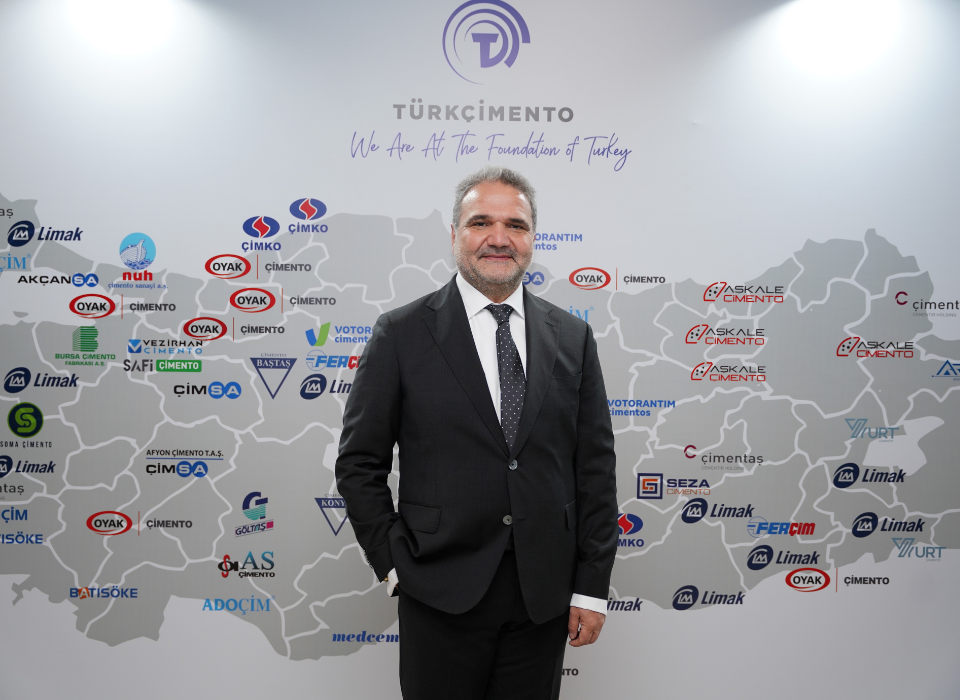
TURKÇIMENTO Chief Executive Officer Volkan Bozay made the following assessment on the matter:
"The Turkish cement sector has been operating since 2015 within a monitoring, reporting and verification (MRV) system aligned with the EU. All our facilities use low-emission dry-process kilns and our actual emission performance is well below the default values. Because no country-specific default value has been defined for Turkey, the application of the highest emission coefficients under the 'other countries' category is placing our sector at an unjustified disadvantage.
In the first 11 months of 2025, TURKÇIMENTO members, representing approximately 94 percent of the sector, achieved a clinker production of 75 million tonnes. Turkey is also the main supplier of clinker and cement imports to the EU."
Bozay, drawing attention to the fact that the current default values do not reflect actual production conditions, stated the following:
"The actual data reported by our members exporting to the EU during the CBAM transition period shows that emissions for grey cement clinker are realised at a level of 0.88 tCO₂/tonne. By contrast, the default value used for Turkey in EU legislation is 1.551 tCO₂/tonne. This difference generates additional costs that do not reflect actual emission performance and raises discussions about the fair and correct implementation of the CBAM."
Impact on EU Citizens as Well
Emphasising that if there are delays in the verification of actual values, the difference between actual and default values will become a serious financial burden, TURKÇIMENTO Chief Executive Officer Volkan Bozay stated the following:
"When this difference is calculated with current EU ETS prices, it increases the carbon cost for one tonne of clinker from approximately EUR 20 to EUR 80. The resulting amount exceeds even the average unit price of products exported to the EU, directly threatening the economic sustainability of exports. If the CBAM is applied in this form, a significant portion of the additional costs incurred will be reflected in final product prices and ultimately affect consumers in the EU. For this reason, the timely activation of verification capacity and the realistic updating of default values are of critical importance. This situation could produce a result that is not fully in line with the fundamental principles of the Customs Union."
On the other hand, Bozay also drew attention to certain technical issues that need to be clarified in the implementation:
"Our cement sector is focusing on increasing the use of renewable electricity. However, for a small to medium-sized cement plant to meet its own consumption entirely from renewable energy, a solar plant capacity of approximately 50–70 MW is required. An investment of this magnitude is often technically impossible to construct and directly connect within or immediately adjacent to the factory site. For this reason, producers have to carry out renewable energy investments at different locations. Within the scope of the CBAM, there is a need for clear rules that will ensure that these investments and the reported actual production data are recognised in indirect emission calculations. In addition, there are ambiguities in the legislation in areas such as embodied carbon methodology, electricity emission coefficients and free allocation adjustments when the final product is cement."
Bozay set out his proposed solutions for ensuring fair competition conditions while protecting the environmental objectives of the CBAM as follows:
"Our sector's priority is the careful preparation and verification of emission reports within the scope of the CBAM. However, particularly in the early years, there is a possibility that delays will be experienced in verification processes and verification capacity will prove insufficient. Site visits and initial verification procedures may take longer than expected. In this case, the application of default values that do not reflect actual emission performance could disproportionately affect low-carbon producers negatively. The fact that Turkey has had an MRV system similar to the EU's since 2015 provides important assurance for both exporters and importers in terms of being able to make assessments on the basis of actual data. For the CBAM not to become a de facto trade barrier, it is important to allow the use of national values based on MRV system data compatible with the EU, rather than general default values under the 'Other Countries' heading. Until the verification infrastructure is fully operational, actual emission data should be taken as the basis and disproportionate financial burdens should be prevented. Otherwise, as a system that cannot distinguish between low-carbon and highest-carbon producers, the CBAM's objective to support low-carbon production will remain merely a non-tariff technical barrier. In this respect, processes related to accreditation, such as the final list of accredited bodies whose scope is not clarified in the CBAM implementation, and secondary regulations and technical issues in the EU's internal legislation must be clarified as soon as possible."
Gallery