Turkey Artificial Intelligence Initiative Publishes 2025 Workshop Report

The Türkiye Artificial Intelligence Initiative (TRAI) took the pulse of the growing ecosystem, which reached 411 domestic artificial intelligence startups in 2025, at the workshop it organized for the eighth time this year. The report, which conveyed the strategic topics discussed at the workshop, addressed the economic impact of artificial intelligence, the entrepreneurship ecosystem, employment, ethics and Agentic AI (artificial intelligence agents).
Turkey's AI Initiative (TRAI) took the pulse of the growing ecosystem of 411 domestic AI startups at the eighth workshop it organized this year. The report conveying the strategic topics addressed at the workshop covered artificial intelligence's economic impact, entrepreneurship ecosystem, employment, ethics, and Agentic AI.
The report noted that artificial intelligence could contribute nearly 1% annually to Turkey's economy and carry a potential savings of 4–5 billion dollars in the public sector alone; current situation, priorities and solution proposals were comprehensively addressed.
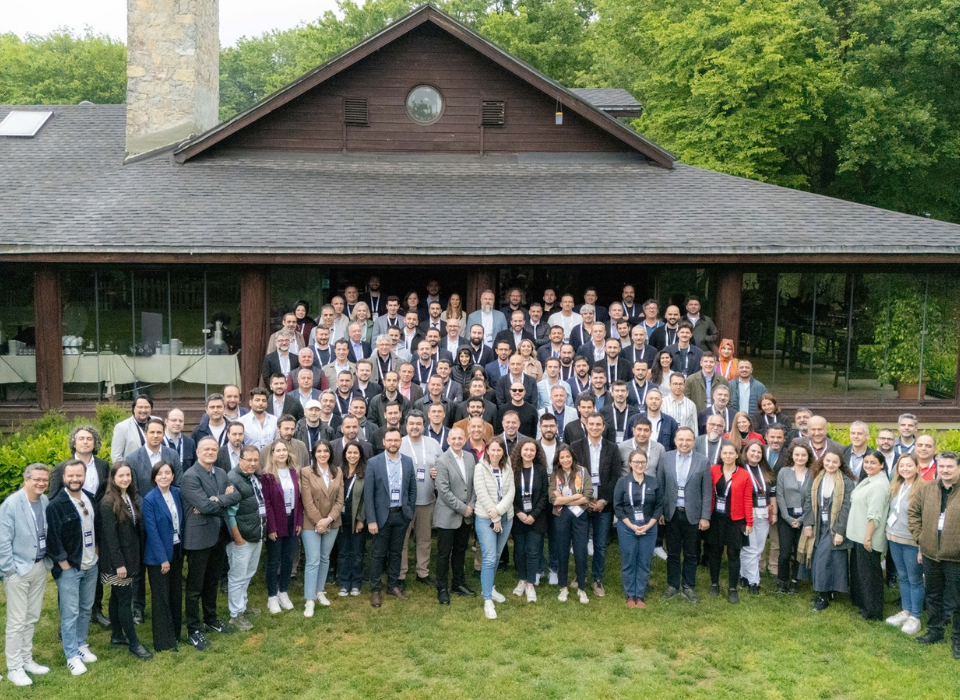
Turkey's AI Initiative (TRAI), which continues its work to increase awareness in the field of artificial intelligence and strengthen collaborations among ecosystem stakeholders, shared the report of its eighth annual workshop with the public.
Among the notable highlights of the report were that artificial intelligence could contribute approximately 1% annually to Turkey's economy, and that solutions developed in the public sector alone could generate savings between 4 and 5 billion dollars. In an ecosystem where 411 domestic AI startups are operating, the potential aggregate valuation of these startups was noted to be between 2 and 4 billion dollars.
Key takeaways from TRAI's 8th Annual Workshop Report:
5 billion dollars in savings possible in public services with AI
Artificial intelligence's economic impact is transforming not only the private sector but also public services. While smart investments can provide annual contributions of 1–2% to GDP, strengthening applications such as e-Government and e-Health with AI creates billions of dollars in productivity potential in health, tax and audit areas.
AI startups in Turkey have potential to become unicorns but the playing field is small
In Turkey, with 411 active AI startups, scaling, finding investment and globalization remain major obstacles. It is emphasized that public procurement systems need to be revised, data sharing models clarified and regulatory systems established for startups to grow.
Your new coworker might be an artificial intelligence agent!
"Agentic AI," or autonomous artificial intelligence systems, are launching a new era in business with software architectures that replace human involvement in decision-making and implementation processes. Though Turkey is at an "early discovery" stage in this area, this technology is expected to shape institutional life over the coming 3 years.
AI doesn't end jobs, it redefines them: new professions on the way
As routine tasks are delegated to automation, human-focused skills such as analytical thinking, creativity and empathy become more valuable. Successful countries are making progress not only in technology investment but also in reskilling and supporting the workforce. For Turkey, this transformation requires comprehensive planning spanning education to social security.
If artificial intelligence is not secure, it is not powerful either
The report emphasizes that trustworthy artificial intelligence is possible only through ethical design, transparent governance and stakeholder participation. Creating a national ethical framework is among the recommendations.
Findings from the Workshop Survey
Results from the survey in which 134 ecosystem stakeholders participated in the workshop are as follows:
• Productivity-focused expectations: The number one expectation of participants is clearly "increased productivity." Artificial intelligence is viewed not as a "cost-saving tool" but as a means of running business processes more intelligently and generating new value.
• Maturity level "operational": Most companies define their AI maturity level as "operational." That is, the technology has moved from "experimentation" to a "results-producing" phase. However, there are still gaps in terms of pioneering.
• Trust concerns emerge: To the question "What is your biggest concern about artificial intelligence?" the most common responses were "misinformation" and "manipulation." This shows that social and ethical risks rather than technical ones are taking precedence.
• New technology on the radar: Generative AI tools (ChatGPT, Gemini, CoPilot, etc.) are widely used. However, Agentic AI—autonomous AI agents—is still deployed on a limited scale. Participants see this technology as "the next big leap."
"Ecosystem growth is possible through adoption of a collaborative production culture"
In his assessment following the workshop, TRAI General Director Can Sinemli, emphasizing that Turkey must take strategic steps quickly to compete globally in the field of artificial intelligence, stated: "While we have serious potential today, turning this potential into reality requires us to strengthen both coordination and implementation capacity. We need a structure in which everyone from startups to the public sector, from academia to investors, is focused on the same goal. In particular, human resources development and increased application-focused projects are among the most critical components of this process. Ecosystem growth is possible only through adoption of a collaborative production culture."
"Strengthening ethical frameworks and regulatory structures should be a priority"
Noting that the widespread adoption of artificial intelligence technologies requires not just a technical transformation but also social, legal and ethical restructuring, Sinemli continued: "New risk areas emerge with evolving technologies. For this reason, we must develop artificial intelligence systems that are bound by ethical principles and are secure and transparent. To secure and sustain the public's trust in this transformation, clear regulations are needed on topics such as data rights, accountability and fair use. Updating existing policies and establishing a more inclusive oversight mechanism in implementation will enable Turkey to become a stronger artificial intelligence player on the international stage."
Gallery