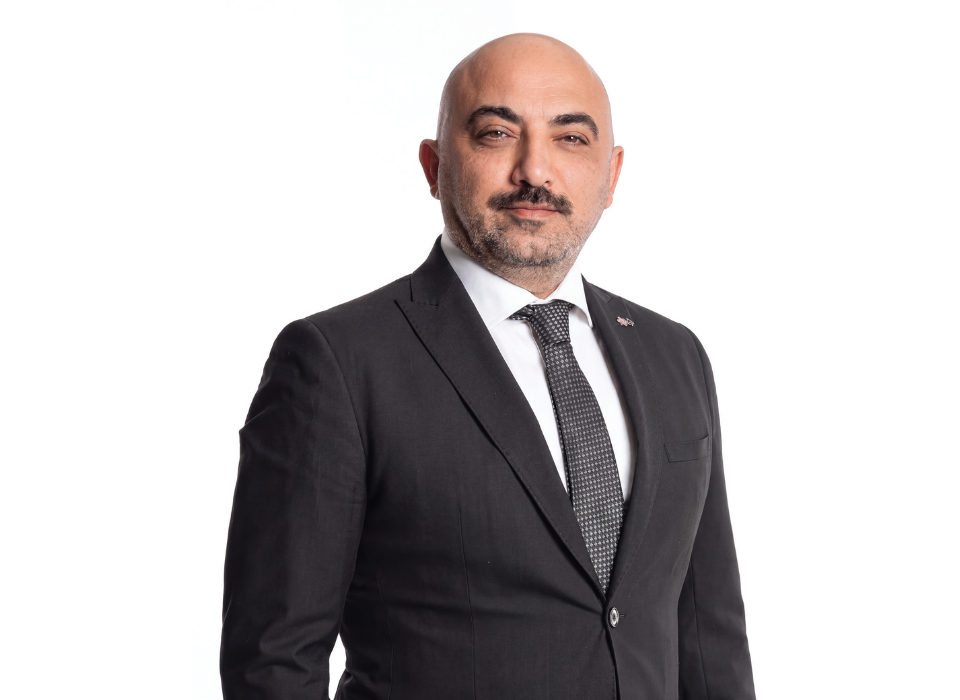
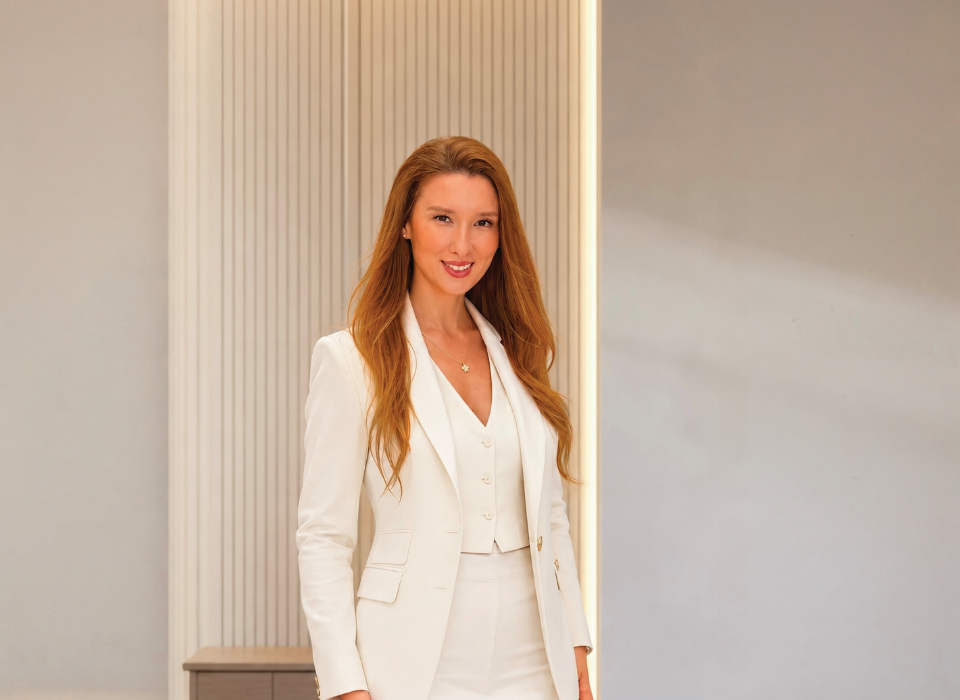
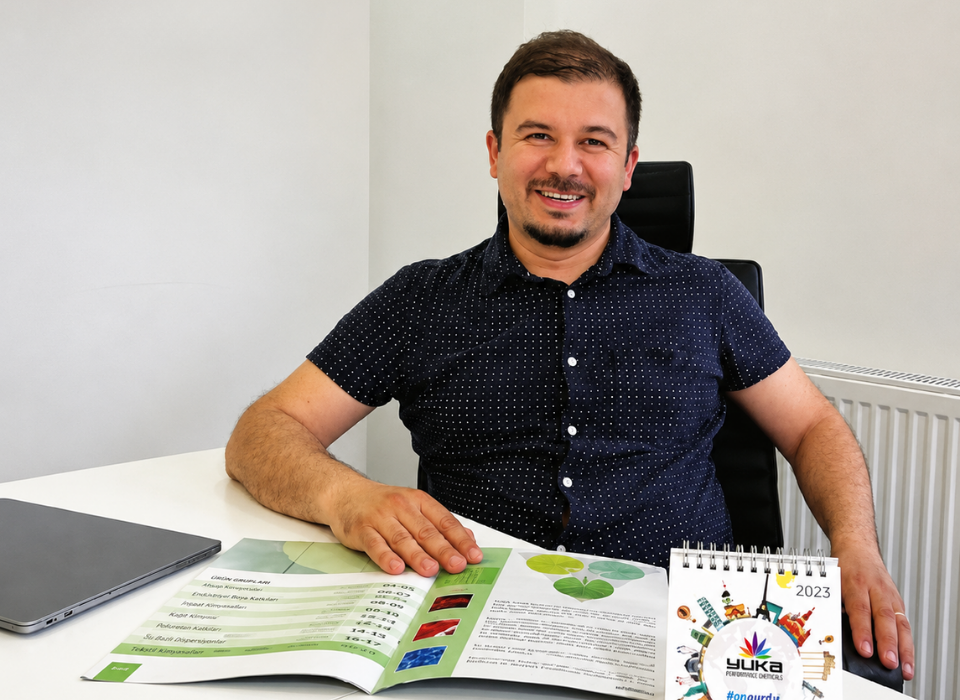
Koç University Faculty Member Prof. Dr. İskender Yılgör is one of our country's most valuable and industrially active academics, drawing on the strength of science and research to bring original and practical solutions to numerous industrial problems. In our interview, we gathered his views on many topics, from the life journey that carried him into the world of science to the current state of university-industry cooperation in our country.
Report: Gamze Ünal
Prof. Dr. İskender Yılgör, a faculty member at Koç University, has brought numerous tailored and practical solutions to industry problems through his scientific work and research, standing as one of Turkey's most valued and industrially active academics. In our interview, we gathered his views on many subjects ranging from the life journey that led him into the world of science to the current state of university-industry collaboration in our country.
**First, I would like to start with memories you recall from your childhood...**
I was born and raised in a large house with a garden in Mersin. Our garden contained various fruit trees, particularly orange trees. My grandparents' homes were also in the same garden. My paternal grandmother and my aunt lived in our house. We are six siblings, and I am the eldest. Growing up with the entire family together was a pleasant environment. My grandfather was a greengrocer, so they also grew vegetables on one side of the garden. We watered our garden on certain days of the week by directing the shared water channel—as described in the novels of Fakir Baykurt and Yaşar Kemal—toward our garden for a specific period. We climbed trees, picked fruit and vegetables. One of my favorite things was picking mulberries. Recently, I asked my nephews, "Do you have a mulberry tree in your garden? Have you ever climbed it and picked mulberries?" Of course, they hadn't. Climbing trees was easy, but getting down was harder. You had to develop a strategy for it. Unfortunately, today's children don't have such an opportunity.
In those days, there were very few vehicles in Mersin. Because of this, the streets belonged to children, and I grew up playing every kind of street game imaginable. In different games, you had to develop different strategies for how to do it better and how to win. Summers were very hot, so we would go up to the highlands in Gözne. There we learned about nature. Several times a week, my siblings and I, along with friends, would leave home in the morning, wander the surrounding mountains, and discover new places. We would bring some food to eat. To not get lost in the mountains, to be able to find water and food, you had to carefully explore and learn your surroundings. Because of this, we memorized where every spring was, where every wild fruit tree was. Sometimes we would encounter creatures that were part of nature, like snakes and scorpions, and we knew how to deal with them. In today's world, I think it would be unimaginable for parents to let their children roam mountains like this. As I tried to mention above, I can say I had a very pleasant and colorful childhood. I believe my childhood experiences had very positive effects on my career in terms of making rational plans, taking risks, and developing strategies.
[Image]
**What can you tell us about your primary education?**
I attended Cumhuriyet Primary School. The school was approximately one kilometer from our house, and we walked there and back. We had an excellent class teacher named Suna Arkun. When she noticed I was different from other students, she paid me more attention, and this had a very positive impact on my development. My father was a professional photographer. Since there was no high school in Mersin, he could not continue his education after middle school. However, he had seen Atatürk and received education at community centers. For this reason, he wanted all of us to receive very good education. After finishing primary school, I went to Akdeniz Collegiate. The classes were small, the teachers were excellent, and English instruction was very intensive. We had an English teacher named Küşade Turunç who had done her master's degree in the United States. By the time I finished middle school, I had completely learned English. This had a very positive impact on my life.
In middle school, I had a math teacher who cared deeply for me. His name was Osman Çağlayan, and I believe he was a graduate of the Village Institute. He also taught Commerce, which was in the curriculum at that time, and I loved that subject very much. Although there were high school students at the school, when I was in eighth grade, Osman Bey told me one day: "We are going to establish a cooperative at school, and you will manage it!" About 100 students became cooperative members, each contributing 10 lira as capital. We made an arrangement with a stationery supplier and purchased the necessary materials. The school gave us a small shed. In eighth grade, we started selling pens, erasers, notebooks, paper, and other items that students needed. While everyone else played during recess, we sold at the cooperative and in the evenings we recorded sales in a ledger like a company would. I think I kept about five different ledgers: a daily journal, a merchandise ledger, a fixed assets ledger, and others. At the end of the year, I distributed 10 lira profit shares to each partner! This taught me so much. Later, I began keeping all my father's ledgers.
[Image]
First day at Toros Collegiate
I transferred to Toros Collegiate for high school. This was because most of our teachers from Akdeniz Collegiate, including Osman Bey and Küşade Hanım, had transferred to Toros. Our class had 15 students. I received excellent education there as well. After classes in middle and high school, I would go help at my father's photography shop. My siblings did the same after me. I would clean and sweep the shop, dry photographs, trim their edges, and number them. When customers came, I would deliver their photographs, and when needed, I would help my father in the darkroom. When my father was not there, I sometimes took photographs. In between, I would do my homework and study my lessons. In the shop, we had to prepare different chemicals to process films and photographs. My father would give us formulas, and I would prepare all of them. My favorite thing in the darkroom was throwing copper 5 and 10 kurush coins into the hyposulfite bath and watching them get plated with silver. I believe all these experiences had a very positive effect on my career. Because as a customer or visitor, I had the opportunity to meet, interact with, and gain experience in the business world from people from very different walks of life. In 1968, I graduated from Toros Collegiate with first honors and was the first graduate.
**How did your interest in chemistry begin?**
My father had many doctor friends who came to his shop. One of them was a family friend named Zühtu Ungan who ran a biochemistry laboratory that performed analyses for these doctors. I can say that Zühtu Uncle was the most influential person in my becoming a chemist. Zühtu Uncle was a very intellectual person and believed science was very important. I would visit his laboratory, observe him, and ask questions. In those days, there were no electronic devices, so everything was done with simple tools. The most sophisticated instrument was a microscope. While watching him conduct experiments, he would give detailed answers to my questions, and he would also ask me questions. These are the reasons that led me to become a chemist.
When I took the university entrance exam, I marked only the Chemistry Department and was admitted with a high score. I started in the first year in October 1968 without completing preparatory school. Everything was going well until January 6, 1969, when the U.S. Ambassador Komer, who was visiting our university, had his car burned in front of the Rectorate, and after that our educational life changed completely. The university closed for an extended period, and over the next four years, no semester started or ended on time. Nevertheless, as a member of the 1968 cohort, the Chemistry education I received at Middle East Technical University was excellent. I believe at that time Middle East Technical University was a world-class university. After graduation, although many of my friends went abroad, I never considered going to the United States for my doctorate. I began my graduate studies in Polymer Chemistry under Prof. Bahattin Baysal. The Polymer Research Institute at Middle East Technical University that he established consisted of young faculty members who conducted scientific research and collaborated on almost every topic related to polymers. Our laboratory facilities were excellent, and we could take courses and develop ourselves in every field. Because of this, the Institute became very successful and trained many scientists. Currently, there is no such well-equipped group in Turkey, and almost everyone works independently. As a member of the 1968 Cohort and Middle East Technical University, in addition to education, we had and learned very different social and cultural experiences. All of these made very important contributions to the development of our personalities.
**How did you decide to go to America?**
During my doctorate, I met my wife Emel (Özgören) Yılgör, who was studying in the Chemical Engineering Department at Middle East Technical University. After my doctorate, as a young scientist, I began working and teaching at Middle East Technical University as an Assistant Professor. Everything was going well, but towards the 1980s, political and economic difficulties were increasing in our country. This naturally affected our scientific work as well. For example, it was often impossible to purchase materials for the laboratory or to have broken equipment repaired. At that time, my wife Emel graduated from Chemical Engineering, we married, and at the end of March 1980, we went to America to Virginia Tech for about a year or two to conduct research. The Virginia Tech Polymer Group had been established in 1977 by three professors who complemented each other and worked together very harmoniously. Jim McGrath worked on organic chemistry and polymer synthesis, Tom Ward on physical chemistry and characterization, and Garth Wilkes on engineering and polymer morphology. In short, research was being conducted in all fields related to polymers. Because of this, you could see the big picture. Between 1980 and 1985, I visited the best polymer laboratories in America and saw that the Polymer Institute at Middle East Technical University was at an equivalent level to them, and I was very pleased with the decision I had made about my doctorate. The research environment at Virginia Tech was motivating and inspiring. My wife was also conducting research. We could do any research we wanted, attend any conference, and we were learning so much. We made learning enjoyable. For this reason, even though we initially thought we would stay for two years and return, we decided to resign from Middle East Technical University and extend this period.
[Image]
At TUBITAK Award Ceremony
By 1985, the Virginia Tech Polymer Group had become one of the best groups in the world. One of the most important things that caught my attention from the beginning and that I was curious about was Prof. McGrath's broad perspective, his extensive knowledge, and the numerous practical solutions he offered for problems. I learned that the reason for this was that Prof. McGrath had worked in industry for 17 years before entering academic life. This was a situation I had never observed in our country. Because of this, at the end of the fifth year, instead of returning to Turkey, I decided to work in industry in America. In particular, I wanted to gain experience in research, production, and management by joining a small company. In Berkeley, California, my wife and I began working at Thoratec, where I served as Vice General Manager of Research and my wife, a Chemical Engineer, served as Director of Process Development and Manufacturing. We worked hard at Thoratec, learned a lot, and gained unique experiences. The most important of these was taking materials we developed in the laboratory at 50-100 gram scale through the pilot production phase and producing them at commercial scale and marketing them as successful products. While working at Thoratec, a German company called Goldschmidt became interested in the silicone and polyurethane technologies we had developed, and they offered my wife and me a job to establish an R&D center and production facility for these areas at their factories in Hopewell, Virginia. We accepted this offer. Additionally, the company purchased some of the technologies we had developed at Thoratec. All of these products are now being marketed commercially by Evonik, which acquired Goldschmidt. Our approximately 10 years of industrial experience in Berkeley and Hopewell added a great deal to us. We learned many commercial polymer problems and produced or tried to produce scientific solutions to them through research. All these experiences also had very large contributions to the education we provided and the research we conducted at Koç University.
**Subsequently, we see you as founding faculty members of Koç University's Chemistry Department...**
While working at Goldschmidt, we went to San Diego to attend the American Chemical Society's spring congress in 1993. A friend we had known for many years, Prof. Burak Erman, was also there, and during dinner one evening, Burak said to us: "A new university called Koç University is being established in Turkey; its Founding Dean is Atilla Aşkar, who was my classmate. I am starting to work there. But I work theoretically while you are experimentalists. Come and let's establish the Chemistry Department together." A few months later, at a meeting held annually in Washington by ATAS (Association of Turkish American Scientists) in the fall, we met with Koç University Rector Prof. Seha Tiniç, obtained information, and later had a meeting with Dean Prof. Atilla Aşkar at the Empire State Building in New York. Attila shared the university's goals and vision during our meeting. In the summer of 1994, we came and visited the university, and my wife Emel and I decided to return to Turkey and work at Koç University. Here we established our polymer research laboratory and student laboratory from scratch. After moving to the new campus, with 10 million dollars in support we received from DPT (State Planning Organization), we established the Surface Technology Research Center (KUYTAM) and the Health Sciences Institute. My wife Emel made very significant contributions, especially in setting up the laboratories. In 1996, we received a very large research project from the Ministry of National Defense on "Production of Cold Climate Clothing in Turkey." We produced a material the Ministry had previously imported and obtained a patent for it. We had very bright and curious students. At the undergraduate level, we started working with them in the laboratory.
The early years of the university were truly wonderful. Family members of the Koç family—Vehbi, Rahmi, Semahat, Suna, and Sevgi—would attend year-end dinners and sit at separate tables with faculty members. They did this both to get to know the faculty and to discuss their own goals for the school, as well as to get information from faculty about how the school was progressing. They owned the school in a very serious manner. At the year-end dinner in 1995, Vehbi came to our table and said: "I thank you for leaving your work and position at one corner of the world, trusting me with your name, and taking a risk by coming here." He said: "I did not receive formal education and do not know languages, but I accomplished very great things. I want our young people to be even more successful. I am prepared to provide whatever financial support is necessary for this university to become one of the best universities in the world." We never forgot these conversations with the elder of the family. This remains our most important source of motivation. Since returning to Turkey, we have touched the lives of hundreds of students. Many of them went to America and obtained doctorates. We told them all the same thing: "After your doctorate, do not return to Turkey without working in industry!" Many followed this advice and became very successful. Some returned to Turkey, and some continue their careers successfully in various parts of the world.
Regarding our scientific work, we have published two books and approximately 150 scientific papers so far, and we have obtained around 20 international patents. We have won various awards both domestically and internationally. One of the most important of these is the TUBITAK Science Award I received in 2003.
[Image]
With Vatech Poly company managers
**What do you think about university-industry collaboration?**
At Koç University, we conducted innovative product-oriented research projects supported mostly by American and European companies, and we developed original commercial products with high added value. We made scientific publications and obtained patents related to these studies. Through these studies, we provided examples of how scientific research projects starting with 5-10 gram experiments in a university laboratory could be transformed into successful commercial products. Even though we were in Turkey, companies producing original products based on knowledge found us to solve their problems. Let me give you a new example of this. A few months ago, I received an email from China saying: "We are China's largest sports shoe manufacturer. We read your old papers and thought we could improve the performance of our shoes by using some of the polymers you developed there. Can you help us?" It is necessary for such offers to come from companies in our country as well for effective university-industry collaboration. As far as I can see, our chemical industry is focusing on easier products that do not carry risk rather than developing original, knowledge-based products with high added value. I think one reason for this is that industrial R&D groups do not conduct regular and effective scientific publication and patent research or investigation. To break this vicious cycle, it is necessary to establish an effective University-Industry collaboration system. Because only in this way will it be possible to develop original and innovative products. Previously, I looked for the reason for the lack of effective industry-university collaboration in our country in the universities' inadequate financial project support to industries. Unfortunately, I later realized that our universities also do not have many groups capable of conducting such projects, since generally individual work is done rather than team work. I believe that to solve complex industrial problems, universities need to establish large-scale research groups or institutes working on complementary subjects.
**What do you think about education in Turkey?**
Education starts in the family. Currently, the education received from family and society appears quite insufficient. I grew up in an extended family. My grandfathers, grandmothers, mother, father, aunt, and uncle all took great interest in us and I learned different things from each of them. My upbringing and education started there. As I described above, at the schools we attended, classes were small, teachers were well-educated, very knowledgeable, and took close interest in us. In middle and high school, we received quite intensive education with emphasis on science and social sciences. This was very effective in shaping our personalities. There were few universities, but quality was high. University graduates could find very good jobs. Currently, all of these are quite different. The PISA test results conducted by the OECD to measure the quality of middle and high school education have been very poor for years. We see the negative consequences of these in students coming to university. These need to change. South Korea, China, Singapore, and Taiwan did these and became very successful.
**What are your recommendations for young academics or those who want to become academics?**
First, they need to make continuous learning a way of life. If they do their doctorate in Turkey, after completing it, it is important that they do a postdoc at one of the world's best universities. They need to see how scientists in the world think, how they work, how pioneering research is conducted, and learn about these things. If possible, working in industry for a while and seeing real problems related to their field and the original and innovative scientific solutions developed to overcome them can also be very helpful. Many people in academia focus on slightly improving some existing work and publishing. Throughout my career, I did not conduct research to publish. I did research to learn the unknown and to raise people's quality of life. Instead of publishing a large number of papers, I published quality, universal papers that attract the interest of researchers and have applications. My professor in America would say: "A paper that interests no one is garbage, but your name will remain there forever. If you are going to write garbage, don't write at all!" I think that for young academics to succeed, they need to have a very broad perspective, speak and write English very well, read continuously and learn new things, and conduct collaborative work with people and groups working on subjects that complement their own research rather than working individually. Thank you very much.
Gallery


Advertisement
Ad Space728 × 90