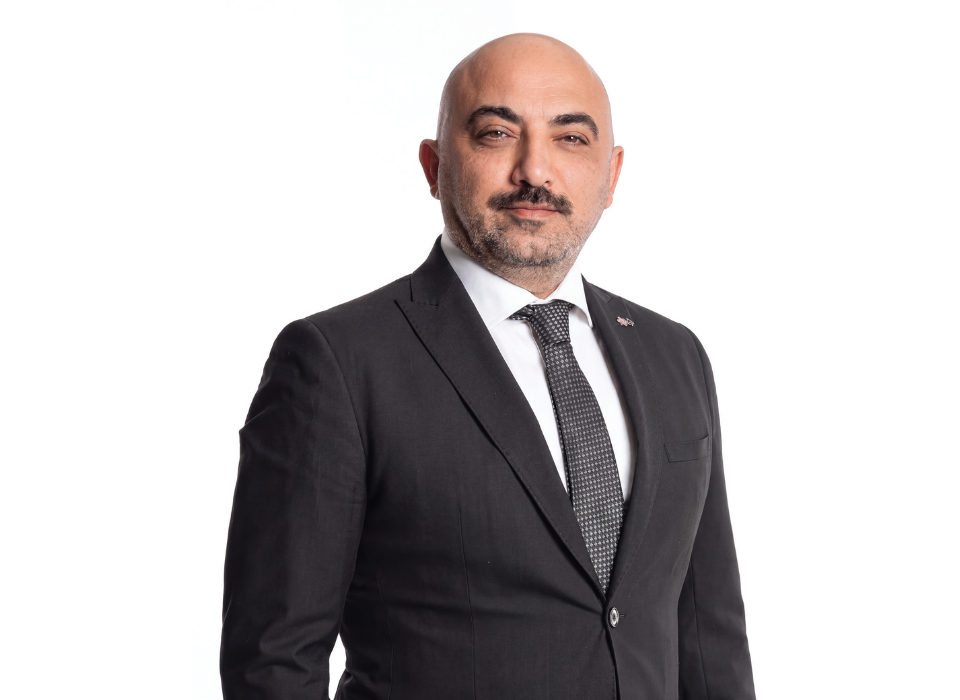
Onur Özyurt, General Manager of Balparmak, on Natural Honey and Honey Analysis Methods
We conducted a pleasant interview with Onur Özyurt, General Manager of Balparmak. Özyurt provided detailed information about the company while discussing natural honey and honey analysis methods.
Could you tell our readers about yourself and your professional background?
I am a graduate of the Business Administration Department at Boğaziçi University. I completed my master's degree at Boğaziçi University in economics and finance, and later completed the General Management Program at Harvard Business School. I held various management and board-level positions in the pharmaceutical, healthcare, entertainment, retail and fast-moving consumer goods sectors in Turkey, the Middle East and the Balkans. In the two years before joining Balparmak, I was based in Singapore working to facilitate the expansion of Turkish brands into Southeast Asia. I joined Balparmak as General Manager in December 2020.Could you tell us about Balparmak's founding and success story?
Since our founding in 1980 as Balparmak, we have pioneered the development of Turkey's honey sector and connect our consumers with honey in its purest and most natural form. As the first branded company in Turkey's honey sector, we became the country's best-selling honey brand in 1989. We conduct our operations with the mission of "supporting sustainable beekeeping, instilling in public consciousness the contributions of bees to ecosystems, and establishing bee products as an essential element of healthy living by preserving their natural character and purity." Our product range includes filtered flower honeys, pine honey, monofloral honeys, the Apitera series, BallıMix and pure propolis. Today, as the leading company in Turkey's honey sector, our facilities spanning 30,000 m² operate with a processing capacity of 32,000 tons per year in three shifts with 297 employees, placing us among Europe's largest honey packagers. In our Research and Development and Quality Control Laboratory, we subject honey and other bee products sourced from our beekeepers throughout Turkey to analyses encompassing more than 100 parameters. As Turkey's largest branded honey exporter, we export to more than 20 countries including Germany, Austria, the Netherlands, Belgium, France, the United Kingdom, China, Azerbaijan, Singapore and Japan. Alongside our pine and flower honeys, we also bring our Balparmak Apitera series, propolis, Katla Balla and BallıMix products to consumers abroad. Beyond all this, we believe it is our responsibility to protect the future of bees, honey and the beekeeping profession. For this reason, we contribute to sustainability through corporate social responsibility projects to raise public awareness about the contributions of bees to nature and society, recruit women and young people to the beekeeping profession and support their professional development, and support the production of quality and value-added bee products.Could you provide information about your domestic and international sales volume?
Since 1991, we have held the position of Turkey's leading honey brand and the 6th largest brand in the global packaged honey market. Today we hold 51% of the market. Our 40th year, 2020, was a year of extraordinary circumstances for our sector as well. With the pandemic, demand for honey and other bee products that support immunity and benefit health increased significantly both in our country and in many countries around the world. In particular, propolis, one of the bee products that naturally strengthens immunity, became one of the most preferred products by consumers.Could you provide information about what to pay attention to when selecting honey?
If you prefer packaged, analyzed and reliable branded products when buying honey, you will have access to natural honey. When beekeepers strain honey from the honeycomb, some organic or inorganic substances may mix with the honey. Therefore, before offering it for consumption, these contaminants not naturally present in honey must be removed. For this reason, only analyzed and packaged honey should be purchased.Honey analysis is quite important for understanding the natural nature of honey. But how is honey analysis performed?
As Balparmak, for exactly 40 years we have carefully selected the best honeys of the country within the scope of food safety and hygiene. We regard food safety and hygiene, which form the foundation of our quality policy, as both our work and responsibility. Within this framework, in our accredited Research and Development and Quality Control Laboratory, we analyze honey across different stages in more than 200 parameters to verify and carefully select its natural character and purity. However, we continue to develop new analysis methods to determine that honey is natural and healthy. We source natural honey from our beekeepers who work hard to produce it throughout our country, from Thrace to Anatolia. In this sense, we maintain equal distance to all our beekeepers who supply us with natural honey within the scope of the Turkish Food Codex Honey Notice criteria, rather than practicing contract beekeeping. We subject honey to quality control in four stages in our laboratory throughout the process from the hive to the table. In the first stage, honey and other bee products sent by our beekeepers and suppliers from every region of Turkey on a batch basis to the Honey and Other Bee Products Research and Quality Control Laboratory are analyzed for compliance with our raw material standards created taking into account the Turkish Food Codex Honey Notice criteria. Honey meeting the standards is approved as a pre-sample and sent to our facility. In the second stage, pre-samples arriving at our facility are subjected to the same analyses again in terms of compatibility with the previous batch, and suitable samples are purchased as raw material. In the third stage, honeys are blended according to their region or botanical origin, analyzed and stored as semi-finished products. In the fourth and final stage, before being packaged and offered to the market, it is analyzed again as a finished product and the analysis results of each batch are fully documented.As a company in the food sector, could you discuss the importance of R&D and the R&D activities you have undertaken?
As Balparmak, we believe that differentiation in our sector comes through innovation and R&D. Within this framework, we continuously invest in innovation and R&D to introduce firsts to our sector and develop innovative and value-added products. Our primary objective is to develop innovative products responsive to our consumers' needs by combining honey, which we preserve in its natural character and purity through analysis in at least 92 parameters, with other natural and healthy bee products. For this very reason, we diversify functional foods to match both our consumers' needs and tastes. This year, in addition to banana and orange varieties of ApiteraMix, we added our new products ApiteraDox and ApiteraGest to our product range. Moreover, in our Balparmak R&D centre, we conduct joint scientific research projects with universities, research centers and laboratories both in Turkey and abroad, as well as new product development work. Currently, we are continuing work on the project "Determination of the Effects of Different Feeding, Storage and Packaging Techniques on Quality Parameters and Economic Sustainability in Royal Jelly Production" being conducted together with TAGEM – Aegean Agricultural Research Institute.Balparmak has a QR code application. Could you briefly describe this application?
The priospot application on Balparmak packaging represents a world first in the food sector. Through this system, consumers can see the Balparmak quality control and pollen analysis reports of the product on the shelf. In our quality control analysis report, the results of honey's quality values contained in the Turkish Food Codex are provided along with the values that should be present. In the pollen analysis report, the pollens contained in the honey are presented to our consumers along with descriptions of 6 nectar source plants. Particularly given that honey is among the most easily counterfeited and adulterated foods, the importance of the priospot application on our packaging is once again apparent. With priospot, we provide consumers with assurance of the quality, naturalness and healthfulness of honey before they even purchase the product. For this, it is sufficient for the consumer to scan the QR code on Balparmak packaging with a smartphone.Could you describe the activities taking place at Balparmak Beekeeping Academy, which was established to make the beekeeping profession sustainable? What rewards await successful participants at the academy?
As Balparmak, since 2004 we have been providing training to our beekeepers on modern beekeeping techniques aimed at increasing quality and productivity, as well as raising awareness about issues adversely affecting bee populations such as water and environmental pollution and climate change. In 2018, we expanded the target audience, scope and impact level of these trainings further and transferred them to a different platform, establishing the Balparmak Beekeeping Academy with the support of the European Bank for Reconstruction and Development (EBRD). With the Beekeeping Academy, our goal is to contribute to the sustainability of the beekeeping profession by recruiting women and young people from rural development regions to the sector and supporting increased production of value-added bee products such as royal jelly, pollen and propolis alongside honey. We began our trainings in December 2018 at our facility in Muğla Ula, which cover the fundamental topics ensuring quality production in the beekeeping profession and making it sustainable, such as bee life and biology, colony care and management, bee diseases, queen bee production, bee product production, beekeeping equipment, regulations and nectar-producing plants. Alongside our classroom trainings, we also conduct trainings during village visits with our mobile training vehicle, practically demonstrating the production of honey and bee products while updating the knowledge of our existing beekeepers. We were the first in Turkey to offer online training. We also received requests for this training from abroad. Through distance education provided via the Balparmak Beekeeping Academy website, we offer anyone who wishes access to basic beekeeping information at any time. We graduated our first cohort in 2020. In addition to distance education, 104 beekeeping candidates, including 52 women, who successfully completed three-week theoretical and practical trainings at the academy, earned the right to receive certification from Bal-Der (Healthy Living with Bee Products Platform). We supported our graduates in taking their first steps into the profession by gifting them two populated hives. We currently have 2,800 beekeeping candidates enrolled in our distance education program who continue the training program. We have sent certificates to 750 candidates who successfully completed the distance training. Furthermore, as Balparmak, we signed the "Sustainable Beekeeping, Value-Added and Efficient Production Protocol" implemented under the leadership of Muğla Metropolitan Municipality. The four-party protocol signed by Muğla Metropolitan Municipality, Balparmak, Muğla Sıtkı Koçman University and Karabörtlen Agricultural Development Cooperative provides practical training to beekeepers in Muğla Ula and surrounding districts within the scope of the Balparmak Beekeeping Academy. We began our trainings in January with the participation of 25 beekeepers from Muğla in the initial phase. Beekeeping Academy trainings planned as 2 + 1 years are conducted face-to-face and practically in classes of 8 people. In trainings where the participation of beekeepers' spouses is ensured, we create awareness among beekeeping families, thereby aiming to enable women and young people to participate in the beekeeping profession and thus support sustainable beekeeping and local development. The Balparmak Beekeeping Academy has been recognized with the 2019 World Food Day Special Award by the Ministry of Agriculture and Forestry, FAO, TÜGİS and the Sustainability Academy for its contributions to the sector and successful work to date, the Felis Award in the Social Responsibility and Sustainability Section in the Social Issues Category, and the Success Award in the Sustainability Management Category. The Balparmak Beekeeping Academy continues to expand its training area and bring new beekeepers to the sector.Advertisement
Ad Space728 × 90