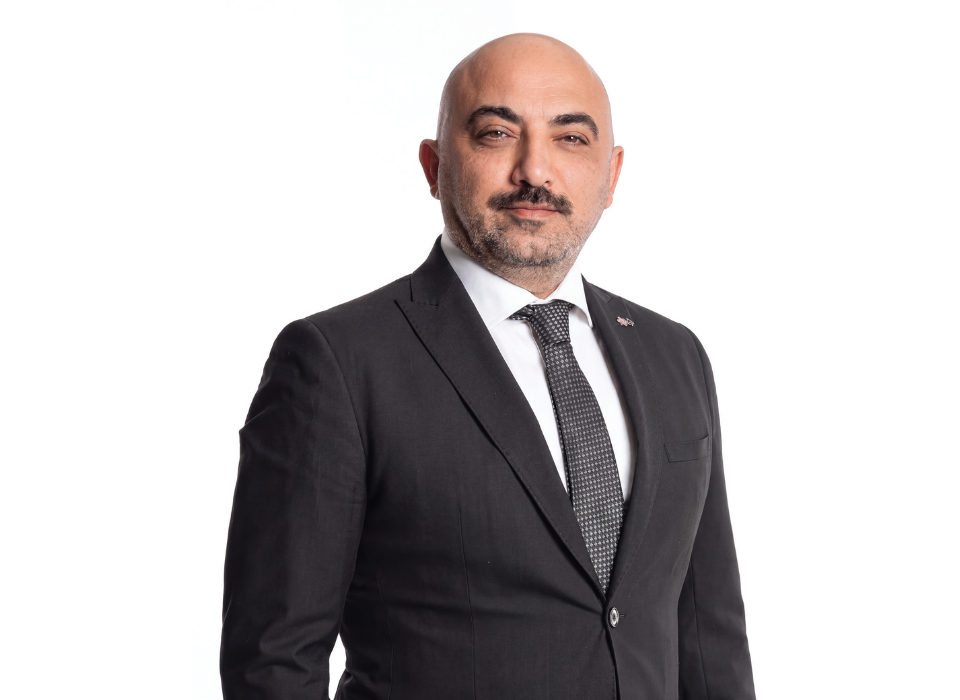
Interview with Savaş Malkoç, Secretary General of the Pharmaceutical Industry Employers' Union
We conducted an extensive interview with Savaş Malkoç, General Secretary of the Pharmaceutical Industry Employers' Association, on matters concerning the pharmaceutical sector. Malkoç provided information on biotechnological medicines and discussed the significance of pharmaceutical licensing processes for the industry.
Could you tell our readers about yourself and your professional background?
I am a graduate of the International Relations Department at Ankara University's Faculty of Political Sciences. I started my career in 1996 as an Assistant Foreign Trade Specialist at the Prime Ministry's Foreign Trade Secretariat Export General Directorate, and served as a Foreign Trade Specialist and Branch Manager in the same unit until 2006. Between 2000 and 2002, I completed my master's degree in Economic Policies at the University of Illinois in the United States. From 2006 to 2009, I worked as a Commercial Counselor at the Embassy in Budapest. Subsequently, between 2009 and 2013, I held the positions of Branch Manager and Department Head at the Prime Ministry's Foreign Trade Secretariat Export General Directorate. In 2013, I was appointed as Head of the Information Technology Department at the Ministry of Economy. Following approximately five years in this position, in 2018 I served for a four-month period as Advisor to the Deputy Minister at the newly renamed Ministry of Commerce. At the beginning of 2019, I was appointed to the position of General Director of the Ministry of Commerce's Risk Management, Liquidation and Revolving Fund Directorate, remaining in this position until the end of September before leaving public service. After nearly 25 years in senior public office, I assumed the role of General Secretary of the Pharmaceutical Industry Employers' Association (İEİS) as of October 2020.Could you provide information about the Pharmaceutical Industry Employers' Association? What are the association's objectives and activities?
The Pharmaceutical Industry Employers' Association is a pioneering and well-established pharmaceutical industry organization, with its foundation laid in 1964. Under the association's umbrella, 56 leading national and multinational companies whose primary activity is pharmaceutical manufacturing are represented. Our vision as an association is, in line with the objectives specified in the 11th Development Plan, to make our country a research and development, production and export hub, first regionally and then globally, in the pharmaceutical industry. In accordance with this vision, our primary missions are to protect the common interests of companies operating in the pharmaceutical industry, particularly our members, in their fields of activity, and in this context to represent our members before public institutions and other civil society organizations, and to play an active role in developing policies that will contribute to the development of the pharmaceutical industry and enhance its competitiveness. Today, the Pharmaceutical Industry Employers' Association continues its work relentlessly with the objective of enhancing research and development competency in our industry and positioning it as a global pharmaceutical manufacturer and exporter producing higher-value-added products, particularly in the biotechnology field.Could you briefly evaluate the Turkish pharmaceutical industry and market during the pandemic conditions of 2020? In this context, what is your view of the localization application that has been interrupted recently?
During the pandemic period, ensuring continuous pharmaceutical supply became one of the main objectives of both our association and our members. Indeed, the fact that no pharmaceutical supply disruption was experienced in our country during this period can be regarded as a success of our well-established pharmaceutical sector. Despite the difficulties experienced in raw material procurement, increases in prices and costs, and supply chain challenges, the fact that production continued uninterrupted is an indication that our sector has a strong foundation dating back a century. In numerical terms, the Turkish pharmaceutical market experienced approximately 7 percent contraction in units in 2020. From a value perspective, however, we see growth of around 17-18 percent. Our pharmaceutical industry made more than its fair share of sacrifices during this period. By taking swift action in the production of both Covid-19 and non-Covid-19 related medicines, it fulfilled an important role by ensuring that our population faced no difficulties regarding medicines. The localization application, which began in 2016, has unfortunately been suspended because it is the subject of a case at the World Trade Organization. With localization, we can say that domestic production in the domestic market increased significantly. While the share of domestic production was 43 percent in 2016, it rose to 52 percent in 2019. With the suspension of the localization application in 2020, there was some decline. However, with more than 50 percent domestic production on a value basis, Turkey is still in a position to meet its pharmaceutical needs. Our expectation as an industry is that the localization process will resume without delay and that the trend of increased domestic production we have achieved in recent years, and the resulting increase in exports, will continue uninterrupted.What is the importance of biotechnological medicines in treating diseases? Could you provide information about the differences that distinguish biotechnological medicines from conventional medicines?
The global pharmaceutical sector is part of the technological developments occurring in industry generally worldwide. In particular, the pharmaceutical sector is among those with the most intensive research and development investments and expenditures. In biotechnological medicines, which have seen a significant increase in market share globally in recent times in both production and sales terms, the active ingredients are not chemicals but living systems and organisms. Through this, biotechnological medicines contribute greatly to faster drug development, the creation of new treatments, and the advancement of patient-based treatment at the therapeutic level. Particularly worth emphasizing is that the share of biotechnological medicines is increasing every day both worldwide and in Turkey.İEİS established the "Turkey Biotechnological Medicine Platform" in 2016. Could you evaluate, in particular, the advantages that biotechnological medicines have brought to our country and will bring?
Because the raw material of biotechnological medicines is living organisms rather than chemicals, both the development and production of these products require significant innovation, technological accumulation, and investment. Therefore, every investment we make in this field in our country will itself contribute to the development of the research and development ecosystem. Starting from this perspective as the Pharmaceutical Industry Employers' Association, we established the "Turkey Biotechnological Medicine Platform" in 2016. A total of 23 companies, which have committed to investment in this field and are largely domestically-owned, are part of the platform. In fact, not all of these companies are members of our association because as the Pharmaceutical Industry Employers' Association we are open to all companies investing in this field. Looking globally, biotechnological medicines represent 25 percent of the total pharmaceutical market. This trend beginning in Turkey and the world is projected to reach approximately 35 percent over the next 3-4 years. In short, the Biotechnological Medicine Platform is a platform aimed at establishing and working in the biotechnological medicine sector in Turkey.What are your expectations from the state as a sector regarding the development of biotechnological medicines in our country? Could you provide brief information?
Biotechnological medicine is a rapidly developing sector that requires serious research and development investment. In this regard, it is crucial that the state supports this field through public policies, both directly and indirectly. In recent years, we have seen that our government provides significant support in terms of investment incentives. Particularly, the investment amount made by our platform members has reached USD 1.1 billion. We expect our government to provide support to our companies working and investing in this field in the form of direct cash payments, including clinical research. With regulations tailored to our conditions, considering scientific standards, and with serious government support, we can further open the way for the development of biotechnological medicines in our country.Could you discuss the difficulties experienced in pharmaceutical licensing processes and the actions that need to be taken to facilitate these difficulties?
Pharmaceutical licensing operations are among the most critical issues in the pharmaceutical sector. Because without a license, it is not possible to bring a product to market and pursue export. Licensing processes must be conducted quickly and effectively so that we can bring our medicines to market as quickly as possible, which ranks among our highest priority issues as a sector. At the point we have reached, we see that licensing processes have not proceeded at the desired efficiency and speed during 2020 and during the first three months of 2021. First and foremost, particularly our research and development companies have made their investments and research and development expenditures by the time they reach the licensing stage. And to continue the process, they need to convert their investments into commercial products as soon as possible. After the licensing process is completed, pharmaceuticals in our country must be included on the Social Security Institution's Reimbursement List. If a license is not obtained, companies cannot be included on the reimbursement list. Looking at the impact of this situation, difficulties arise in our population's access to new medicines, and pressure is created on public finances. Because each new product must be subject to price reductions within the scope of the relevant legislation in order to be included on the Social Security Institution Reimbursement List. In the next step, pharmaceutical exports are also affected.What projects will the Pharmaceutical Industry Employers' Association undertake in the coming periods?
As İEİS, we are working with a research and development, production and export-focused vision for the future of both our industry and our country. As you know, the pharmaceutical sector is now shaped around biotechnology. Treatment of many diseases that conventional medicines cannot cure has become possible with biotechnological medicines. As İEİS, the biotechnological medicine field ranks among our strategic priorities. In this direction, with the aim of increasing the competency and competitiveness of our industry and contributing more effectively to the development of this field in our country, we established the Turkey Biotechnological Medicine Platform at the end of 2016. Our platform was recognized in a very short time as a structure whose views are consulted and considered by the government. We began holding meetings and undertaking joint projects with the government. Today our platform has 23 members, both members and non-members of İEİS. The biotechnological initiative of the Turkish pharmaceutical industry can only be elevated on solid foundations through a holistic perspective and the contribution of all stakeholders. In this context, İEİS will continue without interruption its contacts with our stakeholders to develop and sustain communication and cooperation platforms in the biotechnology field, and will pursue our activities with determination so that the obstacles to the development of biotechnology are removed and our country reaches the place it deserves in this field. The beneficial effects of the aforementioned policy on our industry began to be seen shortly after it started. With the implementation, marked growth in domestic pharmaceutical production emerged, idle production capacity was brought into use, our production technologies improved, and our investments and employment increased. By starting production of products we previously imported, we have contributed as a sector to narrowing the current account deficit.Our industry's production capacity is capable of meeting both domestic demand and, if positioned as a production hub, regional and global demand. Today we are meeting 88 percent of our country's pharmaceutical needs through domestic production. During the Covid-19 pandemic we are experiencing, we have once again seen the strength of our industry and its indispensable importance for public health and the country's economy.
However, unfortunately, due to a complaint filed by the European Union at the World Trade Organization, the localization application was suspended while the second phase was underway. We are of the opinion that the aforementioned application does not contravene the international decisions and treaties to which our country is party. We regard the continuation of the localization policy, in which our companies have made very serious investments and which has been conducted with great sensitivity from the outset, with the same determination and without compromise, as critically important for our country. We will continue to stand by all aspects of our country's institutions during this legal process. In the periods ahead, as we have until now, we are prepared to undertake all work on behalf of our country's production capacity and to fulfill all our responsibilities. As İEİS, we have long designated exports as one of our priority areas. In this context, we established the Turkey Pharmaceutical Exporters Platform in 2012. Our platform conducts work to promote our industry in foreign markets, increase market and export potential, diversify our export products, enhance competitiveness of our export products, and implement projects prepared for these purposes. Our pharmaceutical companies are working eagerly and with full effort to increase their contribution to national exports with the objective of becoming a global force.With the intensive activities conducted in this field, our industry's exports are experiencing an extremely bright period over the past three years. Our pharmaceutical export growth is occurring above the Turkey average. In 2019, our exports increased by 10 percent compared to the previous year, reaching a volume of over USD 1.4 billion. By the end of 2020, our exports reached USD 1.84 billion with an increase of 27.3 percent.
The per-kilogram export value of the pharmaceutical industry is USD 30.5. Given that Turkey's average per-kilogram export value is approximately USD 1.3, it is clear how high the sector's value-added is. Despite our industry's recent export performance, we know that our exports still fall short of our potential. We will continue working intensively to address the problems in this field, both as İEİS and as a platform, in order to further increase our exports.What are your projections for the innovations awaiting both our world and our country in the pharmaceutical sector for 2021 and beyond?
Biotechnological medicines are directing the present and future of the global pharmaceutical industry. In the past 10 years, biotechnological methods in the global pharmaceutical industry have made the treatment of many diseases possible. Consequently, every country is working intensively to make biotechnological medicines accessible to patients, and interest and investment in this field are increasing worldwide. We see that the biotechnological medicine market is growing rapidly both globally and in our country. Indeed, while the share of these products in the global pharmaceutical market was 20 percent in 2012, it has now reached 30 percent. The share is expected to reach 35 percent by 2025. A similar situation exists in our country. The share of Turkey's biotechnological medicine market, which was approximately 15 percent in 2012, reached 25 percent in 2020. Over the next five years, we project that the market share of these products in our country will increase, parallel to the increase globally, to 30 percent.Our companies have been making serious investments in the biotechnology field for a very long time. The value of incentive certificates obtained by our industry in this field has reached USD 1.1 billion. Moreover, our member companies' investments in this field are not limited to the domestic market; they are establishing strategic partnerships with leading biotechnology companies worldwide and are working intensively to develop and produce biosimilar medicines.
However, despite our industry's large-scale investments and intense efforts, our country currently remains highly dependent on imports in this product category. Annual imports in this field are at the level of USD 1.6 billion. Clearly, this model is not sustainable for our country. We believe it is essential to develop, produce and export these products more in our country, to facilitate patient access to these medicines, to position our industry as a significant player in global competition, and to contribute substantially to the national economy by reducing the foreign trade deficit. If our companies' efforts are supported with an ecosystem that we need in this field, regulations suited to our country's conditions, a cooperation environment, and an incentive system that will include cash support, we have the capacity to make our country a biotechnological medicine production and export hub. The priority step that must be taken to accelerate our industry's development in this field is to create regulations specific to our country that will shorten the time for bringing these products to market as much as possible, without compromising public health and scientific standards. Success in this field was achieved in this manner in countries such as Argentina, South Korea, and India, which have become strong players with a say. Furthermore, the European Union recently announced that biosimilar medicines do not raise any doubts regarding quality, safety and efficacy, and that significant changes will be made to regulations in this context to make these products available to patients in the shortest possible time. We cannot ignore this direction. The implementation of a biosimilar medicine regulation in this context is of great importance for our industry's biotechnology initiative. Beyond this, a major transformation is occurring in the world. The role of medicines is changing. No longer is treatment with medicines the aim; rather, disease prevention is the objective. While we are striving to achieve an ambitious position in biotechnology, the world is discussing therapies based on nano and genetic technologies. Therefore, we must capture this trend.Advertisement
Ad Space728 × 90