Journey from an in-house entrepreneurship project to a new, successful brand
Vynax, an intrapreneurship project of Denge Kimya, aims to serve multiple sectors with water-based polyurethane dispersions and provide companies with innovative solutions tailored to their needs. We had an enjoyable conversation with Derya Şara, Business Unit Manager at Vynax, about Vynax's story and future plans.
The Vynax brand continues its journey, which began as an intrapreneurship project, as a new brand developing within Denge Kimya. With water-based polyurethane dispersions, Vynax plans to establish a strong position in many sectors, particularly textiles. The strongest aspect of Vynax is that it approaches design by listening to problems in the sector and aims to be a large platform producing niche solutions. With growing environmental concerns and increasing research into water-based polyurethanes, which are gradually replacing solvent-based polyurethanes, Vynax aims to secure an even better position for itself. Expanding its network with a vision of becoming a multi-directional platform, Vynax's Business Unit Manager is Derya Şara, who has held numerous positions at Denge Kimya for nine years. Derya Şara shared with us the current transition from solvent-based to water-based polyurethanes, detailed information about water-based polyurethanes, and Vynax's future plans.
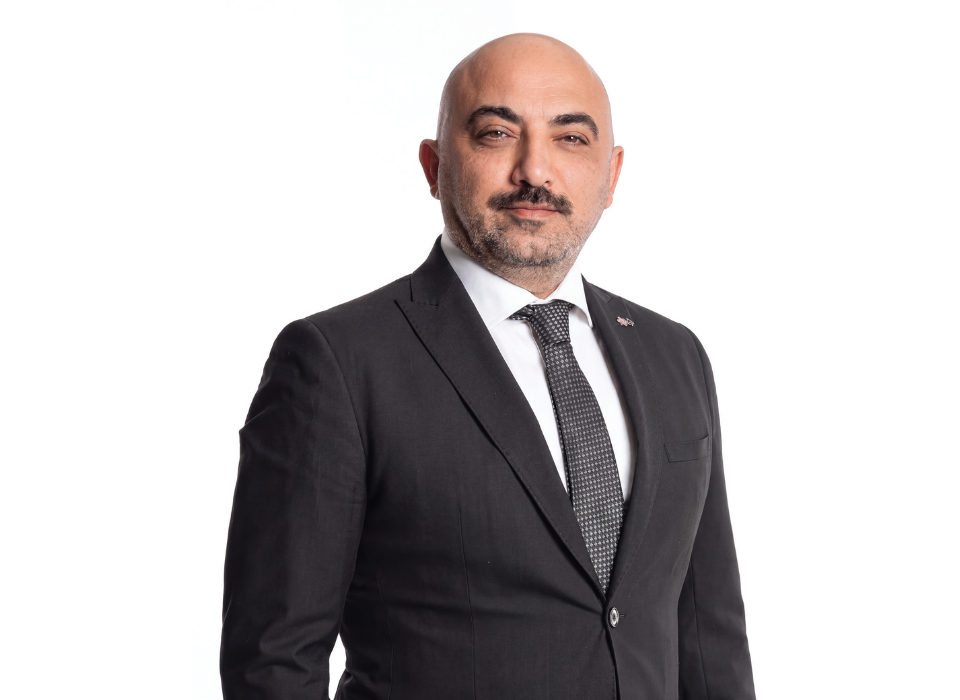
 Derya Şara
Vynax's story is based on an intrapreneurship project. Could you share this story and Vynax's structure with us?
Starting in 2016-2017, we began discussions about forming a working group focused on new areas and sectors. Work on silicon chemistry began in 2011, consultancy was obtained on this subject, and as a result, Turkey's first hydrophilic silicon synthesis was conducted in 2013. Subsequently, a team was formed to explore what Denge Kimya could do with different chemistries or in different areas where we had strengths. This roughly coincides with when I joined the Denge Kimya team. Such group work was conducted in 2016-2017. In this work, we discussed numerous topics ranging from water treatment chemicals to cosmetics, from polyurethane industry additives to the use of polyurethane dispersions in textiles and other fields. Denge Kimya's guiding star and reference is its EFQM journey. The European Foundation for Quality Management and KALDER continued this journey in 2017 with five stars in excellence. This working methodology, which thoroughly examines the institution's direction and culture, enables the development of new business lines, new ventures, and discussions on innovation and value creation. Denge already has a structure that is open to entrepreneurship and supportive of new ventures. We are currently discussing these matters and thinking about how we can pave the way for new ventures and how we can institutionalize this. This also progresses somewhat in parallel with our organizational culture. Today, it is hardly possible for a company to set out alone. Better results can emerge when people with many different expertises and roles come together. We set out on this path with that thinking back then. These days, innovation hubs and many such platforms are finding their place globally. Thinking about what we could develop regarding polyurethane chemistry, we said we would first focus on the textile sector and then work toward other areas we would enter, so we started with R&D. In our initial R&D studies, since we didn't have such a production line, we could produce 100-200 grams. Then we did a project with a major retail company. They asked us for a 5-kilogram sample, but we could only produce 1 kilogram in our laboratory. So we designed based on that, worked on how such a design would look if we could scale it, and prepared a project. This first R&D project was supported by TUBITAK. At that time we were an SME, and the KOBI-GEL support program provided our project with an investment subsidy for mid-to-high technology product groups. We then focused on the project. Our project became third in Turkey and received full support. Subsequently, we received investment support from another project supported by KOSGEB, this time for serial production. During this period, our collaboration with Sabancı University also began. With these developments, we started production for the project in June 2020. During 2021-2022, with product positioning, and in 2023, with our capacity increase, the need arose for polyurethane work within the group to continue its journey as a separate brand. Currently, Vynax brand continues its path as a new brand, with activities in textiles and 3-4 other different areas outside textiles.
You are offering water-based polyurethane dispersions to the sector. Could you tell us about the areas where water-based polyurethane dispersions (PUDs) are used?
Actually, there is hardly any place in our lives that water-based polyurethane dispersions don't touch. You probably applied mascara this morning... From water-based mascara to railroad tracks, this product is being used in many areas. It is also used as a coating material and has a very wide range of applications, from glass to wood, from textile surfaces to plastic, from human skin to biomedical materials.

So why is the transition to water-based PUDs important? Could you tell us?
In Europe, solvent-based products are gradually being banned. Today, the global water-based polyurethane market does not even constitute 40% of the total market. Generally, solvent-based polyurethanes dominate this market, making up nearly 60% of it. End consumers must be well protected from solvent-based products. When a craftsman applies spray, he must not inhale the solvent. Because of their hazards, solvent-based products are now being rapidly withdrawn, particularly from end consumption in the EU, and slowly in other markets. Of course, these products have many performance advantages, such as being able to have high molecular weights. Although water-based products still cannot match the performance of solvent-based ones in some areas, many studies have shown that these areas are open to development. In the transition from solvent-based to water-based polyurethanes, there is an intermediate product used as a co-solvent. This product is less hazardous than solvent-based ones, but these products have also begun to be banned in Europe. Similarly, they are being gradually banned in other countries. In other words, water-based polyurethanes are progressing as an alternative to solvent-based ones. Here, the main distinguishing factor is environmental concerns. Today, even for water-based products themselves, low VOC is being discussed. For example, consider Turkey's synthetic leather sector, the top coating on the armchair we're sitting on, the adhesive in between. These can also be water-based polyurethanes. In the Asian market, environmental concerns may not be given much consideration. But surprisingly, we have begun seeing more water-based finished products from China, water-based made synthetic leathers in the market. Both local Chinese companies and global polyurethane dispersion facilities in this region have accelerated this transition by increasing capacity. Asia is slowly trying to transition from solvents to water-based products. But of course, when transitioning to new technology, costs are also considered. For example, in 2021, during the pandemic, solvent prices rose significantly due to disinfectant supply chain disruptions. During this period, there was no price difference between water-based and solvent-based polyurethanes, and demand for water-based products suddenly increased. There is some price concern on this issue now. For some applications, further development of water-based polyurethane performance is still expected. Once these are overcome, this percentage distribution will probably tilt in the opposite direction. Water-based and even solvent-free polymer applications on surfaces will be discussed.

Which sectors are you focusing on as Vynax to offer this product?
When we first started, our focus was on textiles. This is because Denge Kimya already has two brands, Dng and Dena, which have been in this sector for nearly 30 years. We knew the sector well for this reason. Rather than positioning the same product that exists in the market under Vynax as well, we approached the problem by listening to it from the field and from end consumers, asking 'can we solve this with polyurethane?' As a result, highly innovative and unique products emerged. This became our biggest advantage and a point that distinguished us from other water-based polyurethane manufacturers, distributors, and formulators in the sector. Initially, we focused on textiles because it was our strongest area in the field. Now we have focused on other parts of the coatings industry; we have given weight to work on wood, glass, metal, and plastic surfaces. We have business partnerships here. We conduct both national and international collaborations. About eight years ago, we started with Densurf, our brand offering auxiliary materials to the paints and coatings industry. Now we have added polyurethane solutions under the Vynax brand to our paints and coatings portfolio. In the near future, you will frequently encounter us in the paints and coatings industry.
What kind of innovation do you aim to bring to the sector with your Vynax product portfolio, and what kind of difference do you aim to create in the sector?
Vynax's approach to the subject from the very beginning, rather than making a similar product, demonstrates a commitment to creating a difference from the start. It starts with the customer's voice and most often brings all partners to one table. In the long term, we also aim to be a platform. We want to work in such a platform format where we have consultants, equipment suppliers, and software companies, and produce a result. Rather than presenting a product in response to the most competitive product, we want to create a platform where questions are discussed such as how we can develop the sector, what contributions we can make to the sector, and how we can achieve the most effective results. One of our differences as Vynax is that we contain product groups that most water-based dispersion manufacturers do not have. For example, we are one of the few manufacturers in the world capable of producing hydrophilic polyurethanes for the textile sector. For the coatings sector, we have begun developing hybrid solutions for coating surfaces such as wood and metal. Here, we also incorporate different chemistries into polyurethane chemistry. In areas where water-based products have limited performance, we try to achieve results with hybrid solutions we have developed. Currently, there is significant demand in the sector for bio-based products. One of the biggest trends in the world today is producing products starting from bio-based sources. Regardless of which sector you enter, you encounter this demand, not just for polyurethane. We prefer to step back on this issue and look at it fundamentally. The reason for stepping back is that we do not want to put a bio-based label on our portfolio simply because it is a trend. This is because bringing bio-sourced raw materials from a distance, emitting so much carbon dioxide, and then adding the product group as "bio-based" without doing the necessary analyses does not sit right with us. This is contrary to our ethical codes as a brand and company. Therefore, we first try to ask "why do we need this product?" We analyze at which points this product is needed with questions like "why do we need a bio-based material, is the purpose to use it in recycling, or is the purpose to make it decompose faster in nature?" Of course, we have some bio-based product studies, and we can even offer a few bio-based product alternatives right now. But as I said, at this point, we want to make sure the product truly serves its purpose. There is a huge transformation happening here, especially in the textile sector where you can really feel this transformation. Companies are now burdened with reducing their carbon dioxide loads. At this point, the biggest input is in polyurethane synthesis, and we are researching what we can do about this. We have hybrid solutions, bio-based material alternatives, biodegradable product studies that will not cause problems when integrated with nature, and many innovative solutions for the sector that are not in the product group of most water-based polyurethane dispersion manufacturers.
What recent developments or innovations have occurred in water-based PUD technology?
Of course, many innovations are happening in this area because water-based polyurethanes, which gained popularity in the early 2000s, are still being advanced with know-how held by very few manufacturers. Generally, conventional production methods are applied in water-based polyurethanes, but these are gradually being overcome. At Denge, we did not purchase any know-how regarding the production facility; we developed the process with the support of our partners. Since polyurethanes are an area open to development, we are doing good work by taking advantage of the equipment and process characteristics of our production facility. Today, artificial intelligence tools are very current, and artificial intelligence has also accelerated digitalization. There are very good developments in the direction of digitalization. Computational chemistry, molecular modeling are very current topics, and my own special interest area. We are exploring these areas both for the benefits they can provide to the environment and for innovations that can speed up our work or perhaps slightly change our business model. Of course, polyurethane dispersions are among the topics most open and closest to these technologies. Production technologies are changing; new production technologies and new product groups are emerging. Polyurethane chemistry remains predominantly isocyanate-based. Isocyanate-free products have begun to appear on surfaces in some coating products, many methods are being tested in this area, and this is also an area open to development. This is a topic that was part of some of my doctoral research and is certainly not an easy subject to apply from an industrial perspective. But when we come together as a group on platforms, when everyone presents their expertise, I am confident that something will emerge. We also know that there are groups in Turkey who want to and are about to invest in the water-based field. This is certainly gratifying. Because these efforts will also lead to increased interest in this area, market growth, and acceleration of the transition to water-based. If we cooperate together, perhaps we could also be one of the representatives of the countries that create those technologies.

How do you foresee the water-based PUD market developing over the next 5-10 years, and how are you positioning yourself in this market?
We see that water-based polyurethanes can gain strength in the market over a period of 5-10 years, with the development of new technologies as well. We must create an alternative to solvent-based products in sectors, and water-based products will play a major role here. At the same time, end consumer usage habits are changing. The textile sector, for example, wants to be able to print the t-shirt you will wear just like printing paper on a photocopier. "Do it yourself" (DIY) paints for all surfaces have also become quite popular. At these points, the use of solvent-based products is not possible because of their health hazards. As consumer habits change, naturally water-based polyurethanes must also develop. Today, water-based polyurethane dispersions for digital printing technologies have still not been fully positioned. Large companies have already begun taking action on this issue and making collaborations. We also have some collaborations on these matters. We want to be present on these platforms we have created to lead developing technologies.
Finally, could you tell us about your goals for the coming period?
Our goal is actually to operate 3-4 different business lines under Vynax. In the long term, it looks like 3-4 verticals will be created under Vynax. The textile vertical is almost ready now, a team has formed there. We are working with the entire supply chain on their projects. We have equipment collaborations, collaborations with textile suppliers, and collaborations with primary chemical raw material manufacturers. We conduct European Union projects. We work through consultants in the field. Now we have turned to paints and coatings sectors, and our products are emerging in these areas. In these sectors, we have focused more on exports. There has been an advantage to us from supply chain imbalance. Now we will slowly take part in new projects in the Turkish market as well. The paints and coatings industry is a market where solvent-based use is more dominant. We want to be pioneers in the transition to water-based here. We have begun work with some additives for the polyurethane industry. At some points, we may need to offer a package. For example, water resistance, chemical resistance, and UV resistance are always points where higher performance is desired in relation to polyurethane. We are working on offering a package not just with water-based polyurethane dispersions but with some additives. India currently has a growing economy. It is a market open to development and innovation. The opportunities we see in this market have attracted us. Companies in India have established their own R&D, they have investments in these areas. As a polyurethane partner, we began asking whether collaborations could be created outside the areas mentioned above. We have some market research. Denge Kimya continues to work in its kitchen toward new areas and new product groups. We in the field pursue business development by keeping our horizons broad, exploring areas where we can be present, and continue to produce chemical solutions for a better future.
Who is Derya Şara?
Derya Şara graduated from the Chemistry Department at Yıldız Technical University. Subsequently, Şara completed her Master's program in Polymer Science and Technology at Istanbul Technical University and is completing her doctorate in Chemistry at the same university. Over nine years at Denge Kimya, Şara has held numerous positions including R&D specialist, analytical laboratory establishment, process studies, investment projects, and brand management. Following a brief business management education at Koç University, Şara currently serves as Business Unit Manager of Vynax, Denge Kimya's newest brand.