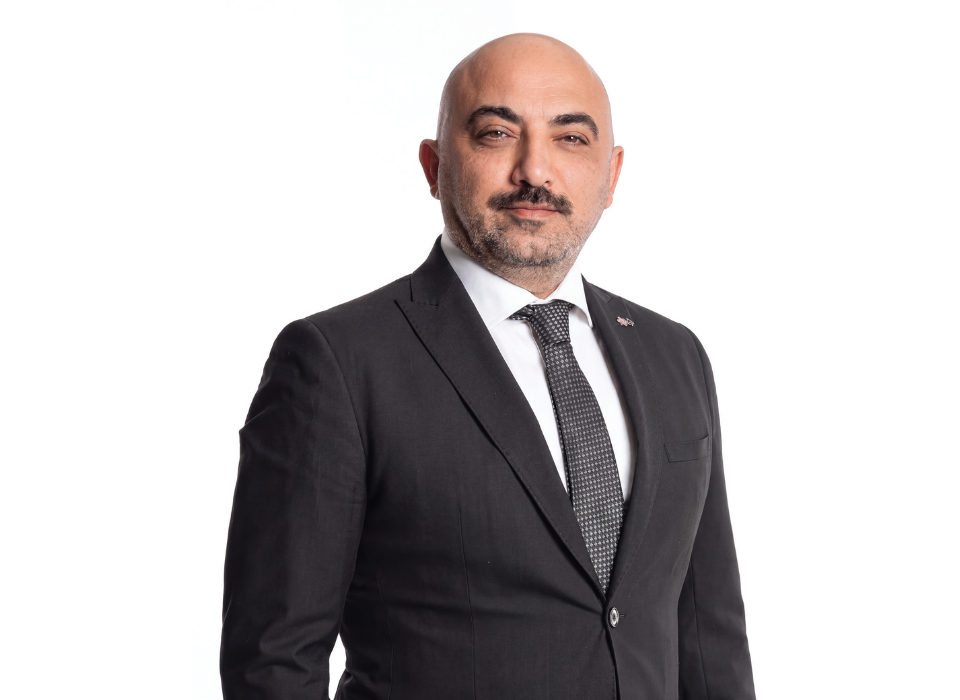
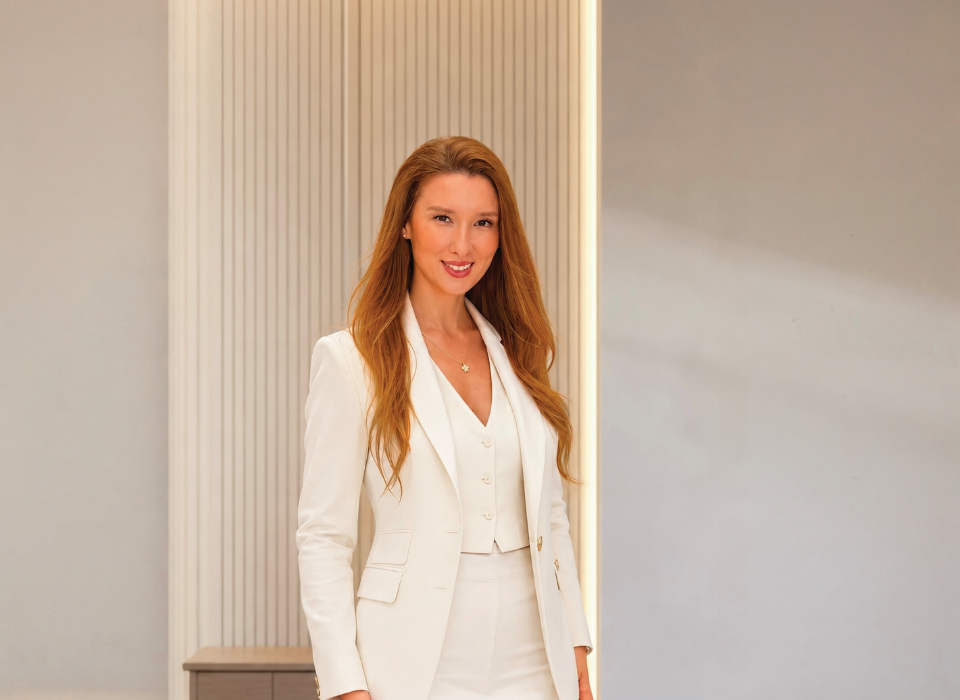
We had an enjoyable conversation with mimaristudio founders Ms. Ayça Akkaya Kul and Mr. Önder Kul.
We conducted a pleasant interview with mimaristudio founders Ayça Akkaya Kul and Önder Kul. These accomplished architects, known for their office projects designed especially for corporate firms, shared information about their design approaches.
Could you briefly tell our readers about yourselves, your educational background and professional experience?
Ayça Akkaya Kul: I graduated in 2000 from Yıldız Teknik Üniversitesi, Faculty of Architecture, Department of Architecture. Subsequently, I completed my graduate education in the Department of Industrial Product Design at Istanbul Teknik Üniversitesi Institute of Science, Graduate School. Önder Kul: I also graduated in 1997 from Yıldız Teknik Üniversitesi, Faculty of Architecture, Department of Architecture. After that, I completed my graduate education in the Department of Architecture, Building Division at the same university's Institute of Science, Graduate School. Both of us, drawing on the accumulated experience from architectural and interior design work we conducted at various architecture and design offices, began our independent architectural practice under the mimaristudio umbrella in 2006. Could you provide information about mimaristudio's founding process and current structure? Önder Kul: In addition to architectural design, interior design, site implementation and implementation supervision work, we provide services related to custom furniture and lighting design and their production. In our first years of operation, we completed projects focused on residential spaces and food and beverage venues. Starting from 2008, with invitations we began receiving from national and international firms, "corporate projects" became our primary focus. Alongside projects such as work spaces, corporate hospitality and event areas, lab-offices and start-up offices, and corporate customer experience centers with technology infrastructure, we also brought to life a major congress center project abroad. We have completed projects of different types and scales for important groups such as BASF Türk, Kibar Holding, Philip Morris SA Pazarlama ve Satış A.Ş, İspak Ambalaj, Philip Morris Seyahat Perakende Satış A.Ş., Vodafone Telekomünikasyon A.Ş., Turkcell İletişim Hizmetleri A.Ş., Payguru, and Polimeks İnşaat. We primarily develop projects focused on next-generation work spaces. Especially in recent years, we have structured our projects on biophilic design and human-centered "well-being" approaches.mimaristudio is particularly known for office projects it designs for corporate firms. How does this design process take place? Is the concept determined according to the company's requests, or is it determined by you?
Önder Kul: As you know, in the new working world shaped by generational change, offices that can now say "we" instead of "I" become more productive, efficient and successful. The ability to work agilely in cooperation with colleagues in addition to individual work, the capacity to be open, transparent and participatory in their work, to socialize, to take time for themselves—these play an important role in their performance. Those who can develop projects that embrace and include all employees within that corporate firm, regardless of their status, position or role, can achieve success in a shorter time. This is what we pay attention to in space design. Starting from the planning phase, we involve the employer in the project. We listen to them, talk with them, and have discussions about their envisioned work area. By the end of the day, we develop projects that both reflect their corporate culture and encompass their complete wishes. Here, we guide them with our knowledge, experience and expertise. Sometimes we take risks, try new things, do what has not been done. But at the end of the day, when the company begins working in their new space and we see the happiness on their faces, that is our happiness and a sign of our success.Work life is in constant motion, and particularly the rapid development of information and communication technology and the opportunities it provides are changing how firms operate. How do these factors affect office design?
Ayça Akkaya Kul: The more flexible work areas are, the more opportunity it creates for people to work with whoever they choose. This strengthens communication and the exchange of ideas. Quality communication, in turn, brings creativity, faster decision-making and shorter work periods. While today's technology increasingly provides us with more opportunities for mobile work, today's employees choose for themselves where and how they work best. They can transition between different work modes throughout the day. Sometimes this takes the form of individual work, where concentration, quiet, personal space and comfort are paramount, while collaborative approaches that enable socialization, presentations, brainstorming, teamwork and informal work also gain importance. In this context, the office of the future takes into account the needs and expectations of different generations working together and places concentration, communication, collaboration and idea generation as primary priorities. This is why in today's new working world—characterized by activity-based working, agile office and home office concepts—technology has become indispensable. We follow all developments that enable flexible work, continuously update our knowledge and have incorporated them into our projects for years. Many spaces and products, from meeting reservation systems to height-adjustable work desks, from informal work areas to quiet rooms, are shaped by evolving technology. The more freedom employees have, the more productively and quickly they can complete their work. This positively affects employee well-being and loyalty to the company, while also helping to increase productivity and efficiency in that firm.Most of our time today is spent in our offices. Of course, comfort is of great importance in spaces where so much time is spent. What design approach do you adopt to help employees feel good and comfortable in their work environment?
Ayça Akkaya Kul: As mimaristudio, in the past few years we have opened a separate section on well-being in our projects, starting from biophilic design. The concept of well-being is the state of a person being balanced and well physically, mentally and spiritually. We can also describe it briefly as "human welfare". In offices, the concept of well-being is gaining importance in direct proportion to employee generations. In firms that support the health, well-being and happiness of their employees, productivity, efficiency and job satisfaction increase, and long and unproductive work hours disappear. Consider that we spend nearly 95% of our time indoors, averaging 11 hours in front of screens or using smart tablets and phones. While an average of 4 to 8 days of sick leave are taken per year, 40% of doctor visits are stress-related. We are talking about a process that seriously and negatively affects employee office productivity. Beyond this, finding young talent and ensuring workplace loyalty has also become more difficult. One-third of the new generation employee profile prioritizes office design among their work-selection criteria, and this rate is much higher among Generation Y. When we consider that Generation Z is at the door, we understand the importance of this concept even more. As space designers, we fulfill our responsibility by adopting a human-centered design approach where employee well-being is the focus of our office projects.Differences emerge in each new generation in terms of their outlook on life, habits and expectations. In this context, could you evaluate business life and office design as pre- and post-2000s? What fundamental differences do you observe?
Önder Kul: With the changing generation, work habits, expectations and needs have also begun to change. As we all know, open offices have been a widely used work system in the world for a long time. However, in recent years, boundaries between work and entertainment have begun to disappear in space design. For example, coffee corners have been introduced into retail stores, or common work areas within offices have begun to be designed as living spaces. That is, space design that appeals to emotions and is interwoven with life has begun to gain importance. In a May 2012 McKinsey study on consumers and markets, it was found that employees place more emphasis on their own health, and companies have begun investing more in health programs to support employee well-being. Because for the new generation, the only criteria is no longer salary, insurance or social benefits. The physical conditions provided by the company have become a serious criterion. One-third of employees note that office design is effective in choosing where they will work. This rate is even higher among Generation Y. Young talent with firm loyalty has also become difficult to find. We can say the concept of Head Hunter emerged for this reason. For this reason, every positive investment firms make on their employees is directly an investment in those employees' well-being, health and happiness.In evaluating paints, building chemicals and insulation products used in your designs, do you find domestically produced products sufficient in terms of quality and variety? As an architect and designer, is it possible for you to source every product your concept requires domestically, or are there situations where you must source from abroad?
Önder Kul: We use many different material groups in our projects. We make an effort not to depend on a single brand and to select products that best represent our design. While some of these materials are of foreign origin, I can say that in paint and building chemicals groups, our selection options for domestically produced products are quite extensive. In both domestic brands and foreign brands operating their production locally, variety increases with each passing year. In our projects to date, we have primarily made product selections geared toward green building certification. In the WELL certification program as well, similar expectations exist, particularly in materials selected in relation to human health. In this context, we are seeing increasing growth in product groups and variety that meet relevant requirements in the sector. This helps us easily access the right products. For example, we prefer paints with zero VOC—volatile organic compound values. Likewise, in building chemicals and insulation materials, products meeting international standards are our first preference. In short, in these product groups I mentioned, we can say that local production materials address most of our technical and aesthetic concerns.Advertisement
Ad Space728 × 90