AWS: AI and Cloud Could Change the Fate of Rare Diseases

Amazon Web Services (AWS) shared the contributions offered by cloud computing and artificial intelligence in the fight against rare diseases. AWS noted that the main reason health systems have so far lacked the funding, data and understanding needed to accurately identify rare diseases and address them urgently has been technological limitations. It emphasized that artificial intelligence and cloud computing could significantly change the experience of living with rare diseases and finally bring these diseases the attention they require.
Amazon Web Services (AWS) has shared the contributions of cloud computing and artificial intelligence in combating rare diseases. AWS noted that technological limitations have been the primary reason why healthcare systems have lacked the funding, data and understanding needed to accurately identify rare diseases and address them urgently. It emphasized that artificial intelligence and cloud computing could significantly change the experience of living with rare diseases and finally provide these conditions with the attention they deserve.

The fact that rare diseases collectively have one of the greatest impacts on human health stands out as one of medicine's tragic paradoxes. The World Health Organization defines conditions affecting fewer than 1 in 2,000 people as "rare," and it is estimated that more than 300 million people worldwide currently live with one of 7,000 health problems classified in this way. This figure is six times the number of cancer diagnoses made in the past five years.
AWS Turkey General Manager Berrin Özselçuk made the following comments on the subject: "Because resources are allocated to research and care for health conditions with larger patient populations, patients diagnosed with rare diseases are typically at a disadvantage in the cost-benefit analyses applied in funding decisions. Low levels of public awareness and insufficient medical research make it difficult to diagnose diseases, further compounding the problem and potentially leaving patients without access to treatment. One of the greatest contributions cloud and artificial intelligence can make to healthcare outcomes is to balance this picture. Artificial intelligence is transforming the fields of genomics and DNA sequencing, enabling researchers to expand their work on a global scale, share their findings via the cloud, and develop innovative approaches to more deeply understand patients' experiences."

Challenges in diagnosing and treating rare diseases
Among the best-known examples of rare diseases are Motor Neuron Disease, Cystic Fibrosis, Duchenne Muscular Dystrophy and Hemophilia. Like many rare diseases, these four conditions share a common characteristic. They are DNA diseases that present themselves in many different ways at different stages. Overall, approximately 80% of rare diseases have a genetic component, which helps explain both why they are relatively rare and why they are usually so poorly understood. Because they are the result of how genes express themselves rather than how external pathogens and environmental exposures affect the body, they often fall outside traditional diagnostic methods.
Not all rare diseases are hereditary, and rare bacterial or viral infections, autoimmune reactions or diseases caused by sporadic genetic mutations present similar challenges. Because they affect individuals rather than populations, they are less visible. Because they do not emerge as epidemics or pandemics, they do not create a sense of urgency in the public. Since many rare diseases affect people in childhood, patients cannot easily describe their symptoms. This situation makes diagnosis even more complex while causing great hardship to patients and their support networks.
A detailed look at rare diseases through genomics
Greater understanding and ongoing research in this area help demonstrate the value of genetic testing in diagnosing many rare diseases. Genomics England, working with AWS and AWS partner Illumina, is incorporating genomic analysis into the diagnostic process and transforming the speed at which cases suspected of rare disease are confirmed. Genomics England's 100,000 Genomes Project laid the foundations for whole genome sequencing for patients suspected of having rare diseases through the NHS Genomic Medicine Service. Supported by Genomics England, the NHS GMS has completed sequencing of more than 100,000 genomes, making the NHS the first national health system in the world to offer whole genome sequencing as part of routine care.
The difference a correct diagnosis can make
For individuals and families dealing with rare diseases, the impact of easy access to diagnosis through genomics can be enormous. For Mel, a mother, the NHS Genomic Medicine Service revealed that her two children, previously diagnosed with autism and dyspraxia, actually had an ultra-rare neurodegenerative disease caused by a variant in the DHDDS gene. Despite only 59 documented cases of this condition worldwide, Mel was able to reach out to specialists working on this issue and received recommendations about specific vitamins that could help her children's tremor symptoms.
In an article on the Genomics England website, Mel explained that "since they started taking the medication, the tremors have reduced by 20-30 percent." However, she also clearly states that support for managing symptoms was only a beginning. As the founder of the Cure DHDDS charity, she is focused on raising funds for research, organizing scientific conferences and establishing an international patient registry. "We need to move quickly, so we are doing many things at the same time," she says. "The goal is to find a drug that could slow the disease while waiting for tomorrow's treatments like ASO or RNA therapies."
Enabling treatments to target gene expression
Antisense oligonucleotides (ASO) and ribonucleic acids (RNA) are therapies that use specific molecules to regulate genes causing disease by changing how genes are expressed. Cloud computing reduces barriers in developing these therapies for rare diseases by democratizing access to computing power and generative artificial intelligence capabilities and providing highly secure, integrated datasets to enable the development and accelerate drug discovery of new treatments. These technologies are also transforming the economics of rare disease treatments, making treatments viable even for conditions affecting smaller populations.
Artificial intelligence and the cloud also provide other scalability advantages to rare disease fighting initiatives. AWS has partnered with the National Center for Biotechnology Information of the U.S. National Library of Medicine to make the Sequence Read Archive, one of the world's largest genome sequencing data repositories, freely accessible from Amazon S3 through the AWS Open Data Sponsorship Program (ODP). The SRA contains approximately 40 PB of data covering nearly 40 million run accesses on AWS ODP. Access through the ODP enables researchers around the world to find and retrieve sequencing data from these experiments, providing more seamless global collaboration and enabling faster generation of game-changing insights.
Detecting early signals of rare health conditions
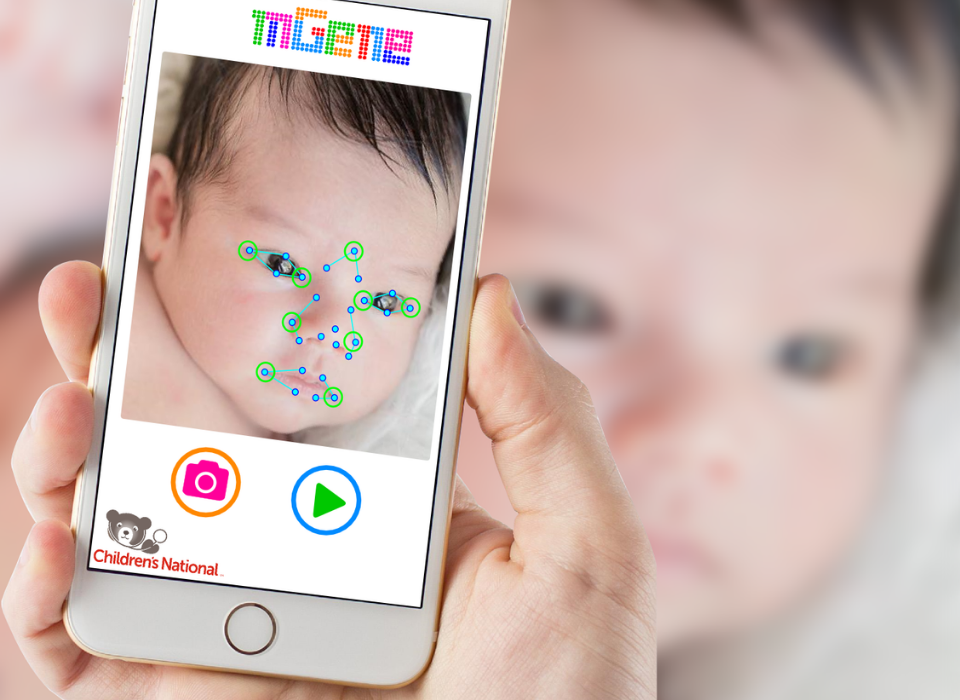
One of the greatest challenges in diagnosing and treating rare diseases is the difficulty in analyzing the experiences of very young children, who make up a significant portion of patients. Children's National Hospital in the United States, one of the first beneficiaries of a new USD 10 million AWS funding program to support research in pediatric health and rare diseases, has developed an artificial intelligence technology that can analyze smartphone camera images to identify subtle changes in newborns' facial features and detect rare genetic disorders. In most cases, these signs are detected late, in which case the effectiveness of preventive care decreases. However, when diagnosed early with artificial intelligence technology, children can avoid years of misdiagnosis and receive the treatment and support they need from the start.
Rady Children's Hospital and Institute for Genomic Medicine was among the first organizations to receive the AWS Imagine Grant Children's Health Innovation Award, which supports organizations accelerating innovations in child health through advanced cloud services. The hospital is using Large Language Models (LLMs) to further accelerate diagnosis and deliver genomic testing to children who need it as quickly as possible.
Doctor Matthew Bainbridge, Supervisory Research Scientist at Rady Genomics, a nonprofit research institute within San Diego Rady Children's Hospital, stated: "Leveraging artificial intelligence and cloud computing is a critical step in working to make genetic testing more equitable, affordable and widely accessible. Working with AWS allows us to use their expertise in artificial intelligence and cloud computing to increase the speed and accessibility of pediatric genetic testing and ultimately shorten a child's diagnostic journey."

Gallery