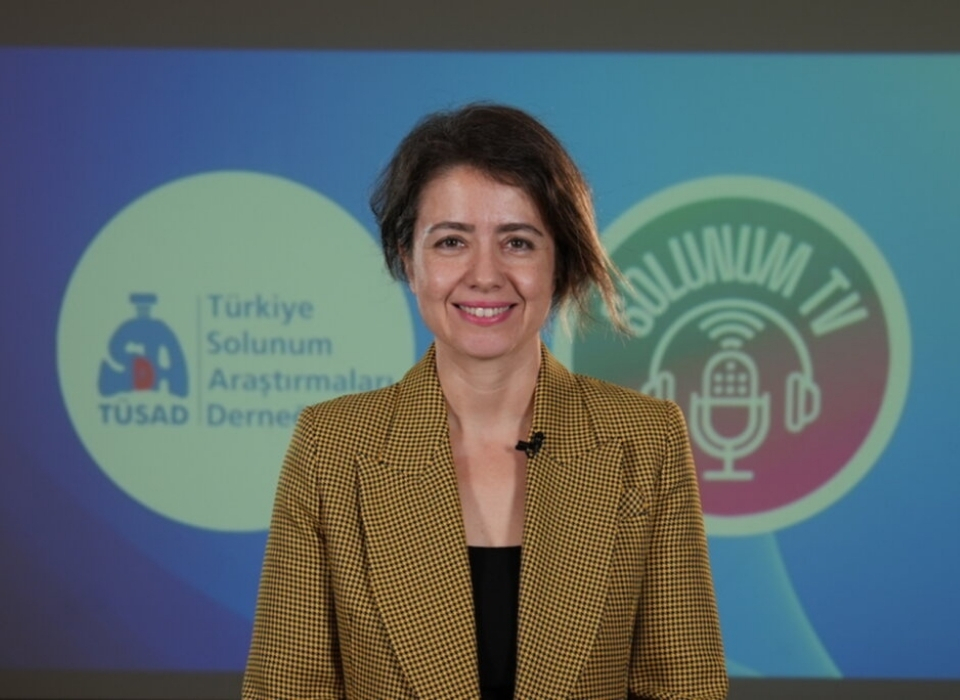
TÜSAD Issues Warning During World Lung Cancer Awareness Month

The Turkish Respiratory Society (TÜSAD) points out that lung cancer is currently the most frequent cause of cancer-related deaths in both women and men.
Assoc. Prof. Dr. Pınar Akın Kabalak, Chair of the TÜSAD Lung Cancer Study Group, emphasizing that individuals who smoke more than 20 packs of cigarettes annually are at high risk, explained that "lung cancer is a type of cancer with high incidence and mortality rates, but when diagnosed at an early stage, there is a chance of recovery."
Lung cancer is currently the most common type of cancer. November is recognized as "Lung Cancer Awareness Month" to draw attention to ways of preventing lung cancer. The Turkish Respiratory Research Society (TÜSAD), pointing out that lung cancer is currently the most frequent cause of cancer-related deaths in both women and men, stated: "lung cancer is a type of cancer with high incidence and mortality rates, but when diagnosed at an early stage, there is a chance of recovery."
MORE THAN 20 PACKS OF CIGARETTES PER YEAR PUTS SMOKERS AT RISK
Despite rapidly expanding and developing treatment options, Assoc. Prof. Dr. Pınar Akın Kabalak, Chair of the TÜSAD Lung Cancer Study Group, warned that according to 2023 data from the American Cancer Society, a 20 percent mortality rate is expected among approximately 230,000 newly diagnosed cases, and provided the following information about the disease: "Particularly individuals aged 50 and over who smoke more than 20 packs of cigarettes annually are at high risk. Those exposed to secondhand smoke, environmental or occupational hazards face equally high risks as active smokers. Persistent cough lasting more than 3 weeks, coughing up blood, unexplained chest and back pain, unintended weight loss, loss of appetite, hoarseness, drooping eyelid, palpable swelling in the body, and facial and neck swelling are warning signs that should prompt immediate medical attention."
Kabalak, emphasizing the importance of combating tobacco and early screening in preventing lung cancer, stated: "According to the Turkey Cancer Control Program 2016 Report, the smoking rate was determined at 31.2 percent. This rate is very high. Particularly in today's young population, the age at which smoking starts is early. Besides smoking, waterpipe use among adolescents aged 13-15 cannot be ignored as a public health problem. As important as the number of packs smoked annually is the age at which smoking begins—a factor that deserves attention. In our country, through serious legislation against smoking, tobacco consumption decreased by 12 percent between 2008-2011. This fight must continue persistently."
PAY ATTENTION TO ASBESTOS EXPOSURE!
Kabalak conveyed that besides tobacco product use, environmental factors—particularly asbestos exposure—pose a serious risk in lung cancer, and described a recent study on this matter as follows: "Prof. Dr. Güntülü Ak and his team from Eskişehir Osmangazi University demonstrated in their study that asbestos increases cancer risk independently of smoking. The same study also mapped high-risk areas in Turkey according to asbestos exposure. Asbestos exposure, indoor air pollution, biomass, and other tobacco products are emerging as risk factors equally important as smoking for our country. When developing screening programs for Turkey, such personal and environmental risk factors must be taken into account."
SCREENING AND TREATMENT INCREASE SURVIVAL
Kabalak, noting that "lung cancer does not cause symptoms until it reaches advanced stages, and patients typically receive a diagnosis at late stages. Screening programs must be prioritized to increase survival in lung cancer," made the following call: "Studies such as the National Lung Screening Trial (NSLT) and Belgium-Netherlands (NELSON) study demonstrate that through screening, patients can receive early-stage diagnosis and access curative treatments such as surgery. Targeted therapies and immunotherapies contribute to survival across all stages, extending expected survival even in advanced stages. However, many patients lack access to effective treatment due to barriers in reimbursement for lung cancer treatment. For this reason, in the management of lung cancer, physicians must work in coordination with civil society organizations, occupational health and safety specialists, and administrative authorities. Smoking cessation clinics should be expanded, and screening policy should be developed based on environmental, occupational, and individual risks, taking into account the country's socioeconomic situation.
Gallery