Üsküdar University's Stuttering Camp Brings Children Together with Peers from Around the World

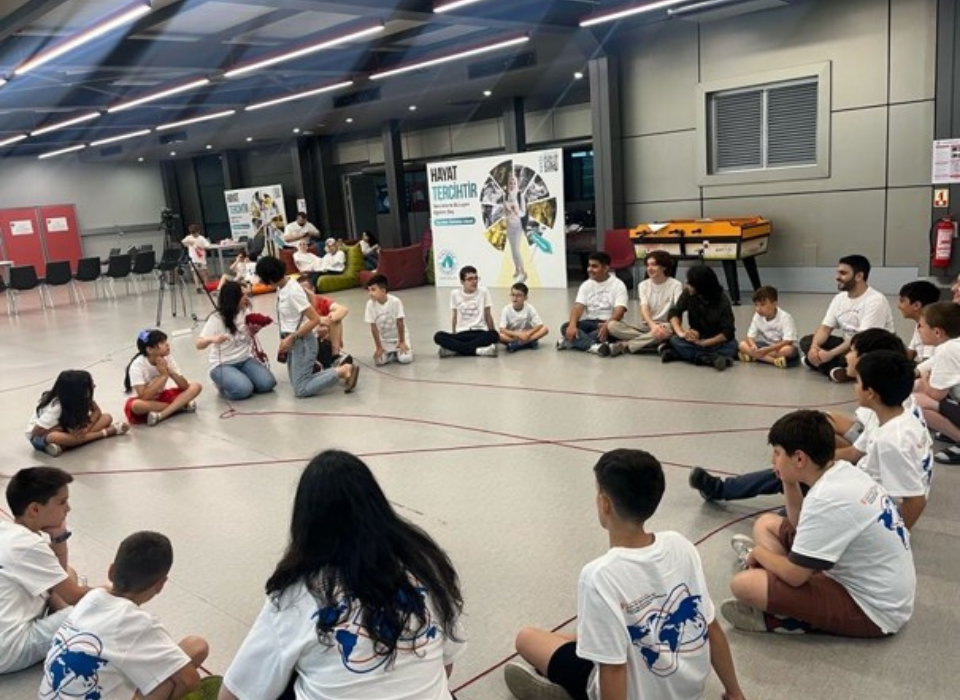
The Camp Dream. Speak. Live. (CDSL), organized in collaboration between Üsküdar University and the University of Texas Arthur M. Blank Center for Stuttering, brought together school-age children who stutter for the second time. Within the scope of the five-day program, the first of its kind in Turkey, children developed communication, self-advocacy and psychological resilience skills, while also meeting online with their peers in the Netherlands, Germany, Malta, Pakistan and Portugal.
The Dream-Speak-Live Camp (CDSL), organized in collaboration between Uskudar University and the University of Texas Arthur M. Blank Stuttering Center, brought together school-age children with stuttering for the second time. Within the scope of the five-day program, which is a first in Turkey, children developed communication, self-advocacy and psychological resilience skills, while also meeting peers from the Netherlands, Germany, Malta, Pakistan and Portugal in an online environment.
The camp, organized by the Uskudar University Faculty of Health Sciences Department of Speech-Language Pathology and Uskudar University Speech Disorders Research and Practice Center (ÜSESKOM) in collaboration with the University of Texas Arthur M. Blank Stuttering Center, took place at the Uskudar University NP Health Campus.
The program, coordinated by Prof. Dr. Ahmet Konrot and Assoc. Prof. Dr. Ayşe Aydın Uysal, was attended by academics from various universities in Turkey and volunteer speech-language pathology students, while the Stutterers Association also supported the organization.

"What matters is not fluent speech, but strong communication"
Uskudar University Faculty of Health Sciences Department of Speech-Language Pathology Chair Prof. Dr. Ahmet Konrot noted that approaching stuttering solely from the perspective of speech fluency is insufficient, stating that they focused on strengthening children's communication skills.
Konrot said, "A child's primary need is not always to speak more fluently. The ability to express oneself, not to avoid speaking, and to feel that what one has to say is valuable is far more important. In the Dream-Speak-Live Camp, we are not trying to teach children how to speak. We are creating an environment where they can discover their own communication strengths. Because the real issue is not how fluently we speak, but how effectively we can communicate."
International peer meetings provided valuable experience
One of the program's highlights was the online meetings conducted with children who stutter living in different countries. Children participating in the camp met with peers from the Netherlands, Germany, Malta, Pakistan and Portugal and shared their experiences.
Through these meetings, children had the opportunity to observe that stuttering is a shared experience seen across different cultures, while experiencing that the most important element in communication is not fluency but the ability to express oneself and develop mutual understanding.
Prof. Dr. Konrot noted that this experience created important awareness for the children, stating, "It is extremely valuable for a child to develop the thought 'There are other people who speak like me and they can succeed in all areas of life.' This experience positively changes how children view both themselves and communication."

Communication skills developed through practical application
During the five-day camp, children were supported with group work on communication skills, self-advocacy, current information about stuttering and psychological resilience.
The team, which included speech-language pathologists who stutter and continue their professions, provided children with practical activities linked to real-world situations. Participants had the opportunity to experience how they could apply the knowledge they acquired in their daily lives.
"The group environment shows children they are not alone"
Assoc. Prof. Dr. Ayşe Aydın Uysal, one of the camp coordinators, noted that the program's main objective was for children to transfer what they learned to their daily lives.
Uysal said, "Our children worked on many topics such as communication, self-advocacy, stuttering and resilience during the camp. However, what is truly important for us is that these achievements continue after the camp ends. The group environment shows children they are not alone, while allowing them to learn from each other's experiences and try new ways of communicating in a safe environment."
Adults who stutter shared their experiences
At the camp's closing program, adults who stutter came together with children and families to share their life experiences. Speaking on behalf of the Stutterers Association, Dr. Erkan Erener shared both his own life story and the association's work with participants.
Through these meetings, children had the opportunity to directly observe that individuals who stutter, like themselves, are able to take active roles in academic and professional life.
The five-day Dream-Speak-Live Camp concluded as an international learning platform in which children not only gained knowledge about stuttering, but also developed communication skills, gained confidence in expressing themselves, and strengthened their social bonds by sharing common experiences with peers from different countries around the world.
Gallery