Composites in Automotive Engineering

The automotive sector is undergoing a profound technological transformation driven by sustainability targets, the electrification process, fuel efficiency regulations and performance optimization requirements. In this transformation process, material innovation plays a decisive role in the development of next-generation vehicle architectures. Among advanced engineering materials, composites stand out as a strategic solution thanks to properties such as superior strength-to-weight ratio, design flexibility, durability and corrosion resistance.
The automotive sector is undergoing fundamental technological transformation in line with sustainability targets, electrification processes, fuel efficiency regulations and performance optimization requirements. In this transformation process, material innovation plays a decisive role in the development of new-generation vehicle architectures. Among advanced engineering materials, composites stand out as a strategic solution thanks to their superior strength-to-weight ratio, design flexibility, durability and corrosion resistance.
Their ability to achieve significant weight reduction without compromising structural integrity and safety translates into lower emission values, extended electric vehicle range and improved overall vehicle performance. For this reason, the use of composite materials is no longer limited to high-performance or niche vehicles, but is also shaping mainstream automotive production and future mobility concepts. In this article, we examine the role of composites in the automotive sector.
Introduction to Composites in Automotive Engineering
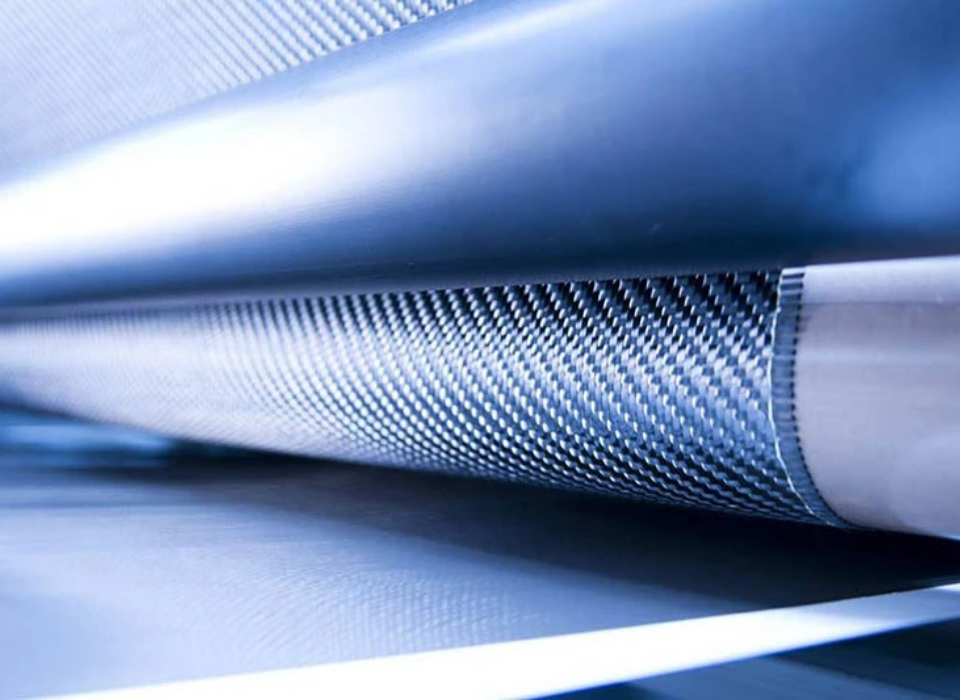
Composite materials are created by engineering two or more components with distinctly different physical or chemical properties into a single material system. When combined, the resulting material exhibits superior performance properties that the individual components cannot provide alone; for example, high strength-to-weight ratio and corrosion resistance. In the automotive sector, composites — particularly fiber-reinforced polymers — have become an integral part of lightweight vehicle design strategies that aim to reduce mass while maintaining structural integrity. This transformation stems from global pressure to meet stricter environmental regulations and to achieve improved fuel economy with reduced carbon emissions.
Primary Advantage: Light Weight
One of the most important reasons automotive manufacturers prefer composites such as carbon fiber reinforced plastics (CFRP) and glass fiber reinforced plastics (GFRP) is that they deliver significant weight reduction compared to conventional metals. Composites typically have much lower density than steel or aluminium; yet they can deliver similar or superior mechanical performance. For example, some composite components can reduce vehicle mass by 30–60 percent, which directly improves fuel economy, extends electric vehicle range and contributes to lower emissions over the vehicle lifecycle. Replacing heavy metal parts with composites also improves acceleration and handling characteristics, delivering both performance and environmental benefits together.
Types of Composites and Their Automotive Applications
Among the most commonly used composite classes in automotive engineering are CFRP, GFRP and, as an emerging trend, natural fiber composites. CFRP stands out for its exceptional specific strength and stiffness values and can even surpass conventional metals in advanced structural applications; however, its cost and manufacturing complexity are higher. GFRP, while not as rigid as CFRP, offers a good cost-performance balance in exterior body panels, bumpers and interior components.
Flax-reinforced natural fiber composites are increasingly used, particularly in non-structural interior parts, in line with sustainability targets. Automotive manufacturers are prioritizing environmentally friendly solutions as alternatives to fossil-based composites.

Structural Performance and Crash Resistance
Composites do not only provide light weight, but also contribute to vehicle safety. The directional strength properties of fiber-reinforced composites allow the design of structures with superior energy absorption capacity under specific load conditions compared to equivalent metal parts. For example, CFRP's high stiffness and strength properties can improve crash energy management, particularly in electric and high-performance vehicles, thereby increasing passenger safety. Additionally, composites are naturally corrosion resistant and therefore offer long service life in harsh environmental conditions. They also contribute to reducing noise, vibration and harshness (NVH) levels, improving ride comfort.
Manufacturing Processes and Design Flexibility
Composite manufacturing techniques overcome the limitations of metal forming methods and offer broad design freedom. Techniques such as resin transfer molding (RTM), compression molding (SMC/GMT) and thermoplastic injection molding enable the production of complex and integrated parts with fewer attachment points and assembly steps. This design flexibility not only simplifies manufacturing lines, but also enables aerodynamic optimization and aesthetic innovations. Composite parts often combine multiple functions into a single component, reducing part count and potentially lowering assembly costs long-term. The increasing use of thermoplastic composites offers significant advantages for mass production thanks to recyclability and rapid production cycle times.
Composites in Electric and Next-Generation Vehicles
The electrification process is accelerating composite use, particularly in battery enclosure structures, crash structures and lightweight modular components. Weight reduction is critical for electric vehicles (EVs); every kilogram of weight reduction directly contributes to extended driving range and improved energy efficiency. Additionally, metal-composite hybrid structures are under development; this approach combines the light weight and fatigue resistance of composites with the ductility and cost advantages of metals. This hybrid architecture enables the creation of optimized structures on future mobility platforms without compromising safety and manufacturability.
Sustainability and Future Trends
In the future, sustainability-focused design approaches will determine the direction of automotive composite development. The integration of recycled fibers and natural reinforcements reduces embodied carbon emissions and energy consumption in the manufacturing process. With advances in composite recycling technologies, further reductions in the lifecycle impacts of composite-intensive vehicles are expected, and the automotive sector is anticipated to move faster toward net-zero emissions and circular material flow targets.
Sources
1.Materials Sciences and Applications (2016). Lightweight technologies and composite materials in road transport vehicles. (Provides data on weight reduction and composite material types)
2.Hallal, A., Elmarakbi, A., Shaito, A., & El-Hage, H. Overview of Composite Materials and Their Automotive Applications. In Advanced Composite Materials for Automotive Applications. Blackwell Publishing. (Comprehensive overview of automotive composite types and structural applications)
3.Composite Materials in Automotive Applications. Innovellix (English industry review on composite types, benefits and automotive uses). (Discusses polymer matrix composites, metal matrix composites and automotive benefits)
4.Composite Materials for Automotive Applications. Innovellix (Detailed automotive components using composites). (Explains specific parts like wheels, interiors and EV structures)
5.HTF Market Report. Composite Materials for Automotive Strategic Review. (Industry-level overview of market segments, composites types and automotive structures)
Gallery