Polyurethane Industry Voices Expectations on Standards
Key players in the polyurethane sector discussed the sector's position, present situation and future at Putech Eurasia 2019 (6th International Polyurethane Industry Fair), the world's second-largest polyurethane industry trade fair.
Important figures in the polyurethane sector, expressing their expectations from the government on standardization and regulations, emphasized that the future of the sector lies in growing together through cooperation.
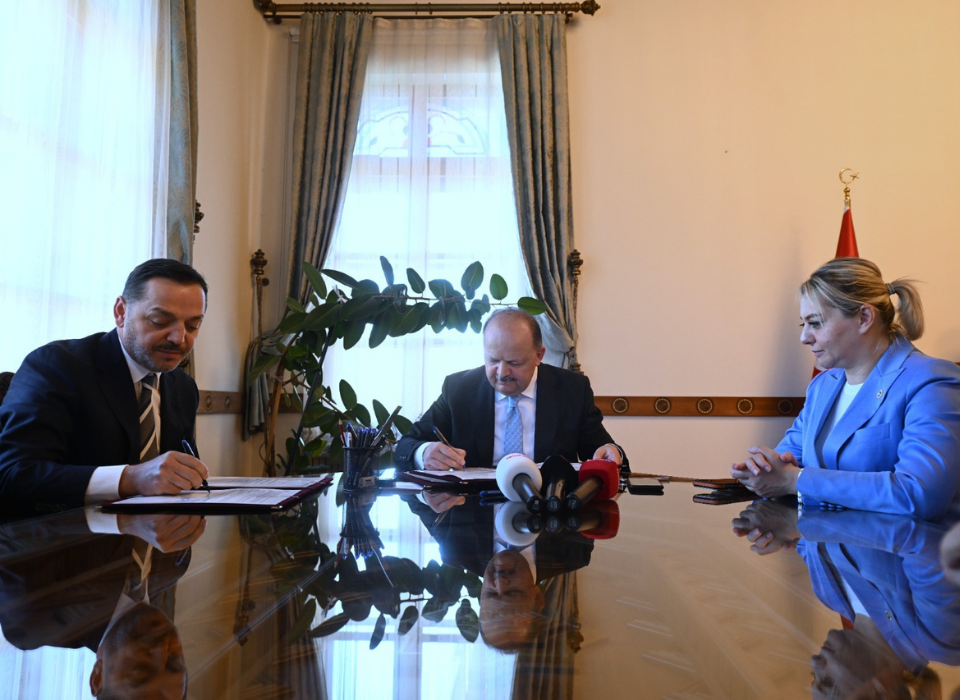
The panel, where important names in the polyurethane sector met to discuss the sector's position in Turkey, innovations and future, was attended by speakers including Levent Atmaca, Director of DOW Turkey Polyurethane System House, Cavidan Karaca, CEO of Kimteks Polyurethane, Dr. Başar Yıldız, Board Member of Flokser Kimya, Mehmet Şişmanoğlu, General Manager of Pürplast, and Bart ten Brink, President of European Flexible Polyurethane Foam Block Manufacturers Association (EUROPUR).
Turkey Second Largest in Europe for Flexible Foam Polyurethane
Bart ten Brink, President of European Flexible Polyurethane Foam Block Manufacturers Association (EUROPUR), stated that the total polyurethane market worldwide stands at 20-25 million tons, flexible foam polyurethane at 8.5 million tons, and sector growth of 4 percent is forecast until 2021, noting that China and the Europe, Middle East and Africa region hold equal market share globally, and continued: "In flexible foam polyurethane, Turkey is Europe's second-largest market. Poland ranks first. With 142 thousand tons of production in 2018, Turkey surpassed strong competitors Germany and Italy in production volume. In the period ahead, Turkey will continue to be a very important country for the world and the region."Recycling in Polyurethane Very Important But Through Cooperation
Drawing attention to the fact that 40 million mattresses made from flexible polyurethane become waste every year, Bart ten Brink stated, "We have to develop new recycling methods. Instead of mechanical recycling, we should move to chemical recycling. Chemical recycling is also very important. The sector must drive its own innovation. Companies in Turkey should work together. This is not competition. This is about how much we support the future. Turkey should try to develop its own market. Please, as a sector, let us work together simply."Standards and Regulations in Polyurethane Should Come as Soon as Possible
Cavidan Karaca, CEO of Kimteks Polyurethane, stating that Turkey's polyurethane exports reached 60 thousand tons in the first 10 months, noted that the sector has a need for regulations and standards, saying: "The polyurethane market is growing. Price focus is threatening the sector's future. The number of shoe and slipper sole manufacturers is increasing. Turkey is also a production hub for footwear. As volumes increase, unit prices being used are falling. There are expectations for cost reduction. Deterioration in product quality is a serious problem for the footwear market. Another important market is white goods. There are serious R&D expectations for energy efficiency classes. There is serious cost pressure. Due to the absence of regulations and standards, we are seeing quality declines in panel polyurethane. It is moving from standard panel to economic panel." Noting that polyurethane continues to develop for the automotive industry, Cavidan Karaca underlined that domestic manufacturers' market share stands at 10-15 percent and that developments in this area continue.Polyurethane is Like Creating Different Sentences with Different Words
Dr. Başar Yıldız, Board Member of Flokser Kimya, noting that when they bring together the components of polyurethane like different words they can create different sentences, described Turkey's polyurethane sector's research and development strategies as follows: "Instead of R&D, we are doing product adaptation in Turkey. As manufacturers we are trying to respond quickly to customer demands or provide products for new applications not within our scope. As a sector we have several shortcomings. One is not having enough trained human resources. We made an agreement with vocational schools and set up a laboratory. We provide training and students at the school can also work with us. We are also trying to set up a laboratory at Istanbul Technical University. Through this we aim to find a solution for our long-term projects. Another shortcoming we have in R&D is that we are not very inclined towards collective work. We need to provide debate training in schools. We cannot discuss enough. In Europe, even competitors do R&D together. We have a long way to go."Lightweight, Flame Resistance, Sustainability Main Focus of Polyurethane
Stating that there are efforts in Turkey to develop new polyurethane products, Dr. Başar Yıldız said, "The output of R&D is patents. Unless the number of patents increases in Turkey, unfortunately it will not be a realistic approach. We must produce patents in Turkey to the best of our ability. We reviewed the patents of the last 10 years. Certain topics are being worked on worldwide. Lightweight, flame resistance, sustainability and recycling. We should also focus on these."We Should Shift from Cost Competition to Value Creation
Levent Atmaca, Director of DOW Turkey Polyurethane System House, saying that success can be achieved by conducting R&D work with stakeholders in the value chain, stated, " We can sustain the sector's positive expansion by preserving the advantages of polyurethane chemistry. Polyurethane is truly a very important plastic. It has very important properties. If we can preserve this; for example, if we take it away from being a very good insulation material and make it just a coating product, we will lose this sector. We must avoid all developments that would discredit polyurethane. We need to move away from cost competition and move towards creating value."Polyurethane's Future Looks Bright with Electric Vehicles
Mehmet Şişmanoğlu, General Manager of Pürplast, underlining that Turkey closed the last two years in automotive on a downward trend, said that they would overcome the sector decline together with innovative approaches rather than price-focused approaches. Speaking about the increasing importance of polyurethane with changes in the automotive sector, Mehmet Şişmanoğlu continued: "In the automotive sector, when you talk about electric vehicles, there are two important criteria; one is weight, the other is noise. Noise is the most important issue. To give an example, we are currently tracking noise from seat belts and producing products that eliminate it. Given this situation, the importance of polyurethane is increasing. Today we are at 25-26 kilograms of polyurethane weight in vehicles. Non-polyurethane parts are meeting polyurethane with weight advantage. It is forecast that by 2025, 75 out of every 100 vehicles on the market will be hybrid and electric vehicles. Therefore, in light of this information, polyurethane's future also looks bright."Advertisement
Ad Space728 × 90