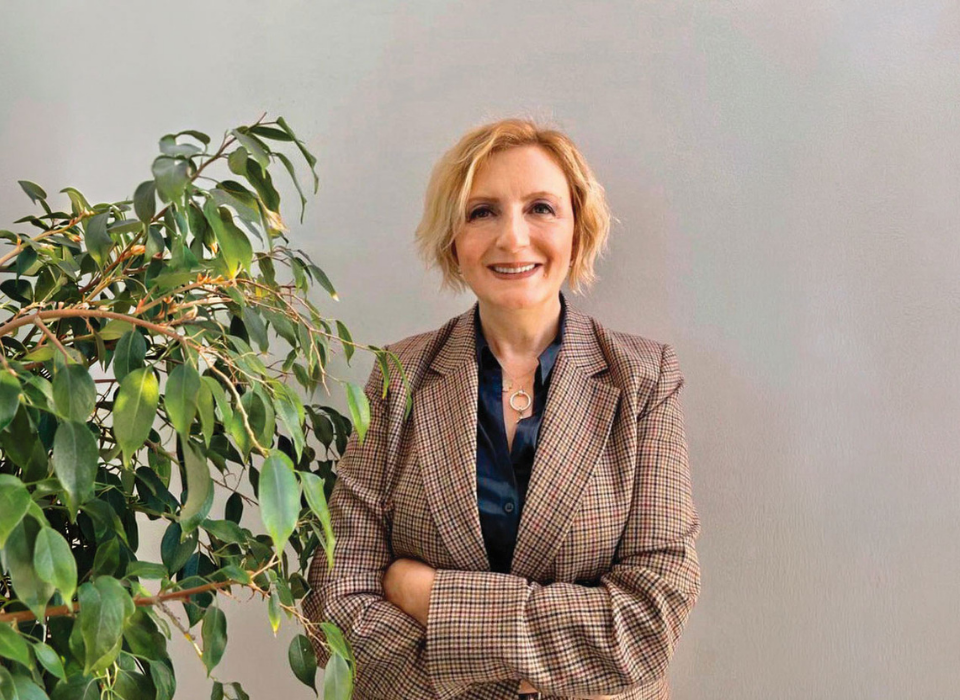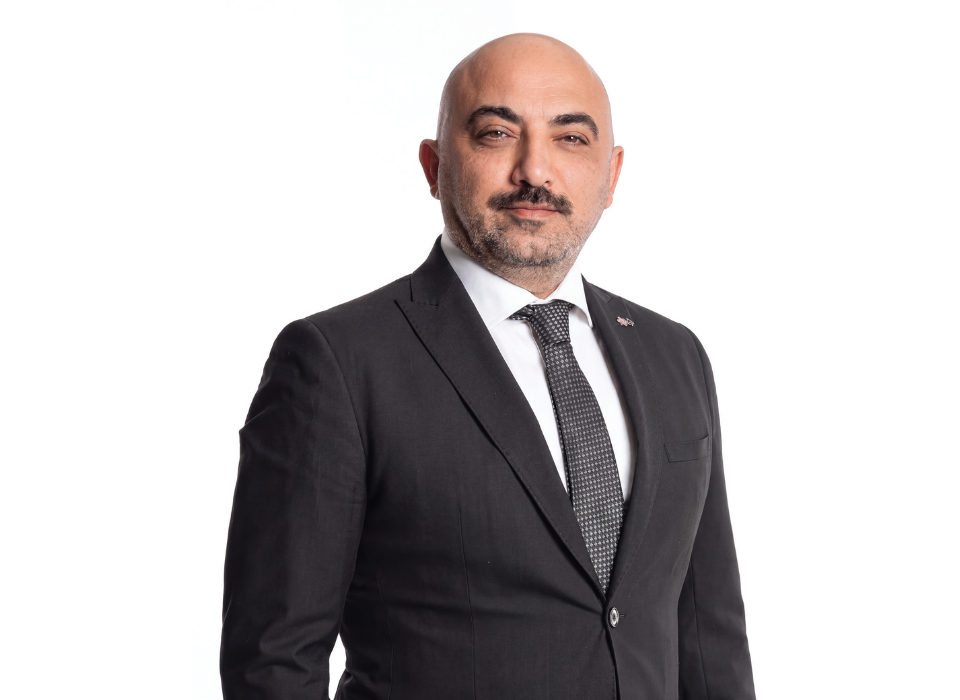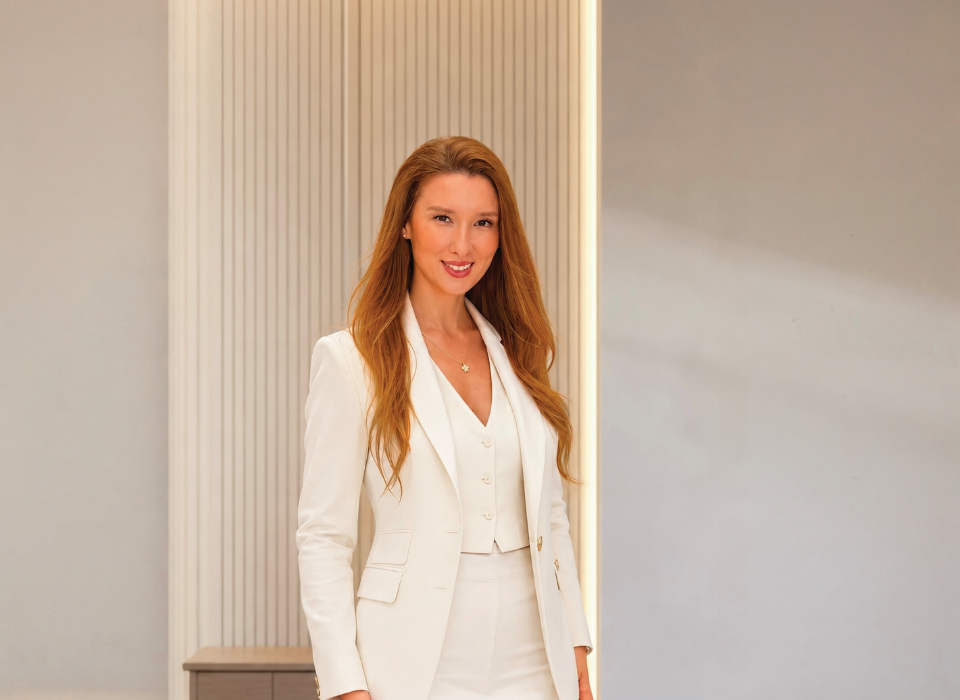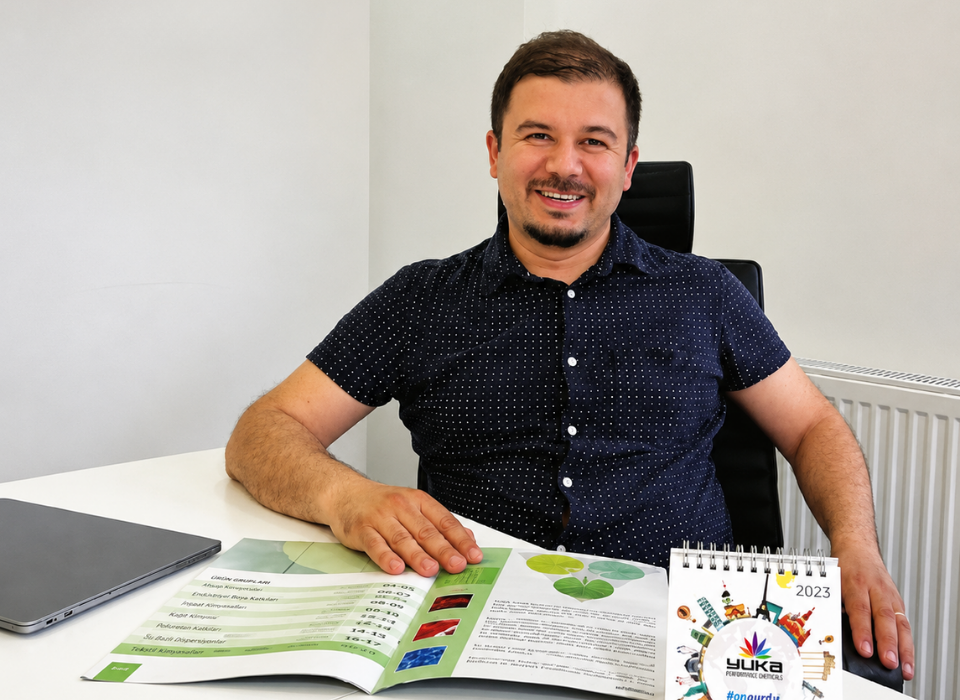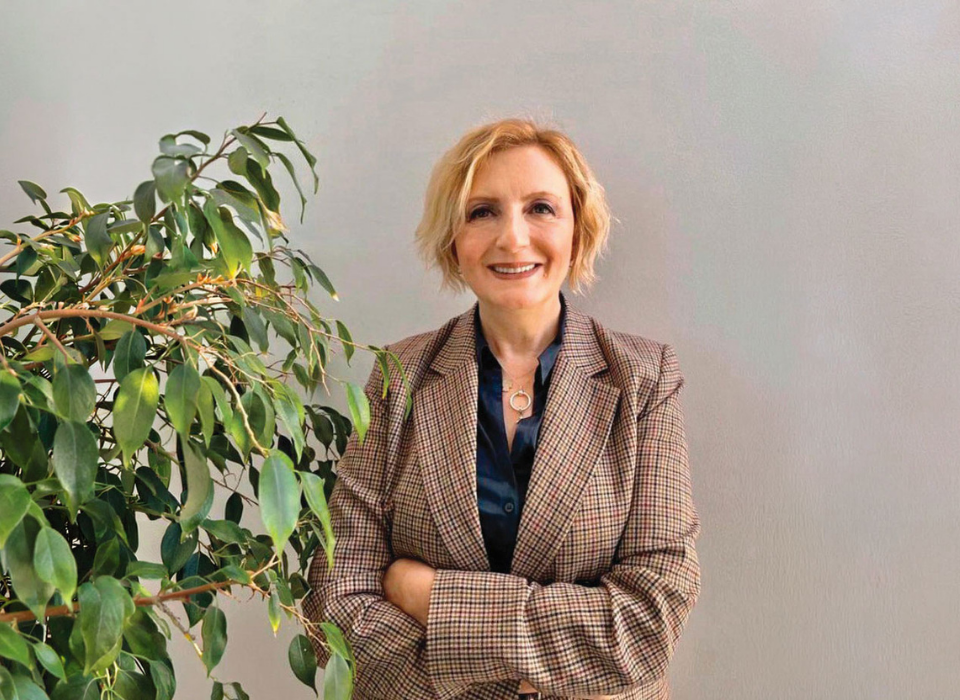
Ahead of the FUTURE IN COSMETICS: WHAT SHOULD WE PRODUCE SUMMIT, to be held on 18 June 2026, we spoke with Summit Chair Ü. Belgin Sile about the future of the cosmetics industry. Sile emphasized that the key forces shaping what the industry should produce in the coming years will be biotechnology, advanced formulation, branding and regulation-compliant innovations.
Report: B. Serhat Cengiz
Ahead of the FUTURE IN COSMETICS: WHAT SHOULD WE PRODUCE Summit scheduled for 18 June 2026, we spoke with Summit President Ü. Belgin Sile about the future of the cosmetics sector. Sile emphasized that the fundamental forces shaping what the sector should produce in the coming years will be biotechnology, advanced formulation, branding and innovation aligned with regulation.
First, we would like to introduce you and KÜAD. As the Cosmetics Manufacturers and Researchers Association (KÜAD), could you speak about the mission you have undertaken and your vision for this summit as an executive?
With a background in chemical engineering and field experience in production processes, regulation and international market dynamics, I serve as part of KÜAD's structure that expands the collective intelligence of the sector. Our association's core mission is to strengthen scientific approach, safe production, ethical standards and sustainable growth in Turkey's cosmetics sector.
For this reason, I see KÜAD not merely as a platform responding to today's needs, but as one shaping tomorrow's production models. My summit vision begins precisely here. I believe the question "What should we produce?" must be addressed not only at the product development level, but together with knowledge, technology, branding, market access and global competitiveness. Because in the cosmetics sector today, success comes not merely from writing a good formula; it comes from positioning that product correctly, building trust and creating sustainable value. For this reason, we are designing the summit not as a forum discussing the sector's future, but as a decision-making space directing it.
The focal point of this year's fourth summit is quite striking: "What Should We Produce in the Future?". In light of the dizzying advances in biotechnology, genetics and life sciences, what scientific breakthroughs await the cosmetics industry in its production trends in the near future?
The cosmetics industry is no longer merely an arena producing good-smelling or pleasant-feeling products. Today, thanks to biotechnology, life sciences, data analytics and advanced formulation technologies, we are in a period where smarter, more targeted and higher-performance products are being discussed. In the near future, we particularly expect bio-based actives, higher purity and efficacy in functional ingredients, microbiome-friendly formulations, personalized skincare solutions and high-value raw materials developed from sustainable sources. I define this transformation as cosmetics' transition from an intuitive field to a science-supported decision-making domain. However, the future production trend will not be limited to "more innovative content" alone. At the same time, we will need to build systems that are more traceable, more regulation-compliant, more agile and more sustainable. Particularly the global pressure we see in UV filters, specialty actives, botanical extracts and packaging materials has shown us one thing very clearly: in the future, competitive advantage will depend not solely on the raw material itself, but on how that raw material is managed with knowledge, formula intelligence and supply foresight. For this reason, I believe the cosmetics of the future will be built by brands that can close the distance between laboratory and market.
The summit brings together stakeholders from industry, entrepreneurship, investment, public sector and academia. What is the greatest challenge and the greatest benefit of bringing such a broad ecosystem together on a single platform?
The greatest challenge is that each stakeholder looks at the issue through a different lens. Industry wants speed and efficiency, academia seeks depth and accuracy, the public sector approaches from a security and compliance perspective, while investors focus on scalability and sustainable returns. Bringing together so many different priorities around the same table requires strong moderation and a common language for the future. The challenge lies precisely here: creating a platform where everyone truly listens to each other, rather than just telling their own story. But the greatest benefit emerges precisely there too. Because in a multi-layered sector like cosmetics, real breakthroughs are not something any single actor can achieve alone.
You create value when you combine academia's knowledge with industry's agility, the public sector's framework with entrepreneurship's courage, investment's scaling power with production's reality. The summit's real strength lies in its ability to transform dispersed potential in the sector into shared strategy. What KÜAD aims to achieve with this summit is exactly this: creating an ecosystem that does not merely talk, but translates into collaboration. The summit's formal framework itself focuses not only on what will be produced, but on how it will be positioned, marketed and how sustainable value will be created.
Creating sustainable value and value-added production are among the topics coming to the fore at the summit.
Where do you think the Turkish cosmetics sector stands when compared with its global competitors in this field?
The Turkish cosmetics sector has very significant production capacity, serious entrepreneurial energy and rapidly developing technical expertise. Particularly in flexible production, quick adaptation and access to regional markets, we hold a strong position. However, global competition today is shaped not solely by production volume; it is shaped by technological depth, brand strength, sustainability standards and scientific differentiation. Looking at this, Turkey's potential is very high, but we need to transform this potential into a more visible, more certified and higher value-added model. I believe our sector now needs to move beyond being a "good producing country". Our goal should be to develop our own actives, tell our own story on a global scale, place sustainability at the center of design from packaging to formula, and transform regulation compliance into competitive advantage. Today, in an environment where price pressures are increasing, raw materials are becoming strategic and margins are narrowing, the real race will be won not in cheap production; but in smart, reliable and valuable production. For this reason, it is very valuable that value-added production, branding, exports and global competition are positioned as one of the main axes at the summit.
The cosmetics sector is one of the fields investing most in R&D and innovation and most in need of academia-industry cooperation. While seeking answers to the question "What will we produce in the future?", what are your thoughts on the direct integration of scientific research (universities and laboratories) into production and shelf?
I think the most critical issue here is not just that research produces results, but that those results can be translated for industry. Turkey has very valuable academic work, excellent laboratory infrastructure and strong researchers. However, knowledge cannot be converted to economic value unless it is productized. We now need to transition not merely to "good research" but to "research that reaches the shelf". For this, we need goal-oriented collaborations established at earlier stages between universities, laboratories, manufacturers and investors, with a commercialization perspective. Particularly when considering stability, safety, efficacy, SPF, microbiological tests and certification processes, converting scientific output to product becomes even more costly for SMEs. For this reason, shared R&D pools, easier access to testing infrastructure, regulatory consulting, pilot production support and incentive mechanisms are critical. I believe the cosmetics production model of the future will be shaped by structures that validate, test and commercialize ideas from the laboratory more quickly. As KÜAD, we also prioritize the sector becoming not only a production entity but one that generates knowledge and can scale that knowledge. KÜAD's efforts in publications, training, certification and sectoral platform development point to a foundation aimed at strengthening this ecosystem.
Exports and global competition conditions also form the main framework of the event. What is the most critical opportunity window ahead of Turkey in cosmetics exports, and what should the sector prioritize to keep this window open?
The most critical opportunity window ahead of Turkey is transforming its flexible and fast production capacity into high value-added, regulation-compliant and brand-supported exports. In the global cosmetics market, it is no longer just affordable price; reliable content, sustainable supply, transparency, certification and story-driven brands are coming to the fore. Turkey, with its geographic position, production infrastructure, young entrepreneurial power and access to regional markets, stands at a very strong threshold. However, for this opportunity to transform into lasting success, we must move from standard production to differentiated production. For this, I think the sector needs to focus primarily on three areas. First, source diversification and domestic content development where possible on the raw material and supply chain side. Second, overcoming the confidence barrier in entering global markets by strengthening R&D, regulation and testing infrastructure. Third, branding. Because exports are no longer just sending goods; they are exporting value. As we move toward 2026, source diversification, efficiency policy and formula intelligence will be more decisive than prices themselves. I frankly believe that Turkey's cosmetics sector's greatest advantage in the period ahead will be its capacity for collective action. With the right collaborations, using domestic resources more strategically and keeping science-backed production at the center, we can keep this opportunity window open for a long time.
Gallery