Hyundai Unveils 2030 Roadmap: Targets 5.55 Million Vehicle Sales
Hyundai Motor Company aims to increase its global vehicle sales to 5.55 million units by 2030 and raise the share of electric vehicles within total sales to 60 percent. While the company is preparing to launch more than 100 new models and over 18 new model derivatives to the market during the same period, it is also accelerating its investments in EREV, battery technologies, software-defined vehicles, artificial intelligence and autonomous driving.
Hyundai Motor Company aims to increase its global vehicle sales to 5.55 million units by 2030 and raise the share of electric vehicles within total sales to 60 percent. While the company is preparing to launch more than 100 new models and over 18 new model derivatives to the market during the same period, it is also accelerating its investments in EREV, battery technologies, software-defined vehicles, artificial intelligence and autonomous driving.
Hyundai Motor Company announced its new growth and technology roadmap to be followed through 2030 as part of the 2026 CEO Investor Day. While the company aims to raise its global sales to 5.55 million units and increase its global market share to 6 percent, it also plans to improve its operational profitability.
Hyundai Motor Company President and CEO José Muñoz stated that the company's strong financial and operational structure provides an important advantage for new investments, saying, "Our foundations have never been stronger. By launching more than 100 new models through 2030, we aim to raise our operating margin above 9 percent. While leveraging strategic partnerships to capitalize on new technologies and opportunities, we are progressing toward becoming a company that produces robots and robotaxis and operates in the field of physical artificial intelligence."

Hyundai sold approximately 2 million vehicles in the first half of 2026, increasing its revenue by 2.7 percent year-on-year to 59.1 billion euros (95.2 trillion KRW). The company reached an operating profit margin of 5.6 percent during the same period.
Share of Electric Vehicles to Rise to 60 Percent
Electrification occupies an important place in Hyundai's new roadmap. The share of electric vehicles within total sales is targeted to rise from the current 23 percent level to 60 percent in 2030.
The company plans to renew more than 100 of its models by 2030 and to launch seven new models to the market within the next eight months. In addition, more than 18 new models across different segments are envisioned to be added to the product lineup.
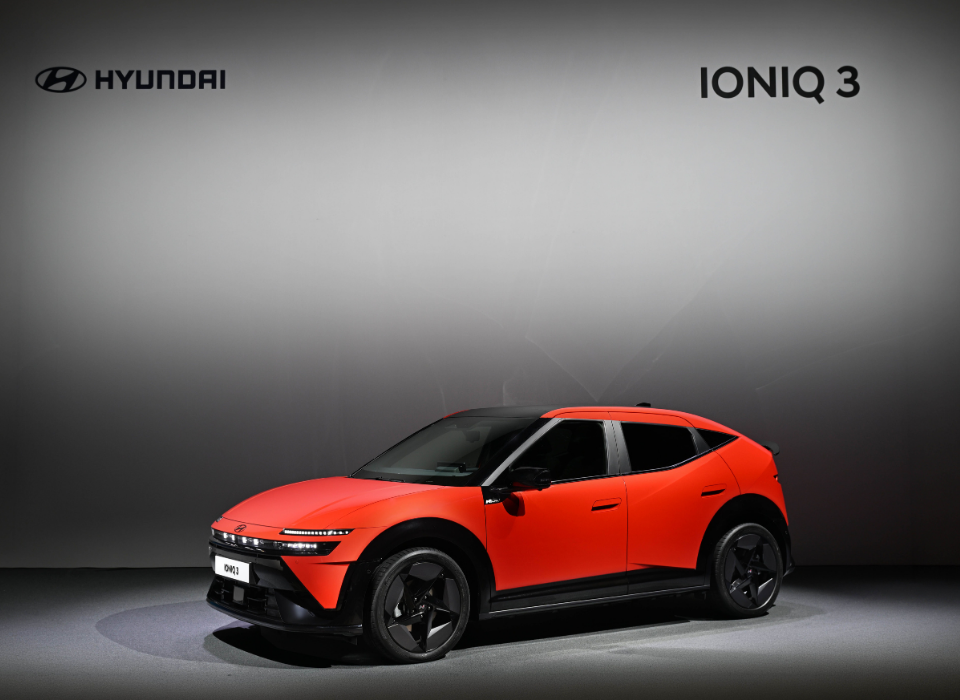
Hyundai, which will carry out extensive product launches in different markets, particularly North America, Korea, Europe, India and China, will expand its product lineup with models such as the new Elantra, IONIQ 3, new Tucson and Tucson Hybrid, and the SANTA FE EREV.
A new A-segment electric SUV for the Indian market, a new B-segment SUV for the global market, and a new B-segment SUV for Europe are planned to be developed.
Range of Over 900 Kilometers Targeted with EREV
One of the notable models in Hyundai's electrification strategy will be the SANTA FE, equipped with EREV technology.
The SANTA FE EREV, planned to go on sale in the first half of 2027, is targeted to offer a total range of over 900 kilometers. The model aims to reduce consumer concerns about range and charging while preserving the driving character of electric vehicles.
The model, which will be produced at the Hyundai Motor Manufacturing Alabama facility in the US, is planned to utilize the company's new-generation high-performance battery cells.
Hyundai is also working on new light commercial vehicles and a mid-size pickup truck for different markets. The product lineup of the high-performance N series is targeted to be expanded, with the goal of selling 100,000 N models annually by 2030.
Global Production Capacity to Increase by 1.27 Million Units
Hyundai plans to add 1.27 million units of additional capacity to its global production capacity by 2030.
Of this increase, 500,000 units are envisioned to be realized in North America, 320,000 units in India, 250,000 units at assembly facilities, and 200,000 units in Korea.
In North America, more than 10 hybrid models are targeted to be offered by 2030, with the share of hybrid vehicles within regional sales expected to rise to 50 percent. Hyundai's total hybrid sales in North America have already exceeded 1 million units.
In Europe, the aim is to cover 85 percent of the market with a product lineup consisting entirely of electric vehicles. The company will offer five new SUVs and light commercial vehicles to the region. Electric vehicle sales in Europe are planned to rise from 116,000 units in 2025 to over 420,000 units in 2030.
IONIQ 3 to Go on Sale in Türkiye in October
The IONIQ 3, production of which began in Türkiye a short time ago, will go on sale in October. While the model offers a range of up to 497 kilometers, it also stands out as the first vehicle in Europe to use Hyundai Motor Group's new-generation connected vehicle infotainment platform, Pleos Connect.
Hyundai is also expanding its production network in Africa, the Middle East and Pakistan with new investments. New assembly plants planned to be established in Saudi Arabia and Algeria constitute part of the company's strategy to increase regional production capacity.
Robotaxi and Artificial Intelligence Investments Accelerating
Autonomous driving and robotics technologies are also prominent in Hyundai's technology strategy.
The first IONIQ 5 Waymo robotaxis are planned to be delivered in the fourth quarter. Vehicles to be produced using a local supply chain at the Hyundai Motor Group Metaplant America in Georgia are targeted to be used in international robotaxi operations as early as 2027.
Hyundai Motor Group's Motional is also planning to launch a driverless commercial service by the end of the year. Robotaxi-ready IONIQ 5 models are envisioned to be used in these operations.
The strategic collaboration between Hyundai and Amazon is also planned to be expanded in four different areas. Amazon Autos is targeted to open its first international market outside the US in early 2027, with plans to integrate Alexa Built-in technology into Hyundai's product lineup and to develop the company's cloud and artificial intelligence capabilities using Amazon Web Services (AWS) infrastructure.
The production artificial intelligence robots that Hyundai has developed with Boston Dynamics are also progressing in the commercialization process. The company plans to deploy the industrial humanoid robot Atlas at Hyundai Motor Group Metaplant America starting in 2028.
Data-Driven Ecosystem in Software-Defined Vehicles
Hyundai is investing in software-defined vehicle (SDV) technologies for the transition from a hardware-centric structure to a software-centric ecosystem in the automotive industry.
In this context, a data ecosystem is being built that connects data collection, data analysis, artificial intelligence and service development with wireless OTA updates.
Along with the renewed Grandeur, the Pleos Connect infotainment system and the generative artificial intelligence agent Gleo AI are planned to be put into use. Data obtained from vehicles will be used in the development of artificial intelligence and new software features; the developed features will then be transferred to vehicles via OTA updates.
Hyundai is also standardizing the sensor architecture to be used in autonomous driving technologies around the NVIDIA ecosystem. In this way, it is aimed to enable data collected by Hyundai, Kia, 42dot and Motional to be used through a common standard.
Level 2+ Autonomous Driving in 2028
Hyundai's autonomous driving roadmap will also progress gradually.
The autonomous driving artificial intelligence Atria AI is planned to be used to collect data under real road conditions in South Korea's Gwangju and South Jeolla regions by the end of 2026.
Within the scope of the strategic collaboration carried out with NVIDIA, it is targeted to integrate Level 2+ autonomous driving technology into the first mass-production SDV model in 2028. Atria AI is planned to be gradually rolled out to mass-production vehicles over time, with the aim of establishing an autonomous driving technology range extending from Level 2+ to Level 4.
Hyundai Motor Group's global sales volume of more than 7 million vehicles annually is expected to constitute a broad data source for training autonomous driving artificial intelligence.
Cost Advantage with New-Generation Battery Technologies
Hyundai is also working on technologies aimed at reducing battery costs, in addition to range and performance, in electric vehicles.
The new battery cells developed by the company are targeted to provide more than twice the power compared to previously used high-nickel cells and to reduce charging time by 40 percent.
These high-performance cells are envisioned to be used in EREV models planned to be launched in the first half of 2027. The new technology is targeted to offer equivalent battery performance and electric vehicle driving character with lower battery capacity compared to similar electric vehicles.
Meanwhile, medium-nickel NCM cells, which are expected to reduce battery cost by approximately 30 percent while maintaining performance under real driving conditions, are planned to be used in electric vehicles to be launched in 2027.
Hyundai is also developing a cloud-based battery management system, aiming to increase battery lifespan by an average of 20 percent by 2028.
The company's developed Thermal Runaway Prevention (TRP) technology aims to limit heat transfer against the risk of battery fire. The system consists of a battery structure that ensures heat distribution and barriers between cells that prevent the spread of heat.
While expanding its production capacity, Hyundai is simultaneously increasing its investments in electrification, battery technologies, software-defined vehicles, artificial intelligence, robotics and autonomous driving, reshaping its global automotive strategy in line with its 2030 targets.
Gallery