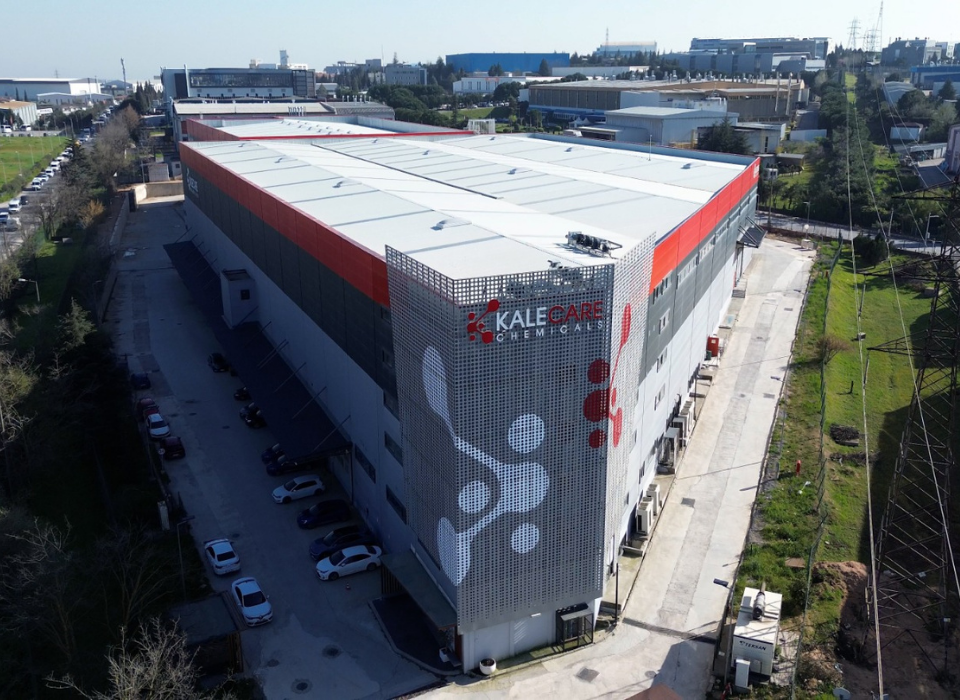
Self-filtering Construction Paint
Self-Filtering Construction Paint from Natural Resource-Based Active Substances
Filter and filter systems are mechanisms that provide protection against external factors by acting as filters. While these systems are typically mechanical, they are sometimes used in industry as materials.
They are employed for various purposes in construction chemicals, particularly in industrial applications, by being added to paints as filtering powder materials. In this study, zeolite, calcite, hydroxyapatite, clay, graphene, meerschaum and bentonite were mixed homogeneously, combined with pre-melted polyoxymethylene (POM) and cooled, thereby enabling sintering. The material was then reduced to powder with a crusher and made suitable for addition to paints.
When the active substance obtained is added to building paint, it will be able to trap cigarette smoke and toxic gases present in the environment, thereby improving air quality and protecting human health.
1. Introduction
Filter systems provide separation and cleaning functions by passing external factors through various mechanical, physical or biological processes. These systems have become a frequently used technique in industry. They are especially preferred for filtering all harmful components that threaten human health. However, their appeal has diminished due to both the limitations of filter systems and their high costs. Worldwide, research into obtaining filters from natural decomposers, particularly from materials that may constitute environmental waste, has intensified. Our research team also works with natural filters. In particular, virus-retaining mask filters developed during the pandemic were produced from activated carbon-added polylactic acid (PLA) polymer using the electrospinning method. It was observed that while preventing the transmission of viruses and bacteria with N99 mask characteristics, the material also filtered other foreign particles. From this perspective, we directed our efforts toward incorporating this functionality into building paints. The purpose of building paints is to provide aesthetic appearance in exterior and interior applications, resist moisture and humidity, and offer insulation and waterproofing properties, among other features. However, while many new studies are gaining momentum in this field today, there is interest in adding paint properties through alternative solutions containing natural materials. This approach will achieve higher performance in building paints. Zeolite material has a porous structure capable of filtering harmful substances from the external environment. Clay is a natural material that absorbs heat. Calcite is a natural absorber derived from eggshells, seashells, marble dust and natural sources, particularly in Niğde province. Hydroxyapatite is a calcium and phosphate-based bone material with a porous structure similar to zeolite. It is a natural absorber capable of trapping toxic factors in cigarette smoke and can be obtained from eggshells, seashells and natural calcium sources. Graphene is a single-atom-thick layer of carbon atoms arranged in a hexagonal lattice that provides good thermal insulation and high filtering properties. Meerschaum is a natural substance, particularly extracted in Eskişehir, capable of filtering cigarette smoke and cigarette toxins. Bentonite is a substance used in the construction industry as a binder. While used for heat insulation, it also serves absorbent purposes. POM polymer, also known in industry as polyacetal, is an engineering thermoplastic used in precision parts requiring high stiffness, low friction and excellent dimensional stability. It helps keep polymer powders intended for industrial use as adhesives cohesive. This is particularly important for our study. Since the material will be added to paint as an active ingredient, adhesion is critical. When the powders are added to the paint while held together, they will not settle at the bottom, will not form lumps, and by providing uniform distribution throughout, superior paint performance will be achieved. Cigarette smoke formation remains in the environment as a result of smoking, particularly creating permanent odors over time. Whatever object is present in the environment becomes permeated by it. Toxic gases represent another harmful factor. Examples include gases from the wood industry. These gases can be both flammable and toxic. In these facilities, filter systems may prove insufficient. In this study, a polymer-based active substance containing natural materials was developed and, by adding it to paints, it will be capable of removing external factors such as cigarette smoke and toxic gases.2. Materials and Methods
Materials Used Zeolite, calcite, hydroxyapatite, clay, graphene, meerschaum, bentonite and polyoxymethylene (POM) were used.Method
Each powder was weighed separately at 10-25 grams. The material was placed in an eccentric mixer. After adding 1% paraffin wax lubricant, mixing was performed at 200 rpm for 1 night. The post-processing mixed powder was fed into a system. At the bottom, POM polymer was melted by heating. Tween 80 surfactant was applied and sprayed onto the floor while airflow was directed toward the powders above. After spraying, the powders were dried at room conditions, collected again, passed through the POM melt and coated, then placed in a sintering furnace to obtain a homogeneous coated core-shell structured natural substance with POM-coated paint active material inside and outside. Production stages are shown in Figure 2.1.3. Results and Discussion
Figure 3.1 shows a particle production image. Particles in the range of 35-200 nanometers were obtained. Particles with spherical morphology were successfully produced.4. Conclusion
The active substance was successfully developed and made ready for addition to paints. It can capture cigarette smoke and toxic gases while exhibiting thermal insulation properties. For industrial applications, an active ingredient with ideal properties providing added value has been achieved. References Buluş, E., Buluş, G. S., & Yakuphanoglu, F. (2020). Production of polylactic acid-activated charcoal nanofiber membranes for COVID-19 pandemic by electrospinning technique and determination of filtration efficiency. Journal of Materials and Electronic Devices, 4(1), 21-26. Gao, L., Cao, Y., Zhou, S. L., Zhuang, T. T., Wang, Y., & Zhu, J. H. (2009). Eliminating carcinogenic pollutants in environment: Reducing the tobacco specific nitrosamines level of smoke by zeolite-like calcosilicate. Journal of Hazardous Materials, 169(1-3), 1034-1039. Erdi Buluş Lecturer / Material Technologies Specialist Istanbul Arel University ArelPOTKAM (Polymer Technologies and Composite Application and Research Center) Transportation Services Department Civil Aviation Cabin Services Program, Vocational School Gülseren Sakarya Buluş Specialist Istanbul Provincial Health Directorate Bahçeşehir University Engineering Management Department Graduate School of EducationAdvertisement
Ad Space728 × 90