Sütaş and TEMA Foundation Highlight Use of Organic and Organomineral Fertilizers for the Future of Agricultural Land
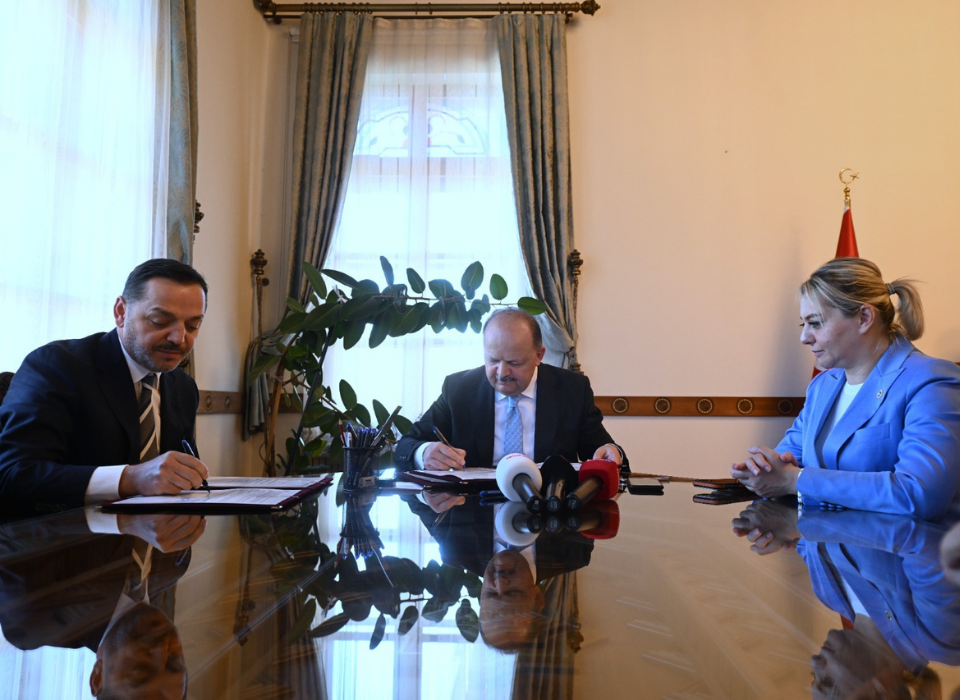
The 'Organomineral Fertilizer Workshop' organized through the collaboration of Sütaş and TEMA Vakfı was held with the participation and contributions of 20 academics from various universities and representatives from the Ministry of Food, Agriculture and Livestock.
At the press conference where the workshop book was introduced, attention was drawn to the lack of organic matter, which ranks at the top of health and quality indicators in agricultural soils, and it was underlined that this is one of the most important problems affecting soil fertility.
Organic Matter Content is at Low Levels in 99% of Agricultural Soils in Turkey
TEMA Vakfı Management Board Chairman Deniz Ataç, stating that they have been working for 26 years to protect all natural resources, especially soil, said that soil must be protected along with all living and non-living components as an ecosystem to make agricultural soils more productive. He noted that soil provides vital ecosystem services such as food and clean water provision, protection of biological diversity, and a regulatory role in carbon, nitrogen and water cycles. Deniz Ataç, expressing that all ecosystem services are directly related to soil quality, said: "With the support of Sütaş and with the participation of highly valued scientists and representatives from the Ministry of Food, Agriculture and Livestock, we conducted an important study for our soils. In this study, attention was drawn to the scarcity of organic matter, another soil problem as important as erosion. Soil organic matter is the component that most affects soil quality, in other words the ecosystem services produced by soil. A good agricultural soil should contain at least 3% organic matter by weight. 99% of agricultural soils in Turkey fall below this value. Incorrect agricultural practices cause great damage to our soils, reducing the amount of organic matter, which is the most functional part of the soil ecosystem. For this reason, it is important to utilize resources that will increase the amount of organic matter in our soils and to expand the use of organic and organomineral fertilizers," he said.With the "Farm to Table" Business Model, We Return What We Take from Nature Back to Nature
Sütaş Group Deputy Chairman for Agricultural Operations Tarık Tezel said: "We are delighted to share with you this book, which is the product of intensive work and will be a very valuable resource for the sector. At Sütaş, since 1975 we have been working with the mission of 'spreading the goodness and abundance of milk'. From that day to this, we have viewed natural resources as our trust, our business as our social responsibility, and economic development as our goal, and we will continue to do so. With this perspective, sustainability is actually a natural part of our business. The foundation of our sustainability approach is our integrated "Farm to Table" business model. This model brings together agriculture, livestock and industry, constitutes an important example of how these sectors are managed in an integrated manner, and at the same time carries the character of a regional development model. We do not view our business solely as the production of milk and milk products. We manage and oversee the entire process from the grass that feeds the cows to the products that reach our tables. In short; thanks to our "Farm to Table" business model, we return what we take from nature back to nature," he said. Tezel continued his remarks as follows: "For the physical, chemical and biological properties of Turkey's agricultural soils and their productivity potential to be at desired levels, the organic matter content should be at least 3% of soil weight. According to soil analysis results conducted in recent years, 99% of our soils contain organic matter below this value. Incorrect and unconscious agricultural practices affect soil and environmental health. Yet we have a powerful key to get out of all these negatives: 'organic and organomineral fertilizers'. As Sütaş, we not only convert all our animal and plant waste into electricity and steam energy in our energy facilities, but since 2016 we have been turning the fertilizers we process in our biogas facilities into high-quality organic and organomineral fertilizers. Currently we produce at a level of 6,000 tons per year. Our target for 2020 is to produce 100,000 tons of organomineral fertilizer per year."Soil Has a Vital Role for All Living Creatures
Prof. Dr. Engin Kınacı, editor of the Organomineral Fertilizer Workshop book and Advisor to TEMA Vakfı, said: "Despite being one of the most important indicators of soil quality, the importance of soil organic matter is not sufficiently known today. Producers should be informed about the importance of organic matter content in soil, the animal and plant organic matter sources they can use in their soils, and how to use them. To improve our soils which are poor in organic matter content, example field studies and awareness activities should be conducted on expanding the use of organic and organomineral fertilizers and sustainable agricultural practices. Organomineral fertilizers have an important advantage in that they are sources of organic matter and they contain minerals that plants need immediately. In this regard, the use of organic and organomineral fertilizers should be encouraged," he said.Advertisement
Ad Space728 × 90