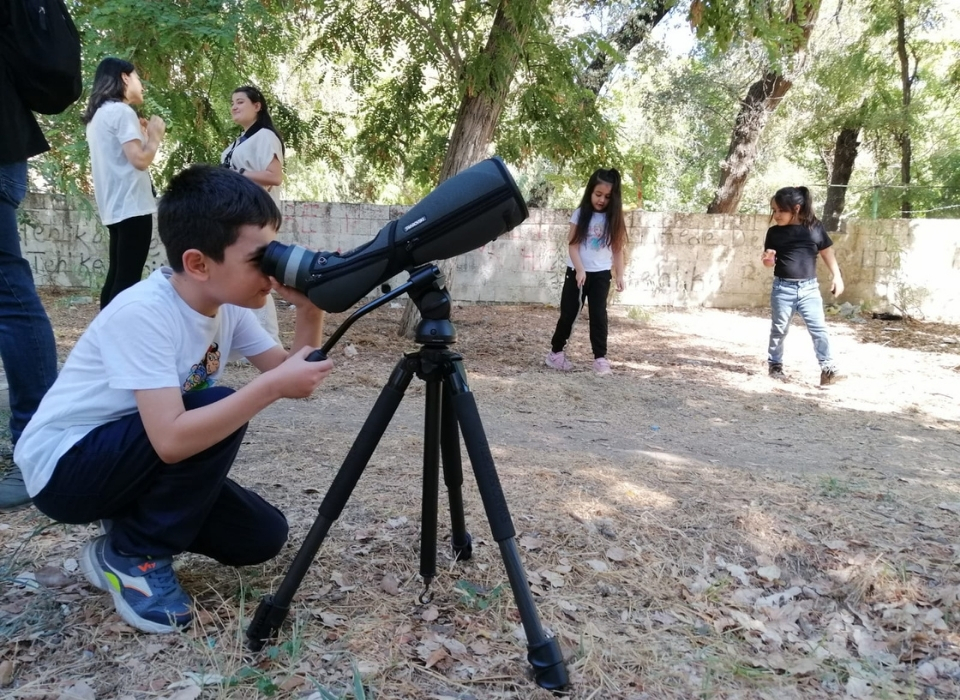
Events Held at 17 Locations in Turkey for European Bird Watching Day

The European Bird Watching Day events, organised by BirdLife International since 1993, with Doğa Derneği as Turkey's partner, took place on 5-6 October at 17 different locations across 12 provinces in Turkey. The aim of this 30-year tradition is to draw attention to the challenging migration journeys that birds undertake twice annually and the difficulties they face.
At this year's European Bird Watching Day, the 32nd held in Europe, 984 events were organised across 29 countries, including Turkey. A total of more than 24,000 people participated in the events. Nearly four million birds were observed. Finland recorded the highest number of observations, with approximately 1,400,000 birds observed, followed by Sweden with 617,808 birds counted. The main factor behind these high numbers is the thousand bird observers who participated in these events in those countries.
In Turkey, volunteer communities in different provinces, working in partnership with Doğa Derneği, conducted events in which 272 participants observed 150 different bird species and a total of 21,733 individual birds.
The most frequently observed species in Turkey were common tern (8,012), common kestrel (4,696) and white pelican (900). Among the observed birds were also rare species such as black stork, striped flycatcher, Iraqi jay, wren-warbler and dusky thrush.
Özge Yaylalı, Biodiversity Research Coordinator at Doğa Derneği, made a statement on the matter: "Turkey holds great importance globally due to its biological diversity and its position on the migration route of migratory birds. Through the European Bird Watching Day, we aim to draw attention to the long and challenging migration journeys that birds undertake twice annually, to their habitats and conservation efforts." She added:
"Doğa Derneği has participated in this event since 2017. For over 20 years, we have been collecting data through citizen science and enabling society's integration into conservation work. Bird watching is a process in which not only scientists, but everyone can participate. As we witnessed this year at Çavuşçuğöl in Konya, one of the most effective ways to monitor and record threats is through bird watching. Bird watching and nature education do not merely involve data collection; they communicate the importance of building a deep connection with nature and protecting our ecosystems to all sections of society. For this reason, we invite everyone to participate in bird watching and discover nature together."
Gallery