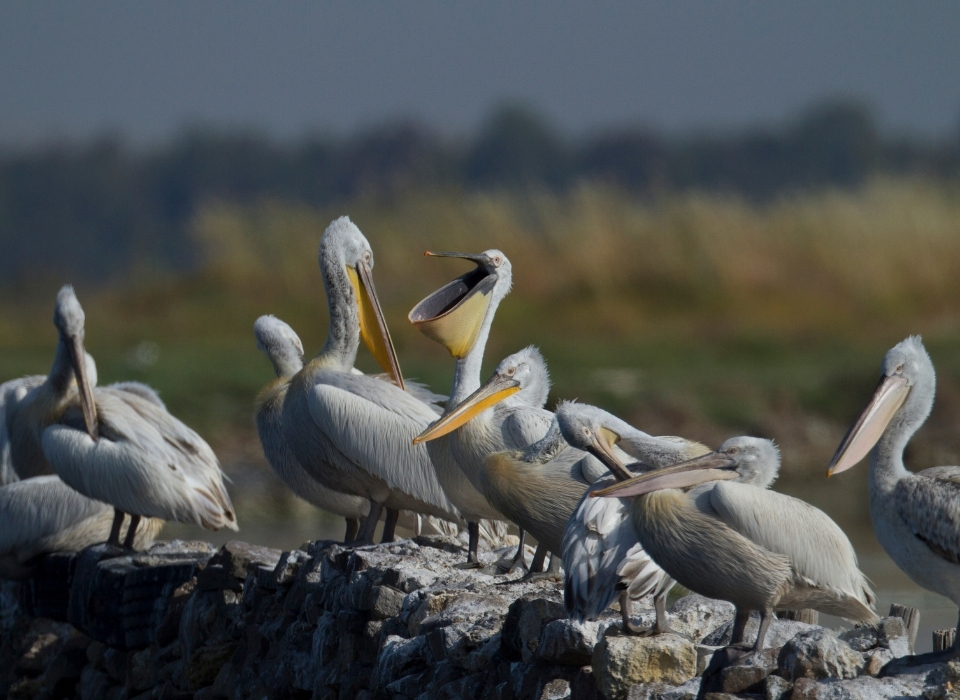
Nest Platform Installed for Dalmatian Pelicans in İzmir's Gediz Delta

Doğa Derneği is creating artificial breeding platforms in İzmir for Dalmatian pelicans, one of the largest bird species living in Turkey. Due to the loss of wetlands in the country, Dalmatian pelican numbers have declined, and the aim is to establish safe nesting areas. Different specialists are working together to ensure the success of the nest, which is planned according to pelican ecology and international successful examples. For this work, which will be completed in its first phase by year-end, Doğa Derneği is seeking volunteers and people who can provide support.
The global population of Dalmatian pelicans, which are subject to intensive conservation efforts worldwide, is estimated at 11,400–13,400 individuals. This bird, with a wingspan exceeding 3 meters, takes its name from the fluffy feathers on the crown of its head. On the International Union for the Conservation of Nature (IUCN) Red List, Dalmatian pelicans were classified in 2017 as Vulnerable (VU), meaning threatened at a global scale. Thanks to intensive conservation efforts carried out since then, they are now being evaluated as Near Threatened (NT).
The Dalmatian pelican, one of three pelican species recorded in Turkey, was breeding in 17 different wetlands in the country during the 1950s–1980s. However, their numbers declined due to wetland drainage, water regime modifications, and disturbance of the species in nesting areas.
Today, Dalmatian pelicans regularly breed in only 5 areas in Turkey with approximately 500 breeding pairs. One of these areas is the Gediz Delta in İzmir. This delta, which is home to 3% of the world population of Dalmatian pelicans, is globally significant. However, human pressure in pelican breeding areas, rising sea levels due to climate change, erosion from waves and currents leading to nesting areas being submerged, and the insufficiency of artificial islands created are causing a decline in the Dalmatian pelican population in the region. Doğa Derneği is working to protect the Dalmatian pelican population and conducting research to understand the impacts of lost areas.
New nests are aimed at increasing pelican numbers.
Doğa Derneği has begun work to create new areas where Dalmatian pelicans can breed. The association announced that it is seeking volunteers and sponsors who will participate in this work.
Association experts examined successful artificial nest examples tested in countries such as Ukraine, Greece, Russia, and Bulgaria. They designed a nest suited to the species' ecology and conditions in the Gediz Delta. The wooden nest platform will be completed by the end of September. Natural material nesting material will then be placed on the platform surface. Pelican models will also be positioned on the platform for the nest to be accepted by the birds. In January–February, the goal is for pelicans to arrive in this area, establish nests, and have a successful breeding season away from dangers. The work is being carried out with permission from the Ministry of Environment, Urbanization and Climate Change General Directorate of Nature Conservation and National Parks and Binbir Gıda Çamaltı Salt Works, and with support from the İzmir Branch Directorate.
Gallery