Koruma Klor Alkali's FLEX-CIRC-CO₂ Project Receives Perfect 15/15 Score from Horizon Europe
The FLEX-CIRC-CO₂ project, in which Koruma Klor Alkali R&D Center is one of the consortium partners, received a perfect score of 15 out of 15 in the evaluation conducted by the European Commission. Within the scope of the project, which involves 14 partner organizations from 8 countries, an integrated technology will be developed to capture CO₂ from energy-intensive industries and convert it into formic acid through electrochemical methods. Koruma Klor Alkali will be responsible for electrochemical process development and the development of a pilot-scale electrolysis cell within the project.
The FLEX-CIRC-CO₂ project, in which the Koruma Klor Alkali R&D Centre is among the consortium partners, received a perfect score of 15 out of 15 in the European Commission’s evaluation. The project, involving 14 partner organisations from eight countries, will develop an integrated technology for capturing CO₂ from energy-intensive industries and converting it into formic acid by electrochemical means. Koruma Klor Alkali will take on electrochemical process development and the development of a pilot-scale electrolysis cell.
Koruma Klor Alkali has taken its R&D work in sustainable production technologies, the circular economy and carbon conversion into an international project under Horizon Europe, the European Union’s research and innovation programme.
The FLEX-CIRC-CO₂ project – “Flexible Circular CO₂ Capture and Utilisation Across Energy-Intensive Industries” – in which Koruma Klor Alkali is a partner, will run for 36 months. It brings together research institutions and industrial companies from the United Kingdom, Portugal, Germany, Greece, Spain, Italy, Austria and Türkiye.
CO₂ will be captured and converted into formic acid
The central aim of the FLEX-CIRC-CO₂ project is to capture the carbon dioxide produced in energy-intensive industries and to convert it into formic acid by electrochemical means within the same integrated process.
One of the project’s innovative aspects is that the CO₂ capture and electrochemical conversion stages are brought together on a single integrated platform rather than being treated as separate processes. This approach aims not only to capture carbon dioxide at the emission source but also to treat it as a raw material and convert it into a value-added chemical.
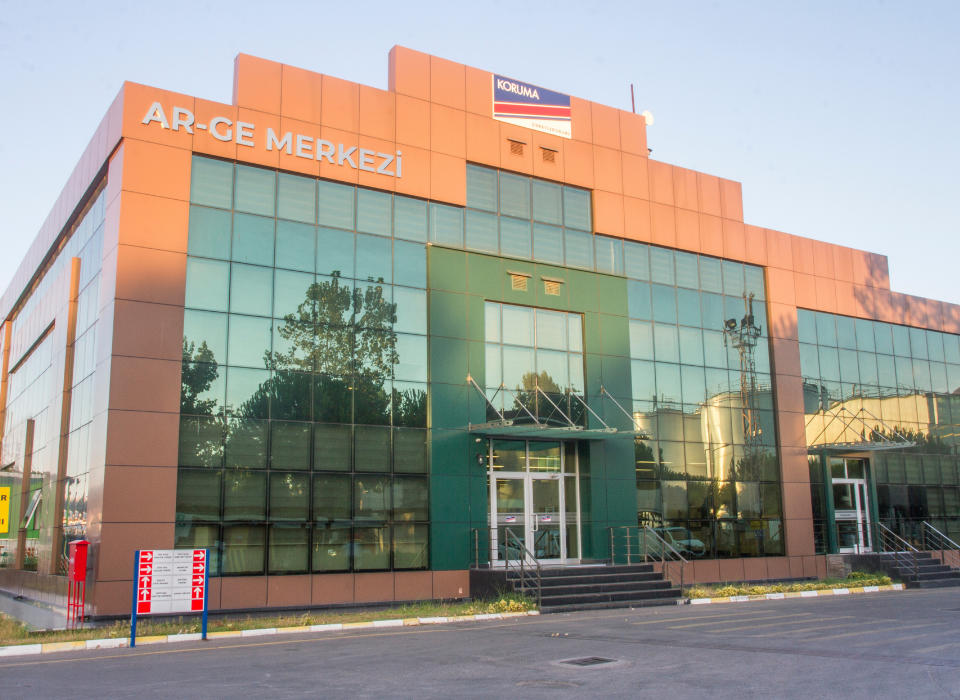
The Koruma Klor Alkali R&D Centre will contribute to the project with its expertise in electrochemical process development in particular. The centre’s responsibilities also include developing a pilot-scale electrolysis cell.
This work will support the development of more efficient and scalable process and equipment solutions for use in the electrochemical conversion of CO₂.

Koruma’s R&D experience in European Union projects
Koruma Klor Alkali’s experience in EU-funded R&D projects goes back some years. The company opened its R&D centre in 2015 and began taking part in EU-supported R&D work in 2018 with a project accepted under Horizon 2020.
Koruma Klor Alkali is also among the participants in USABLE PACKAGING (Unlocking the Potential of Sustainable Biodegradable Packaging), one of the Horizon 2020 projects listed on the European Commission’s CORDIS platform.
The FLEX-CIRC-CO₂ project is significant in taking the company’s R&D collaborations in Europe further, particularly in electrochemistry, carbon capture and the conversion of carbon into value-added chemicals.
Aracı: “A strong international endorsement of our technical competence”
Vefa İbrahim Aracı, Chairman of the Board of Koruma Klor Alkali, said the FLEX-CIRC-CO₂ project’s perfect 15/15 score in the Horizon Europe evaluation showed how far Koruma’s R&D work had come.
Aracı made the following assessment:
“At Koruma we place R&D at the centre of our production processes, our competitiveness and our sustainability work. We care about scientific work reaching a result that is applicable, scalable and value-creating in industry. That our European Union project experience now continues with the FLEX-CIRC-CO₂ project, evaluated with a full 15/15 score under Horizon Europe, is a strong international endorsement of the technical competence our R&D team has reached.”
Noting that the project is also important in sharing Koruma’s expertise in electrochemistry with international research and industrial organisations, Aracı continued:
“We are extremely proud of our team’s achievement. The innovative, integrated carbon dioxide capture and conversion system to be developed in the project will allow us to work on more efficient, compact and scalable solutions. I see this collaboration, which brings Koruma’s expertise in electrochemistry together with Europe’s leading research and industrial organisations, as a valuable step for our R&D vision and our international R&D goals.”
Horizon Europe: a EUR 93.5 billion research and innovation programme
Covering the 2021-2027 period, Horizon Europe is the European Union’s main funding programme for research and innovation. Its indicative total budget for the period is EUR 93.5 billion.
The programme supports research and innovation projects aimed at combating climate change, sustainable development, increasing Europe’s competitiveness and developing new knowledge and technologies.
The integrated CO₂ capture and conversion technology to be developed under the FLEX-CIRC-CO₂ project is intended to offer new technological possibilities for reducing carbon emissions in energy-intensive sectors and for using captured carbon in the production of a value-added chemical.
Gallery