
Rising Pressure for Productivity in the Chemical Industry
Distillation columns are among the process equipment with the highest energy consumption and operating costs in the chemical industry. Critical for the separation of raw materials, achievement of purity levels and preservation of product quality, these columns also determine a significant portion of facilities' total energy consumption. Rising energy costs, sustainability targets and competitive pressure have made improving distillation column efficiency no longer merely a matter of process engineering, but rather a subject of comprehensive facility strategy. The traditional perspective limits distillation efficiency to in-column equipment (trays, packing types), design criteria and thermodynamic calculations. However, real operating conditions in the field create significant differences from theoretical design. One of the principal causes of this gap is the inadequate, unreliable and non-continuous measurement of process parameters. In digitalized chemical facilities, the efficiency of distillation columns is increasingly defined by the quality of measurement technologies and the reliability of process data.
Is Efficiency Possible Without Measurement Reliability?
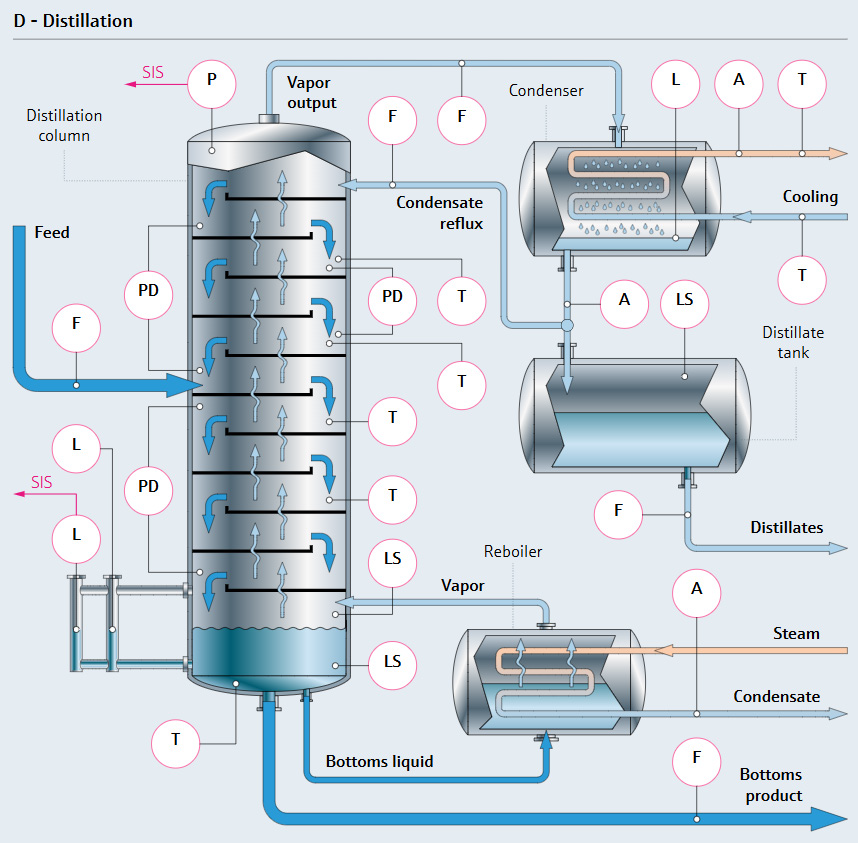
To achieve targeted separation performance in a distillation column, fundamental process parameters such as temperature, pressure, flow, level and density must be kept under continuous control. Even minor uncertainties in these parameters lead to incorrect adjustment of reflux ratios, excessive increase in reboiler load, and consequently significant energy losses.
For example, pressure fluctuations in the column directly affect boiling points. Delays or deviations in pressure measurement cause the operator or control system to take late and incorrect actions. Similarly, when the temperature profile inside the column cannot be sufficiently clearly visualized, the theoretical number of stages cannot be achieved in the field. This leads either to a drop in product purity or to excessive energy consumption in an attempt to maintain target purity.
At this point, the concept of efficiency means not only "less energy" but also more stable, more predictable and safer process operation.
Pressure Measurement: The Silent Indicator of Column Performance
Although pressure measurement in distillation columns is often perceived as secondary in importance, it is one of the fundamental indicators of column efficiency. Correct and high-precision monitoring of upper and lower column pressures ensures continuity of separation performance.
Stable and reproducible measurements provided by advanced pressure transmitters enable better understanding of hydraulic behavior within the column. In particular, through pressure sensors with wide measurement ranges, standardized instrumentation becomes possible at different points in the column. This approach simplifies maintenance procedures while reducing spare parts and engineering costs. As a result, with correct pressure measurement, the column can be operated within narrower control bands and energy consumption can be optimized.
Temperature Profile: The Heart of Distillation Efficiency
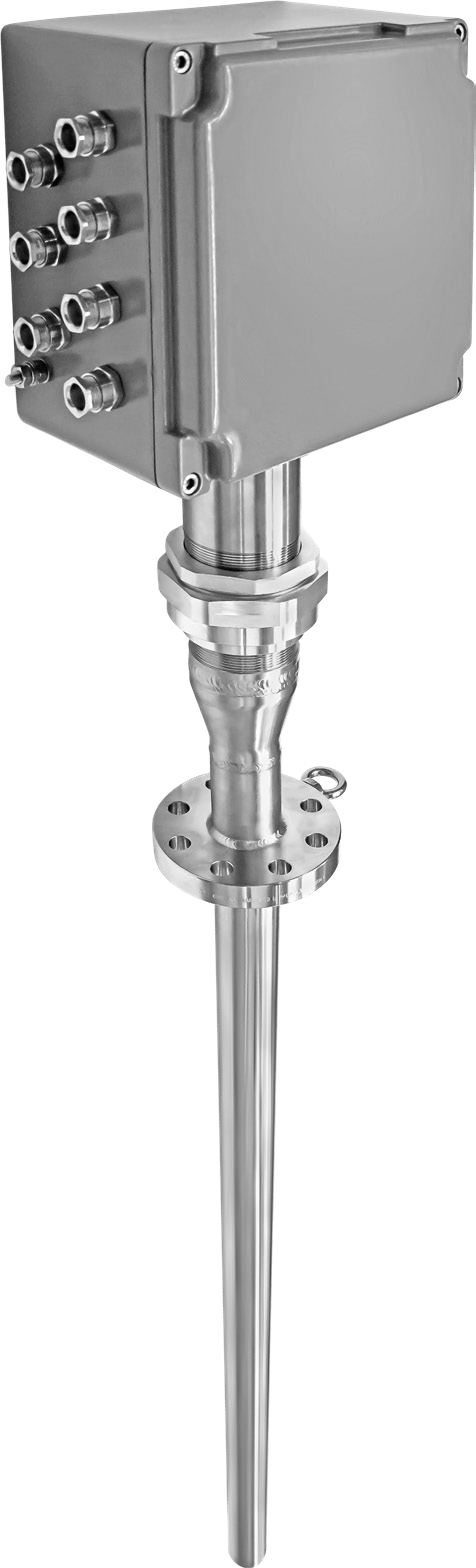
One of the most effective ways to understand the real behavior of a distillation column is through detailed temperature profiles taken along the column. Temperature measurements at a single point are often insufficient in explaining the complex heat and mass transfer mechanisms within the column.
Through multi-point temperature measurement systems, the effect of the feed point, temperature differences between trays and the dynamic behavior of the column can be clearly monitored. This provides operators and control systems with the ability to make reflux and reboiler adjustments more precisely.
The ability to monitor numerous measurement points from a single process connection reduces mechanical complexity while improving data quality. This approach plays an important role, particularly in large and tall columns, in closing the gap between theoretical design and actual operation.
Flow and Density Measurement: The Common Language of Energy and Quality
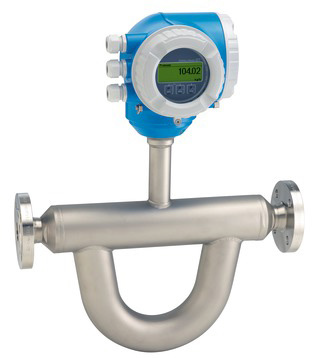
Flow measurement in distillation columns is often addressed for mass balance and inventory tracking purposes. Yet modern measurement technologies place flow measurement at the center of efficiency and quality optimization.
Mass flow meters capable of providing density information in real time enable instantaneous evaluation of column performance. In streams containing entrained gas, conventional measurement techniques produce erroneous signals, while advanced measurement technologies minimize this uncertainty.
Through correct flow and density data:
Reboiler load is not unnecessarily increased
Risk of off-spec product formation is reduced
Energy consumption is optimized without quality loss
In conclusion, an efficient distillation column is not only one that separates well, but also one that measures correctly.
Level Measurement and Process Stability
Level fluctuations in the reboiler, reflux drum and intermediate tanks directly affect the stability of the distillation column. Providing reliable level measurement under challenging process conditions such as foaming, vapor, gas blanketing and density changes is a prerequisite for efficient operation.
Through reliable level measurement:
Column fluctuations are prevented
Operational safety increases
Risk of unplanned shutdown is reduced
Additionally, remote verification and fault diagnosis capabilities offered through Heartbeat Technology in modern level sensors simplify maintenance operations while contributing to operational continuity.
Digitalization and Maintenance: A New Dimension of Efficiency
Efficiency is no longer limited to process parameters alone. Digital services, remote support solutions and predictive maintenance approaches have become an integral part of operational efficiency.
Through diagnostic and condition information obtained from field devices, potential faults can be detected before affecting process performance. This approach:
Reduces unplanned shutdowns
Lowers maintenance costs
Increases process safety
Ultimately, efficiency means not only energy savings but also operational agility, reliability and sustainability.
Measurement-Focused Distillation
In today's chemical facilities, the efficiency of distillation columns is shaped not only by in-column equipment but also by correct, reliable and intelligent measurement technologies. From pressure to temperature, from flow to level, each measurement point has a direct impact on energy consumption, product quality and operational safety.
For this reason, the modern distillation approach places measurement at the center of the process. A correctly measured column operates more stably, consumes less energy and provides the operator with a long-term competitive advantage.
Gallery