





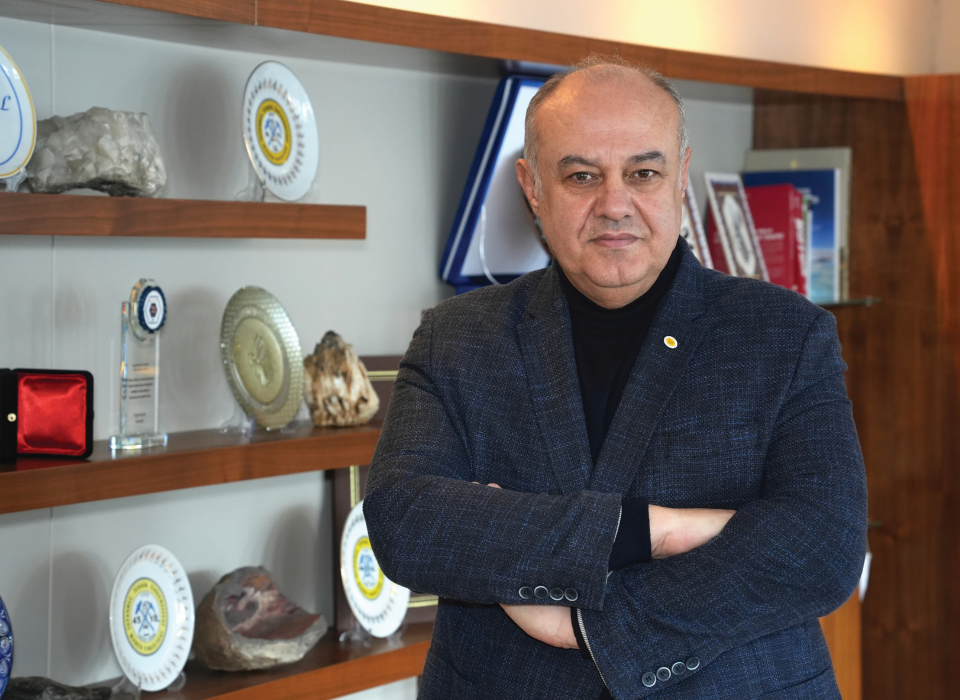
Türkiye is shifting from raw mining to high-technology chemical processing in rare earth elements, aiming to reduce foreign dependency by producing advanced materials for green energy and catalysts. In an interview we conducted, Prof. Dr. Mustafa Kumral, Dean of the İTÜ Faculty of Mines, provided detailed information on the subject.
Report: Murat Soygür
Photographs: Taner Dalkılıç
Turkey is transitioning from raw rare earth element mining to advanced chemical processing, aiming to produce high-tech materials for green energy and catalysts while reducing import dependency. In our interview, Prof. Dr. Mustafa Kumral, Dean of the Mining Faculty at ITU, provided detailed information on the subject.
What are the fundamental reasons for evaluating rare earth elements as strategic raw materials for the chemical industry?
Rare earth elements (REE) constitute the lanthanide series of the periodic table and represent a group of elements that play a critical role in advanced technology applications due to their physical and chemical properties. The unique magnetic moments, high optical sensitivity, and catalytic activity-enhancing effects of these elements make them indispensable inputs, particularly for functional material production. In this context, REE should be evaluated beyond being a conventional mining product and understood as a strategic industrial input directly linked to advanced production technologies.
From a chemical industry perspective, rare earth elements are used in the production of numerous intermediate and final products such as catalyst manufacturing, high-performance ceramics, optoelectronic components, energy storage materials, and advanced alloys. This positions these elements not merely as an economically valuable raw material but as a critical resource with direct bearing on countries' industrial policies. The capacity for advanced material production, which is one of the defining factors of technological competitiveness today, is largely associated with access to rare earth elements and the technical capability to chemically process them. Therefore, the strategic significance of rare earth elements extends beyond reserve size alone and gains meaning through the capacity to convert these reserves into high-value-added chemical products. In this framework, developing production infrastructure based on REE has the potential to serve as an important lever in the chemical industry's transition to technology-intensive manufacturing.
What are the applications of rare earth-based catalysts in petrochemical and refinery processes?
One of the most common applications of rare earth elements in petrochemical and refinery industries is in the catalyst systems used in fluid catalytic cracking (FCC) processes. In particular, the integration of elements such as lanthanum and cerium into zeolitic catalyst structures offers significant advantages in terms of improving catalytic stability and enhancing reaction selectivity. The use of rare earth-doped catalysts enables more efficient cracking of heavy hydrocarbon fractions, making it possible to obtain lighter products at higher yields. Additionally, through improved thermal and chemical stability of the catalyst structure, process life is extended and the energy intensity of refinery operations can be reduced. This provides substantial economic efficiency and environmental sustainability gains. When evaluated specifically for Turkey, increasing domestic catalyst development capacity stands out as a strategic objective for reducing import dependency in the petrochemical sector and localizing process technologies. Developing rare earth element-based catalyst production technologies is critical not only for optimizing refinery processes but also for strengthening the chemical industry's advanced material production capabilities.
Could you describe the R&D work carried out by ITU Mining Faculty on rare earth elements?
Research conducted within ITU Mining Faculty is primarily focused on revealing mineralization characteristics through exploration and identification of base ore deposits rich in rare earth elements. Within this scope, activities are being carried out to understand the behavior of rare earth elements in geological environments, particularly those associated with existing base metal deposits, and to identify potential enrichment zones. In these exploration activities, multiscale remote sensing techniques are effectively employed to analyze the spectral characteristics of surface and near-surface geological units, enabling early detection of alteration zones and geochemical anomalies that may indicate rare earth enrichment. Through integration of satellite data and airborne measurements with field work, it becomes possible to identify target areas with higher accuracy. Subsequently, qualified geochemical analyses and mineralogical characterization studies assess the economic recoverability of potential enrichment areas. In this process, the field experience and analytical expertise of our experienced research team, which has been working on rare earth elements since early years, provides a significant advantage. An interdisciplinary approach toward geochemical data interpretation, determining mineral associations, and establishing mineralization models contributes to strengthening decision support mechanisms from the exploration phase onward.
Following preliminary research activities, work is underway to characterize mineralization properties in identified areas in detail and to develop appropriate concentration methods. In particular, identifying physical and chemical concentration techniques that enable the effective separation of rare earth elements from gangue minerals stands out as a critical research area in terms of process efficiency. Additionally, research is being conducted on optimizing hydrometallurgical processes for the chemical separation of rare earth elements. Development of selective leaching and element-based separation processes is important not only for technical efficiency but also for minimizing environmental impacts. Through research conducted in this direction, the goal is to support Turkey's development of a holistic production infrastructure spanning from exploration through chemical processing in the rare earth value chain.

How could current projects, particularly Beylikova, affect our chemical industry's capacity for intermediate products and advanced materials production? Can Turkey become not only a rare earth element extractor but also a country that chemically processes and transforms these elements into high-value-added products?
Projects focused on significant rare earth reserves such as the Beylikova deposit present important opportunities for Turkey's transition from a mining-based production model to an advanced material-focused industrial structure. Such projects must extend beyond ore production to encompass chemical processing and intermediate product manufacturing stages in order to be critical for developing high-value-added production capacity. The use of rare earth elements in areas such as magnet production, battery components, catalyst systems, and optoelectronic materials necessitates chemical processing of these elements.
Therefore, planning mining activities in integration with the chemical industry will enable the completion of the rare earth-based production chain within the country. If a comprehensive production ecosystem extending from mine to final product is established, Turkey could transition from being merely an exporter of rare earth elements to possessing industrial infrastructure that processes these elements and transforms them into advanced technology products. This transformation can be regarded as a strategic necessity for gaining access to higher tiers in the global value chain.
How does China's dominance in the rare earth elements market affect the sector?
China's dominant position in rare earth element production and, particularly, its chemical processing capacity is causing significant concentration in the global supply chain. This situation increases supply security risks for countries producing advanced technologies based on rare earth elements and accelerates efforts to develop alternative sources.
In recent years, the development of strategic reserve policies for rare earth elements and investments in domestic processing technologies by numerous countries, particularly the European Union and the United States, can be regarded as an indicator of a global trend toward reducing this dependency. In this context, not only extraction of rare earth elements but also their chemical processing and transformation into advanced products is of critical importance. From Turkey's perspective, adoption of a similar strategic approach is significant for strengthening technological independence in industry and reducing import dependency. Development of domestic processing capacity could provide a sustainable competitive advantage in rare earth element-based production processes.
How do you evaluate the role of rare earth elements in energy transition and carbon neutrality goals?
In the energy transition process, rare earth elements occupy a central position among the basic components of low-carbon technologies such as wind turbines, electric vehicle motors, and energy storage systems. Elements such as neodymium and dysprosium, used particularly in the production of high-performance permanent magnets, directly contribute to improved energy efficiency. Through the use of these elements, it becomes possible to develop more compact and efficient energy systems; this in turn contributes to achieving global targets for reducing carbon emissions. Therefore, developing production infrastructure based on rare earth elements can be evaluated as an important policy instrument in the energy transition process. Regarding achievement of carbon neutrality targets, sustainable production and recovery of rare earth elements is equally as important as primary production. In this context, development of environmentally friendly production technologies and adoption of circular economy approaches should be among the core components of rare earth element-based industrial policies.
What technological breakthroughs do you expect in the rare earth elements field over the next 10 years?
Over the coming decade, significant technological advances are expected in rare earth element recovery, environmentally friendly separation technologies, and alternative material development. In particular, development of hydrometallurgical and biometallurgical methods for rare earth recovery from waste electrical equipment will be decisive for increasing resource efficiency.
Additionally, development of next-generation separation technologies that reduce process intensity and minimize environmental impacts will play a critical role in the sustainability of rare earth production. Increasing applications in advanced magnetic materials and next-generation energy systems will further strengthen the strategic importance of rare earth elements in industrial policies. In this direction, supporting R&D activities based on rare earth elements and strengthening university-industry collaboration are considered fundamental requirements for Turkey to achieve competitive production capacity in this field.
Gallery
Related News

Küresel Rekabetin Anahtarı: Mevzuat Uyumu
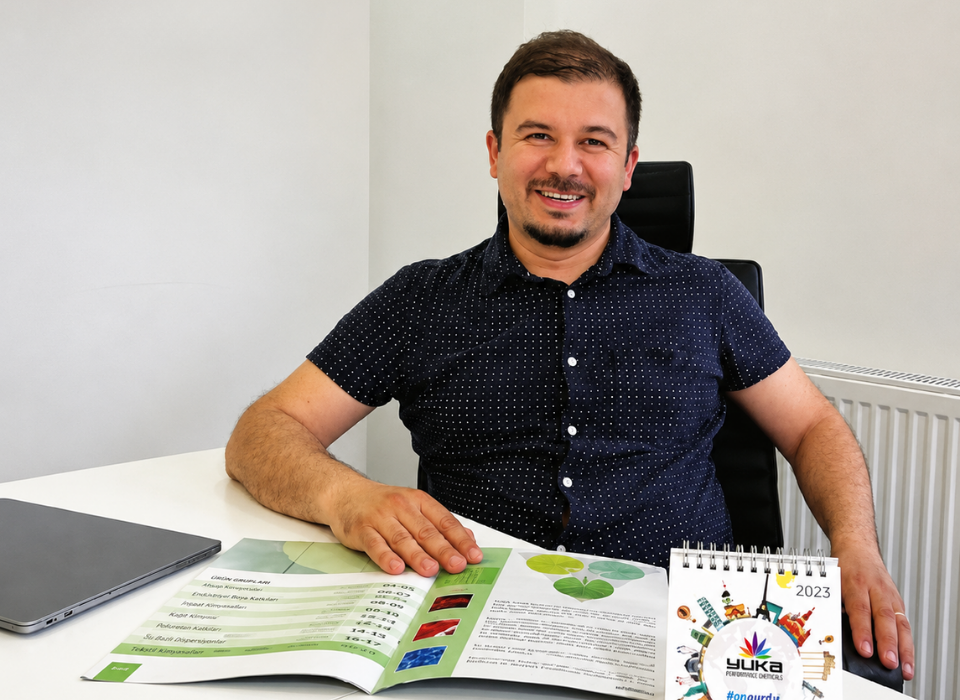
Sustainable Solutions Making a Difference in Paint Formulations: YUKA Kimya

Building Strong Bonds: SABA's Global Adhesive Strategy

Sustainable Growth in Adhesive Technologies: Bostik
Oyunlardan ve bulmacalardan öğren
Kimya sanayiini oynayarak tanıyın: her hafta yeni bulmaca, etkileşimli periyodik tablo, sektöre özel oyunlar ve ücretsiz hesaplayıcılar.
Deneyiminizi iyileştirmek ve site kullanımını ölçmek için çerez kullanıyoruz. Ayrıntılar Çerez Politikası ve KVKK Aydınlatma Metni'nde.